


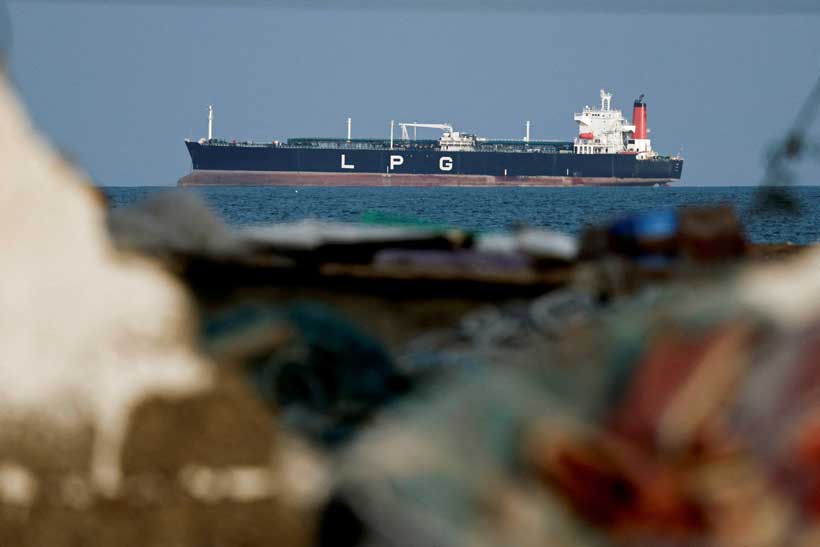
The Strait of Hormuz has remained heavily disrupted since the start of the Iran war on February 28. A U.S. naval blockade targeting Iranian shipping has further tightened movement through one of the world’s most important oil transit routes.
Normally, about one fifth of global oil and gas flows through the strait. However, recent data shows that traffic has become limited, selective, and heavily dependent on political coordination.
What is still moving through the strait
Despite the disruption, some non Iranian oil tankers have continued to pass through the waterway, largely through negotiated or carefully managed transit arrangements.
Key flows include shipments to Malaysia, China, India, Pakistan, and Thailand. These cargoes primarily consist of crude oil from Saudi Arabia, Iraq, and the United Arab Emirates, along with refined products and liquefied petroleum gas.
Stay ahead of the geopolitical week.
MD Briefing delivers expert analysis across five global fronts — the Indo-Pacific, energy, geoeconomics, European security, and the Middle East — every Monday morning. Free.
Many of these vessels are either state linked or operating under coordinated diplomatic approvals, allowing them to avoid interception or delays.
Country level flows
China
Several China linked tankers have continued transporting crude from Iraq and Saudi Arabia to Chinese ports or regional offloading hubs. Some cargoes are also being redirected to Southeast Asia before final delivery to Chinese refineries.
India
India remains a major destination for Gulf crude, with multiple shipments arriving in ports such as Mumbai, Paradip, and Sikka. Both crude oil and refined fuels continue to move, though routing complexity has increased.
Malaysia
Malaysia linked vessels are transporting crude from Gulf producers, with shipments expected to arrive at key refining hubs such as Pengerang and Malacca.
Pakistan
Pakistan flagged tankers have entered the Gulf to load crude and refined products from the UAE and Kuwait, while earlier shipments from Saudi Arabia have already been delivered to Karachi.
Thailand
A Thai tanker successfully transited the strait following diplomatic coordination, highlighting that negotiated exemptions are still possible for selected cargoes.
Why traffic has not completely stopped
While the Strait of Hormuz is under severe pressure, complete closure has not occurred due to several factors.
Some vessels have prior clearance agreements or diplomatic coordination with Iran and other regional actors. Others are carrying non Iranian cargoes that are not targeted by the blockade. In addition, major importers such as China and India have strong incentives to maintain energy flows and have engaged in behind the scenes coordination.
Geopolitical implications
The selective nature of shipping through the strait reflects a fragmented but functioning energy corridor under stress. The U.S. blockade is primarily aimed at Iranian exports, but the broader instability increases risk for all maritime traffic.
This creates a layered system where political alignment, cargo origin, and diplomatic negotiation determine whether a vessel can pass safely.
Economic impact
Even partial disruption has significant implications for global energy markets. Higher insurance costs, rerouting delays, and uncertainty over access are increasing operational costs for importers and exporters alike.
The continued movement of oil to Asia helps prevent a full supply shock, but the system remains highly vulnerable to escalation.
Analysis
The Strait of Hormuz is no longer functioning as a fully open global artery but rather as a controlled and contested passage. Rather than a total shutdown, the situation reflects selective access shaped by military pressure, diplomacy, and energy dependency.
This makes the system more fragile. Even small escalations could quickly shift the balance from managed flow to severe disruption.
Oil continues to move through the Strait of Hormuz, but under tightly constrained and politically sensitive conditions. While key importers are still receiving supplies, the overall system is operating under heightened risk, with stability dependent on fragile diplomatic and military balances.
With information from Reuters.
