


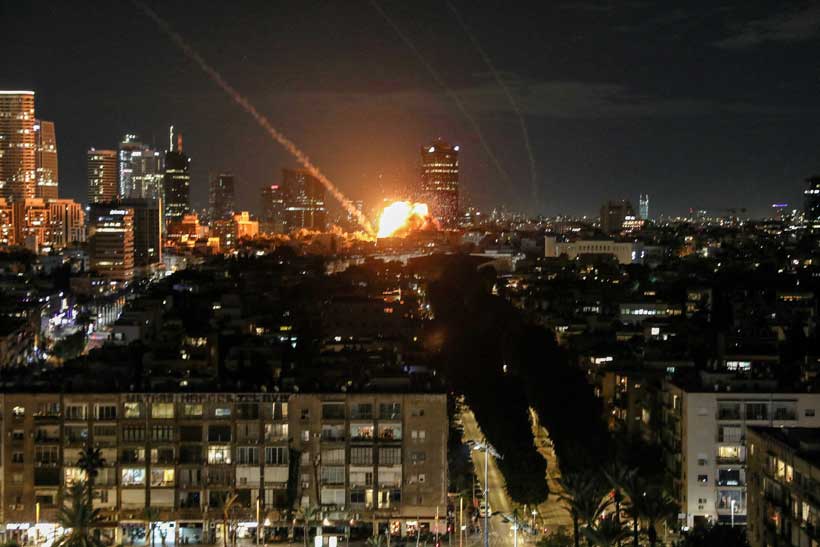
On February 28, 2026, the United States and Israel launched nearly 900 strikes on Iran in 12 hours. The Supreme Leader was dead by morning. Within days, the Strait of Hormuz was closed, oil hit $120 a barrel, and Gulf states were intercepting Iranian drones around the clock. By mid-March, 70% of the region’s food imports were blocked. Bahrain was running on 13% of its missile interceptor capacity. A grocery emergency was unfolding in countries that import almost everything they eat.
Nobody planned for any of that. Not really.
Forty days later, a ceasefire exists, technically. It started cracking within four hours of being announced, with missiles still flying and both sides accusing the other of violations before the statement was even cold. Wars like this one do not end cleanly. They leave things behind: broken assumptions, exposed vulnerabilities, and a changed map of who matters and who doesn’t when the world is genuinely on the edge.
This war left five of those things. None of them are comfortable, but all of them are permanent.
Stay ahead of the geopolitical week.
MD Briefing delivers expert analysis across five global fronts — the Indo-Pacific, energy, geoeconomics, European security, and the Middle East — every Monday morning. Free.
1. The Age of Proxy Wars Is Over
For decades, Iran’s strategy was elegant in its indirectness. Hezbollah in Lebanon, the Houthis in Yemen, militias in Iraq, Hamas in Gaza. Tehran projected power across the region without ever officially being at war with anyone. The arrangement suited everyone involved. Iran got influence without accountability. Its proxies got weapons and money. And the US and Israel got to fight fires without confronting the arsonist directly.
Then came Operation Epic Fury on February 28, and Iran absorbed the lessons of every previous conflict where calibrated retaliation had failed to deter further strikes. It went big from day one. Hundreds of drones and ballistic missiles, not at symbolic targets, but at US military bases, Gulf oil infrastructure, desalination plants, and Israeli cities simultaneously.The proxy architecture did not disappear, Hezbollah, the Houthis, Iraqi militias all joined in, but Iran itself was now fighting openly, under its own flag, accepting responsibility for strikes it would previously have denied.
The retaliation hit Bahrain, Jordan, Kuwait, Qatar, Saudi Arabia, and the UAE. A drone struck Britain’s Akrotiri military base on Cyprus. Missiles were intercepted over Turkey. Civilian infrastructure was struck in Oman and Azerbaijan. The geographic footprint of “an Iran war” turned out to be most of the eastern hemisphere.
The lesson is uncomfortable. Proxy warfare was dangerous but contained. Direct warfare between a major US-Israeli coalition and Iran proved immediately, catastrophically uncontained. The world spent years worrying about Iranian proxies. It probably should have worried more about what happens when the proxies are not enough.
2. Wars Don’t End, They Pause. That’s Where Power Is Decided
Just before the strikes began on February 27, Oman’s foreign minister said a “breakthrough” had been reached in nuclear negotiations and that Iran had agreed to never stockpile enriched uranium and to full IAEA verification. Peace was “within reach.” Talks were scheduled to resume on March 2. The bombs dropped on February 28.
The ceasefire announced on April 8 is now showing the same dynamics in reverse. Attacks continued for hours after it was declared. Iran accused the US of violations before the ink was dry. Israel kept bombing Lebanon while endorsing the truce with Iran. The Strait of Hormuz is technically open but ships are being charged tolls of over a million dollars per crossing and passage requires coordination with Iranian armed forces.
By April 9, there was no sign the Hormuz blockade was actually being lifted. Iran’s parliamentary speaker called the ceasefire “unreasonable.” The Iranian ambassador to Pakistan warned Gulf states to watch their backs.
Ceasefires in this region are not ending, but they are repositioning. The two weeks of talks in Islamabad had to determine whether this pause becomes something real or just buys time for both sides to count their ammunition and recalibrate. But as history suggested, the latter is more likely. The real negotiations, the ones about enrichment, sanctions, Gulf security guarantees, Lebanon, have not started. They were why the war started in the first place.
3. Geography Is Back. Where You Sit Determines Everything Now
Following the closure of the Strait of Hormuz on March 4, Brent crude surged past $120 per barrel. QatarEnergy declared force majeure on all exports. The collective oil production of Kuwait, Iraq, Saudi Arabia, and the UAE dropped by at least 10 million barrels per day by mid-March. The maritime blockade triggered a grocery supply emergency across Gulf states, which rely on the Strait for over 80% of their caloric intake. By mid-March, 70% of the region’s food imports were disrupted.
A single narrow waterway, 21 miles wide at its narrowest point brought the global economy to its knees in under two weeks. Not through a cyberattack. Not through sanctions. Through geography. Iran sitting at the mouth of the Gulf is not a diplomatic talking point. It is a physical fact with trillion-dollar consequences.
The crisis rippled outward in ways nobody fully anticipated. The C6 countries of Central Asia held emergency phone consultations. The Caucasus region scrambled to avoid being absorbed into the conflict. Italy declared the situation a matter of critical national security due to its Mediterranean trade route dependencies. South Korea reviewed its contingency plans for the 17,000 nationals it had living in the region.
Every country that spent the last decade convincing itself that geography no longer mattered; that supply chains were diversified, that energy was abundant, that the world had moved beyond chokepoints, learned otherwise. Where you sit relative to the Strait of Hormuz, or the Red Sea, or the eastern Mediterranean, is not an abstraction. It is your economy’s vulnerability, written in nautical miles.
4. Small States Pay the Biggest Price in Wars Between Giants
Nobody asked Bahrain if it wanted to host this war. Nobody asked Kuwait or the UAE or Qatar. They hosted American military bases because the security arrangement made sense in peacetime. When the war started, those bases made them targets.
By late March, the UAE and Kuwait had spent roughly 75% of their Patriot missile interceptor stocks. Bahrain had depleted as much as 87%. Kuwait faced 28 Iranian drone attacks in a single day. Abu Dhabi’s main gas complex caught fire. Saudi Arabia’s critical east-west pipeline was struck directly.
The Gulf’s food import disruption was not a side effect of the war. It was the war’s direct consequence, with 70% of the region’s food imports blocked and consumer prices spiking between 40% and 120% for basic staples. Iranian strikes on desalination plants, the source of 99% of drinking water in Kuwait and Qatar, pushed the crisis toward humanitarian emergency.
Lebanon was drawn in on March 2 after Hezbollah joined the fighting, with more than 2,000 civilians and militants killed in the subsequent conflict. Lebanon had already been hollowing out for years before the first Israeli strike landed.
The pattern is not new but the scale was. Small states hosting great power military infrastructure become frontlines the moment that infrastructure becomes a target. The Gulf states are now in Islamabad’s talks only indirectly, through the security guarantees they are demanding as a condition of any lasting settlement. They absorbed the damage. They should be at the table.
5. The Global South Now Has a Seat at the Table It Didn’t Ask For
Pakistan’s role in brokering the ceasefire marks a significant shift. A country that was not at the table for the 2015 Iran nuclear deal or the Abraham Accords positioned itself at the center of a major diplomatic effort. “This is the first time Pakistan has simultaneously managed active conflict mediation between two adversaries under ongoing military escalation without direct contact between them,” one analyst told Al Jazeera.
But Pakistan is not the only Global South story this war produced. India watched carefully, issued a brief statement of “deep concern,” and said nothing more substantive while simultaneously managing its Russian oil imports, its Quad commitments, and its trade relationship with Tehran. Brazil and South Africa focused on the humanitarian dimension at the UN without taking sides. China called for restraint and quietly kept buying Iranian oil.
None of these countries chose the war. All of them were affected by it, through energy prices, shipping disruptions, diaspora communities in the Gulf, and the broader instability radiating outward from a closed strait. And several of them shaped its outcome without formally being parties to it. Pakistan brokered the ceasefire. China, according to Trump himself, helped bring Iran to the table. Turkey and Egypt worked the diplomatic margins alongside Pakistan for weeks before the deal materialized.
The old model was that great power wars were resolved by great powers. The US, Russia, the Europeans, occasionally China, these were the parties that mattered when things got serious. The Iran war produced a ceasefire negotiated in Islamabad, brokered by a country managing its own economic crisis, and supported by a coalition of middle powers that Washington and Tehran both needed more than either wanted to admit.
The guns are quiet for now. Fourteen days of ceasefire, a table in Islamabad, delegations from two governments that still fundamentally disagree about what they agreed to. That is what passed for progress at this particular moment in history. The talks are over and no real agreement was reached.
So here’s what comes next now that the Islamabad talks have ended without a deal: Iran resumes strikes with more domestic political cover than it had before. Gulf states, already running on depleted interceptor stocks, face another round with less capacity to absorb it. The Strait closes again, and this time markets will reprice faster because they now know exactly how quickly a single chokepoint can unravel global supply chains. Israel keeps bombing Lebanon with no ceasefire in sight on that front. And the US faces a choice between escalating a war that is already unpopular at home or accepting terms that its own officials have privately said are unacceptable.
