


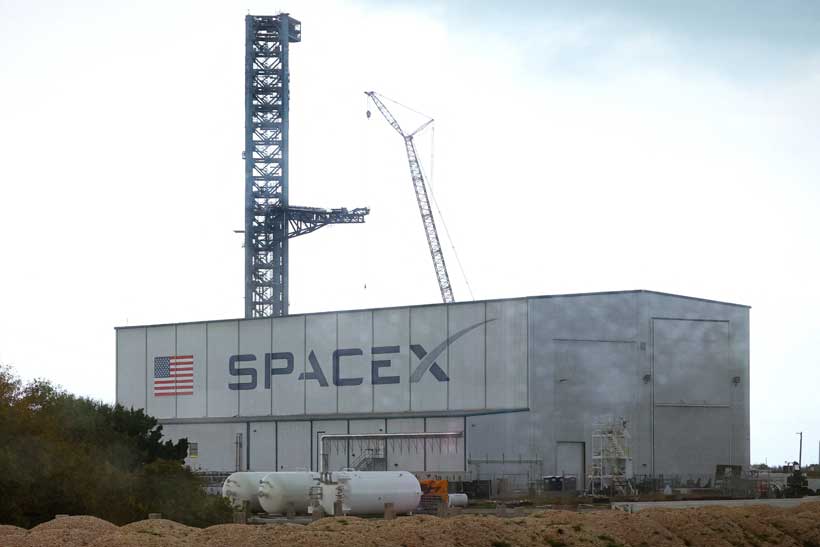
Elon Musk’s SpaceX aims for a $1.75 trillion valuation in its upcoming initial public offering (IPO). This valuation would place SpaceX as the sixth most-valuable publicly listed company in the U. S., surpassing established firms like Meta and Berkshire Hathaway. Despite the high valuation, investors show strong interest, with projected IPO proceeds potentially reaching $75 billion or more, a record amount. Many investors are turning to secondary markets, navigating complex ownership structures to own SpaceX shares.
Analyst Samuel Kerr notes that SpaceX lacks direct public competitors to benchmark its valuation, likely leading to a premium price due to its size and leadership in the space tech sector. The company’s valuation is supported by its profitable Starlink satellite network, which boasts over 10 million subscribers, and a launch business that reshapes access to space. The Falcon 9 rocket, since its recovery and payload delivery in 2015, set a new record in 2025 with 165 launches.
Investors and analysts also factor in SpaceX’s unproven ventures—Starship, xAI, and data-center satellites—trusting Musk’s history of building influential businesses. Daniel Hanson, a portfolio manager, highlighted SpaceX’s already proven capabilities in launching and providing internet services via Starlink.
SpaceX leads in deploying low-Earth orbit satellites, with Starlink accounting for 50% to 80% of its revenue. However, many of its future projects, like the Starship for lunar and Martian missions, remain in development. Analyst Franco Granda stressed the importance of following the timeline for these projects to support the proposed valuation.
SpaceX has an unprecedented launch frequency, surpassing all other space programs, which gives it a trading edge against competitors like Amazon. Mark Boggett of Seraphim Space called SpaceX unique in its operational model.
In 2025, SpaceX reported about $8 billion in profit with revenues estimated between $15 billion to $16 billion. This growth rate has seen revenues rising by as much as 100% in recent years. Unlike publicly listed companies, there are no consensus growth projections for SpaceX, but assuming revenues double in 2026, the valuation would imply high multiples—56 for price-to-revenue and 109 for price-to-EBITDA, which are among the highest in the sector.
With Tesla, another of Musk’s companies, valued at 12 times expected revenues and 79 times EBITDA, SpaceX’s projections appear daunting. Shay Boloor from Futurum Equities pointed out that Starlink’s rapidly growing subscriber base is crucial for justifying the ambitious valuation.
In February, in its merger with Musk’s AI startup xAI, SpaceX was valued at $1 trillion. Some investors view this as conservative, with the combined entity currently valued at $1.54 trillion in secondary markets. Greg Martin from Rainmaker Securities stated that SpaceX remains one of the top traded names due to its uniqueness in the private market, with demand frequently exceeding supply.
With information from Reuters
