


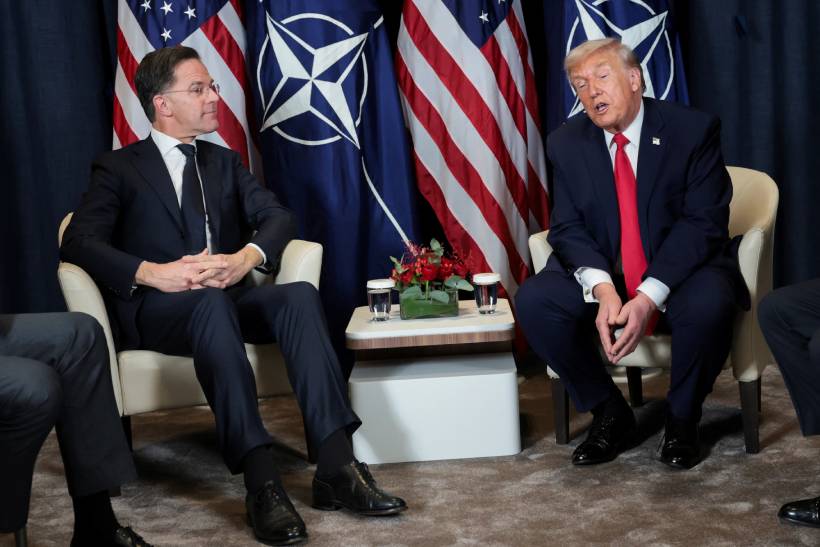
The North Atlantic Treaty Organization is facing one of the most serious crises in its history. Established after World War Two, it has long been the foundation of European security, built on the principle of collective defense.
But today, tensions are not just coming from external threats like Russia or the war in Ukraine. Instead, the strain is coming from within the alliance itself, driven by growing divisions between the United States and its European partners.
A Crisis Triggered Beyond Europe
The immediate trigger lies in the escalating conflict involving the United States, Israel, and Iran. President Donald Trump has expressed frustration that European allies have refused to send naval forces to secure the Strait of Hormuz.
Stay ahead of the geopolitical week.
MD Briefing delivers expert analysis across five global fronts — the Indo-Pacific, energy, geoeconomics, European security, and the Middle East — every Monday morning. Free.
What might have remained a policy disagreement has instead turned into a major political rupture. Trump has gone as far as suggesting the United States could reconsider its commitment to NATO, raising fears about the alliance’s stability.
Erosion of Trust at the Core
At the heart of NATO is the idea that members will defend each other if attacked. That assurance is now being questioned. European leaders are increasingly uncertain whether Washington would honor that commitment in a real crisis.
Even figures like Mark Rutte, who previously dismissed concerns about the alliance’s future, are now operating in a far more uncertain environment. Trust, once taken for granted, is beginning to erode.
Transatlantic Tensions Intensify
The current dispute reflects deeper and longer-standing tensions. The United States has repeatedly criticized European countries for not contributing enough to defense, while European leaders are frustrated by what they see as unpredictable and confrontational behavior from Washington.
Differences over policy toward Russia and its president Vladimir Putin have added to the strain. Diplomatic exchanges have become more tense, highlighting a widening gap in strategic priorities.
Europe Reconsiders Its Dependence
For decades, Europe has relied heavily on American military power. That assumption is now being reassessed. Policymakers are increasingly discussing the need for Europe to develop its own defense capabilities independent of the United States.
This does not mean NATO will collapse, but it does indicate a shift in thinking. The idea of a Europe less dependent on American support is no longer unthinkable.
A Defining Moment for the Alliance
Efforts are still underway to preserve unity. Diplomatic engagement continues, and both sides recognize the importance of cooperation. The United States still provides capabilities that are difficult for Europe to replace.
However, even if NATO survives this crisis, it may not emerge unchanged. The alliance could become more transactional, with weaker assumptions of automatic support.
This moment represents a turning point. NATO may endure, but the trust and structure that defined it for decades are now under serious pressure.
With information from Reuters.
