


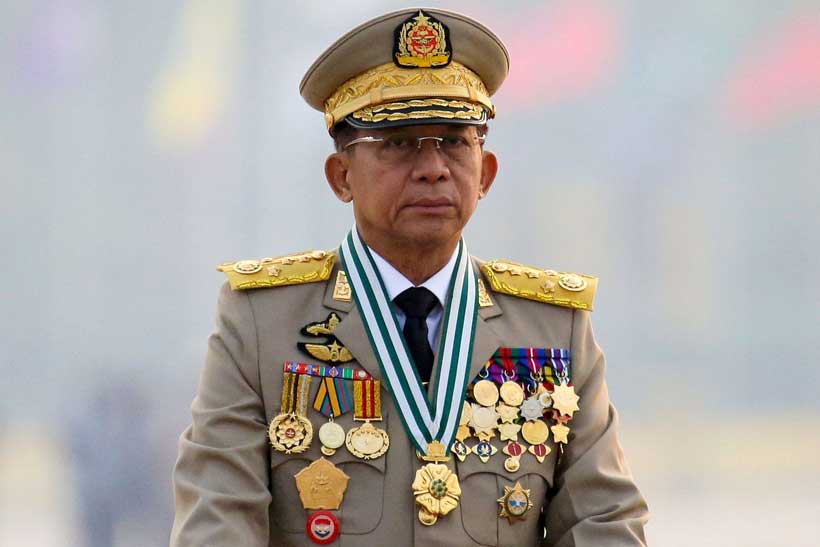
Min Aung Hlaing, the Myanmar general who led the 2021 coup that overthrew Aung San Suu Kyi’s government, has now been elected president in a parliamentary vote. While this gives the appearance of a civilian transition, analysts say it is a carefully engineered move to maintain military dominance while presenting a veneer of legitimacy.
A Controlled Election
The election was tightly managed by the military. With opposition parties sidelined and major challengers absent, the outcome was almost guaranteed. This strategy allows the junta to diffuse criticism and maintain cohesion while keeping real power firmly in its hands.
Elite Management and Loyalty
Stay ahead of the geopolitical week.
MD Briefing delivers expert analysis across five global fronts — the Indo-Pacific, energy, geoeconomics, European security, and the Middle East — every Monday morning. Free.
Min Aung Hlaing has strengthened his position through careful control of the military elite. Key allies have been rewarded with influential positions and access to military-linked businesses, while potential rivals have been marginalized or detained. This mix of reward and punishment ensures loyalty and reduces internal threats to his rule.
Military Mindset Driving Decisions
Min Aung Hlaing’s worldview has been shaped by decades in Myanmar’s military, particularly at the Defence Services Academy. The institution instills the belief that the military is the ultimate guardian of national unity, ethnic dominance, and the Buddhist religion. From his perspective, the 2021 coup was justified to “protect the state” rather than a simple grab for power.
Civil War and Ongoing Conflict
Myanmar remains in a state of civil war. Rebel groups control large swathes of territory, and tens of thousands have been killed or displaced. The transition to a presidential role does not indicate an end to the conflict; instead, it allows Min Aung Hlaing to consolidate authority while continuing military campaigns.
Maintaining Control Behind the Curtain
Even after stepping down as commander-in-chief, Min Aung Hlaing has appointed loyalists to lead the armed forces, ensuring continued influence over military operations. The presidency, under Myanmar’s constitution, gives him significant executive power without formally controlling the military, yet in practice, this separation is largely symbolic.
A Regime Adapted, Not Changed
Min Aung Hlaing’s rise to president shows how authoritarian systems can adapt. By blending military dominance with a civilian façade, he has created a flexible system that withstands internal dissent and international criticism. The surface appearance of governance has changed, but the underlying concentration of power remains firmly with him.
With information from Reuters.
