


The current war began on February 28 when the United States under Donald Trump, alongside Israel, launched strikes targeting Iranian military and strategic sites. These attacks were justified by Washington as necessary to prevent Iran from advancing toward nuclear weapons capability and expanding its regional influence.
Iran responded rapidly through direct missile attacks and through allied militias across the region. This transformed what could have been a limited strike into a prolonged and multi front conflict involving areas like Iraq, Lebanon, and Gulf states such as Saudi Arabia and the United Arab Emirates.
Over time, the war has shifted from targeted military operations to a broader regional confrontation with humanitarian, economic, and geopolitical consequences.
Trump’s Strategy and Military Escalation
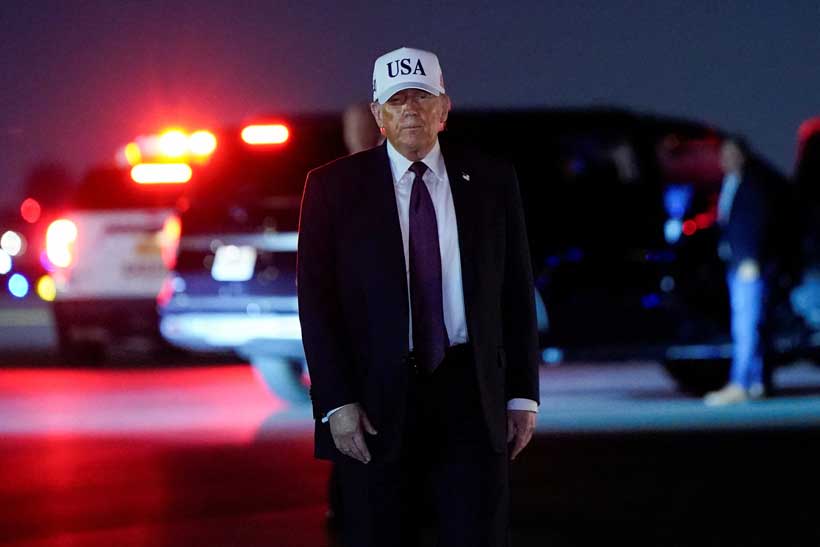
Trump’s recent speech marks a turning point. Instead of signaling de escalation, he emphasized intensifying strikes over the next two to three weeks. His language suggests a strategy of coercive pressure, where overwhelming force is used to compel Iran into submission.
Stay ahead of the geopolitical week.
MD Briefing delivers expert analysis across five global fronts — the Indo-Pacific, energy, geoeconomics, European security, and the Middle East — every Monday morning. Free.
He also hinted at expanding attacks to Iran’s energy infrastructure, which would significantly weaken Iran economically but risks escalating the war further.
This reflects a broader US approach rooted in deterrence and dominance. By demonstrating military superiority, Washington aims to reshape Iran’s behavior in the region. However, such strategies often produce the opposite effect by hardening resistance rather than forcing compliance.
Iran’s Response and Strategic Position
Iran’s reaction has been equally uncompromising. Officials have warned of more destructive retaliation and have framed the conflict as a matter of national sovereignty and resistance.
From Iran’s perspective, backing down would signal weakness not only domestically but also to its regional allies. Therefore, escalation becomes a rational choice within its strategic framework.
Iran has also leveraged asymmetric warfare tactics, including proxy groups and control over strategic chokepoints, to counterbalance US military superiority.
The Strait of Hormuz and Energy Politics
One of the most critical developments is Iran’s restriction of the Strait of Hormuz, a narrow passage through which nearly one fifth of global oil supply flows.
This move has immediate global consequences. Oil prices surged significantly, reflecting fears of supply shortages. Energy dependent economies in Europe and Asia are particularly vulnerable, while even the United States faces rising domestic fuel prices.
Control over the Strait gives Iran strategic leverage. It allows Tehran to shift the cost of war onto the global economy, thereby increasing pressure on international actors to push for a resolution.
Global Economic Fallout
The war is no longer just a regional security issue but a global economic threat. Markets have reacted negatively, with stocks falling and investors moving toward safer assets.
Institutions like the International Monetary Fund and World Bank have warned of uneven but serious global impacts. Developing countries that rely heavily on imported energy are likely to suffer the most.
Rising oil prices can trigger inflation, increase transportation and production costs, and slow down global growth. If prolonged, the conflict could push the world toward recessionary conditions
Diplomatic Efforts and Deadlock
Despite the severity of the situation, diplomatic efforts remain stalled. Iran has demanded guarantees of a ceasefire before engaging in talks, while the US insists on concessions first.
Countries such as Pakistan have attempted mediation, but there has been little progress. The lack of trust between the two sides is a major barrier.
Additionally, differing objectives make compromise difficult. The US seeks strategic rollback of Iran’s influence, while Iran seeks security guarantees and recognition of its regional role.
Regional and Security Implications
The longer the war continues, the higher the risk of regional spillover. Attacks have already extended into neighboring countries, raising fears of a wider Middle East war.
There is also a risk of disruption to global trade routes, particularly if maritime conflict intensifies. Any direct confrontation involving more states could significantly escalate into a broader international crisis.
Analytical Perspective
From a neorealist viewpoint, this conflict is a classic example of power politics and security competition. States act to maximize their security in an anarchic international system.
The United States is attempting to maintain its dominance and prevent the rise of a regional challenger, while Iran is resisting external pressure and asserting its strategic autonomy.
The security dilemma is clearly visible. Each side’s actions to increase its own security are perceived as threats by the other, leading to further escalation.
Trump’s reliance on military force may achieve short term tactical gains but risks long term instability. Without a diplomatic framework that addresses both power and security concerns, the conflict is unlikely to end soon.
Conclusion
The prospects for a quick resolution remain low. Military escalation, economic disruption, and diplomatic deadlock are reinforcing each other.
Unless both sides shift from coercion to compromise, the conflict is likely to continue, with serious consequences not just for the Middle East but for the global order.
With information from Reuterss.
