


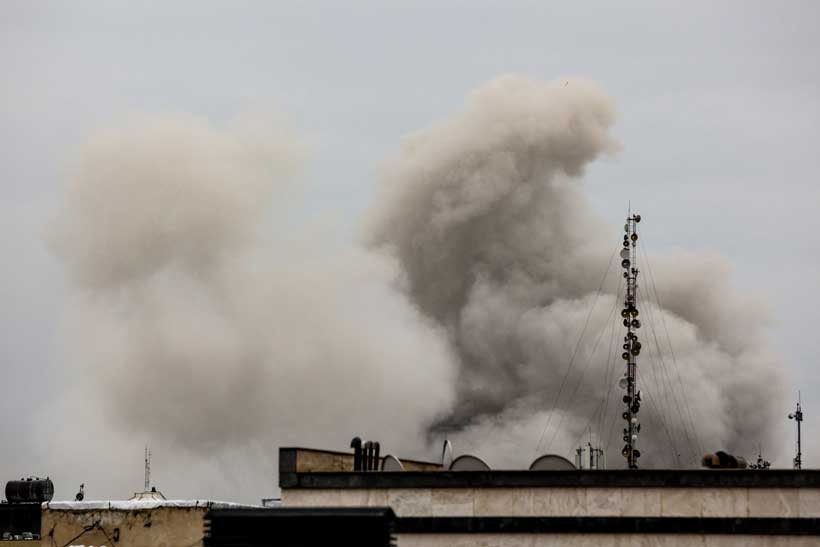
For nearly four weeks, the world has had a taste of what a war between competing powers looks like, and what the stakes are—and how high they can rise. It was only the Strait of Hormuz that was closed, yet the stakes for certain parts of the world increased significantly. Tehran had not yet closed the Bab al-Mandeb Strait through the Houthis in Yemen, as that could have escalated the situation much further.
For instance, the Houthis carried out over 190 attacks between November 2023 and October 2024, and more than 100 attacks last year, disrupting shipping in the Red Sea and the Gulf of Aden, which forced many of the largest shipping companies to reroute via the Cape of Good Hope in Africa. This detour adds 10–14 days to the journey from Asia to Europe compared to the previous route. Consequently, traffic through the Bab al-Mandeb Strait and the Suez Canal had declined dramatically, with daily transit volume dropping from 4 million metric tons in 2023 to 1.7 million metric tons in 2024.
Russia has been the “biggest winner” of the US-Israel unprovoked aggression against Iran. To stabilize the global energy supply crunch caused by the closure of the Strait of Hormuz, Donald Trump eased sanctions on Russia, and Russian oil sales to India have jumped by 50 percent. It is estimated that Moscow might earn up to $5 billion more by the end of March, marking its highest fuel-related revenues since 2022, when Russia invaded Ukraine.
This war has also shifted the United States’ focus away from Ukraine and made it more difficult for Europe to fund Kyiv amid rising energy prices. Donald Trump has long opposed continued support for Ukraine—perhaps because, in his calculus, budgets tighten quickly for Kyiv but somehow stay remarkably flexible when it comes to Israel.
Stay ahead of the geopolitical week.
MD Briefing delivers expert analysis across five global fronts — the Indo-Pacific, energy, geoeconomics, European security, and the Middle East — every Monday morning. Free.
China has also benefited strategically from this war. During the conflict, US assets—including missile defenses, bombers, and aircraft carriers—were shifted to the Middle East, reducing pressure in the Indo-Pacific.
Moreover, Beijing observed US tactics, logistics, and weapon performance in real time. This could assist China in its objective of regaining Taiwan, which Washington supports and which Beijing considers a major obstacle to its annexation plans. As a result, the possibility of future military confrontation between the United States and China over Taiwan cannot be ruled out.
Iran’s strategy of allowing—though not officially—tankers to pass through the Strait of Hormuz only if payments are made in Chinese yuan rather than the US dollar has also threatened the petrodollar system. This is something BRICS has been pursuing for quite some time, as part of its broader effort to move toward the de-dollarization of international trade.
Overall, the United States has been the biggest loser of the war, as its bases—meant to serve as guarantors of security for Gulf states—were themselves targeted, thereby becoming sources of insecurity and raising concerns about the sovereignty of the host nations.
This situation could provide Russia and China with leverage in the post-war Middle East, while Iran may emerge as a relative victor. It has become increasingly evident, at least in this context, that regional instability is largely shaped by the actions of Israel and its close ally, the United States.
Even if Gulf states do not consider granting direct basing rights to Moscow or Beijing, they may still move closer to them for security cooperation, procure Russian or Chinese weapons, and potentially use their good offices to reach an understanding with Iran in order to avoid serious security threats to their territory.
In addition, the war was a matter of prestige for the United States and Israel, but a matter of survival for Iran. The objective appeared clear: to turn Iran into the next Iraq or Afghanistan, install a regime aligned with US and Israeli interests, and gain control over its oil reserves and the Strait of Hormuz—none of which has been achieved.
For Iran, survival was the primary objective, and it has managed to secure that. However, it has not been able to avenge the loss of its frontline leadership, assassinated in attacks carried out by Israel or the United States.
In sum, the United States and Israel appear to have suffered a strategic setback, which may give the anti-American bloc a significant boost in confidence. If Tehran, despite decades of sanctions, can withstand sustained pressure from the world’s sole superpower, it raises questions about Washington’s ability to prevail in conflicts against stronger coalitions equipped with more advanced and, in many cases, nuclear capabilities. It would not be entirely inaccurate to argue that Israel’s objective of regime change in Iran has, instead, tarnished the once-formidable image of Washington.
In conclusion, this conflict has exposed the limits of the US and Israeli power while underscoring Iran’s resilience. What was intended as a campaign of domination and regime change has instead reinforced Tehran’s survival and boosted the confidence of anti-American actors. Strategically, the war has shifted regional dynamics, giving Russia, China, and Iran newfound leverage, and demonstrated that even the world’s most formidable militaries cannot guarantee easy victories.
