


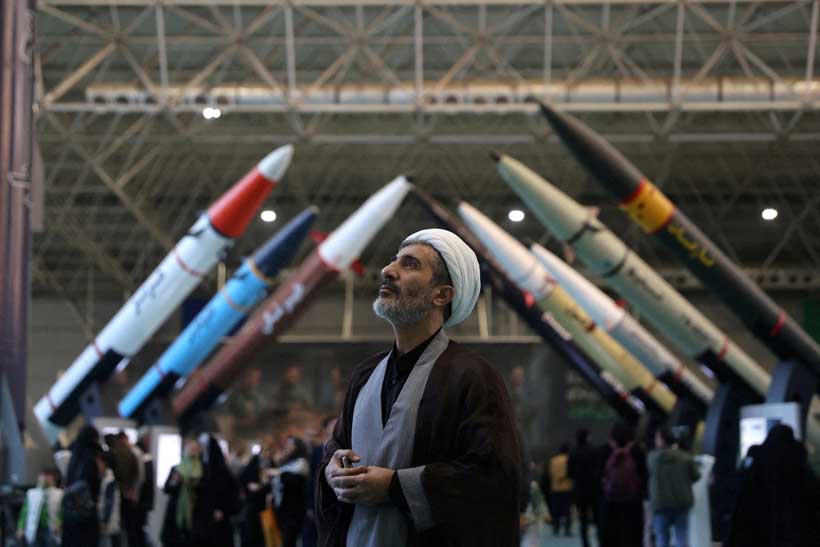
Tensions between Iran and Israel surged sharply after Tehran launched waves of missiles targeting Israeli cities, including Tel Aviv. The strikes came just a day after Donald Trump claimed progress in talks aimed at halting a widening regional war.
Washington and Israel had initiated military action on February 28, citing stalled negotiations over Iran’s nuclear program. Since then, the conflict has expanded beyond bilateral confrontation, pulling in Gulf infrastructure, Lebanese territory, and global energy routes.
Iran has denied any ongoing negotiations, dismissing US claims as misinformation while simultaneously signaling limited openness to de escalation through intermediaries such as Pakistan and regional actors.
Missile Power Replaces Diplomacy
Iran’s latest missile barrage signals a calculated rejection of US diplomatic framing. By striking Israel immediately after Trump’s remarks, Tehran appears to be asserting that military leverage, not negotiation optics, will define the conflict’s trajectory.
Stay ahead of the geopolitical week.
MD Briefing delivers expert analysis across five global fronts — the Indo-Pacific, energy, geoeconomics, European security, and the Middle East — every Monday morning. Free.
The symbolic mockery of Trump’s proposal to jointly control the Strait of Hormuz further underscores Iran’s refusal to accept external influence over a critical geopolitical chokepoint. The Strait remains central, carrying a significant share of global energy flows, and Iran’s effective closure has amplified its strategic bargaining power.
Power Shift Inside Iran
The appointment of Mohammad Baqer Zolqadr, a former commander of the Islamic Revolutionary Guard Corps, to a top security role reflects a consolidation of hardline influence within Iran’s decision making structure.
With the killing of Ali Larijani in an Israeli strike, institutional space for pragmatic negotiation has narrowed. The growing dominance of security elites suggests that Iran’s response will remain militarized and less susceptible to diplomatic compromise.
Regional Expansion of Conflict
Israel’s parallel escalation in Lebanon, particularly against Hezbollah, indicates a multi front war strategy aimed at weakening Iran’s regional network. Plans to extend military control up to the Litani River point to a long term territorial and security objective rather than a limited retaliatory campaign.
Simultaneously, Iran’s strikes on Gulf infrastructure and threats against US aligned states widen the conflict into an economic and energy crisis. The involvement of the United Arab Emirates in intercepting missiles highlights how quickly the war is regionalizing.
Markets Signal Fragility Not Stability
Initial optimism following Trump’s comments briefly stabilized global markets, but Iran’s denial of talks and continued escalation reversed those gains. Oil prices rebounded sharply, reflecting persistent uncertainty around supply disruptions.
The International Energy Agency has already characterized the situation as an unprecedented shock to global energy systems, with gas markets particularly vulnerable due to limited storage and rerouting flexibility.
Analysis
This phase of the conflict reveals a fundamental mismatch between US diplomatic signaling and realities on the ground. While Washington is attempting to project control and negotiation momentum, Iran is demonstrating that escalation remains its primary tool of influence.
Tehran’s strategy appears threefold. First, increase military pressure on Israel to raise the cost of continued strikes. Second, leverage the Strait of Hormuz to exert global economic pressure. Third, reshape internal power structures to ensure unified hardline decision making.
For Israel, expanding operations into Lebanon reflects a doctrine of preemptive containment of Iranian proxies, though it risks entrenching a prolonged regional war.
The possibility of talks in Islamabad suggests that backchannel diplomacy is not entirely absent. However, the absence of direct engagement and the simultaneous intensification of military activity indicate that negotiations, if they occur, will be shaped by battlefield dynamics rather than goodwill.
In essence, diplomacy is not driving the conflict. It is trailing it.
With information from Reuters.
