


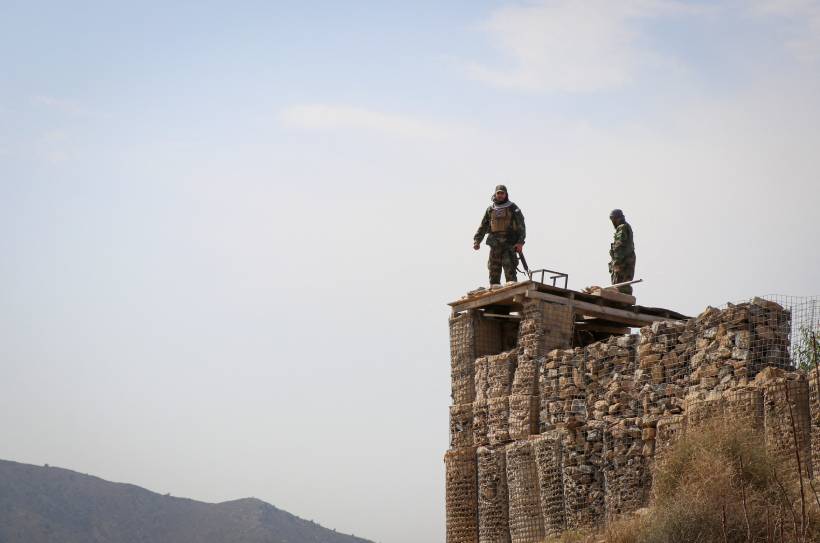
A fragile pause in fighting between Pakistan and Afghanistan during Eid al-Fitr has done little to ease fears that the conflict could reignite at any moment.
The weekslong violence, which has already killed hundreds, was only temporarily halted, with both sides warning they would respond immediately to any violations. A deadly blast in Kabul, which killed more than 400 people, underscored the intensity of the crisis.
Although overshadowed by the war involving Iran, the conflict carries serious risks for regional stability.
What Is Driving the Conflict
Stay ahead of the geopolitical week.
MD Briefing delivers expert analysis across five global fronts — the Indo-Pacific, energy, geoeconomics, European security, and the Middle East — every Monday morning. Free.
At its core, the latest escalation is rooted in long standing tensions along the Durand Line, a disputed 1,640 mile border that has never been fully accepted by Afghanistan.
The immediate trigger is Pakistan’s concern over cross border militant activity, particularly from Tehreek-e-Taliban Pakistan, which Islamabad says operates from safe havens inside Afghanistan.
After the Taliban returned to power in 2021, Pakistan expected greater cooperation on security. Instead, militant attacks inside Pakistan increased, while Kabul appeared either unwilling or unable to act decisively against these groups.
The situation has been further complicated by the growing use of drone warfare and allegations that Afghan based actors have used foreign supplied technology in attacks inside Pakistan.
A Conflict Years in the Making
Tensions between Pakistan and Afghanistan are deeply rooted in history.
Since Pakistan’s independence in 1947, disputes over the Durand Line have fueled mistrust. During the Cold War, the two countries found themselves aligned with rival powers, deepening suspicion.
The Soviet invasion of Afghanistan marked a turning point, with Pakistan becoming a key base for anti Soviet fighters. This period entrenched militant networks that continue to influence the region today.
After 2001, relations remained strained, particularly over accusations that Pakistan supported proxy groups in Afghanistan.
The Taliban’s return to power in 2021 did not resolve these tensions. Instead, it reshaped them, with ideological alignment failing to translate into practical cooperation on security.
Why This Matters Beyond the Border
The conflict is not just a bilateral issue. Its implications extend across South and Central Asia.
First, instability along the border creates space for militant groups to operate, raising the risk of cross border and even transnational attacks.
Second, it threatens regional trade and connectivity. Pakistan’s role as a corridor linking Central Asia to global markets depends on stability along its western frontier.
Third, the situation keeps Afghanistan central to global strategic concerns. Even after military withdrawal, the United States and other powers cannot fully disengage from a region where instability can quickly spill over.
Analysis
This conflict reflects a deeper structural problem rather than a temporary crisis.
At its heart is a mismatch of expectations. Pakistan seeks security cooperation and action against militants, while the Afghan Taliban prioritize sovereignty and resist external pressure.
Without a shared framework for managing the border, each incident risks triggering escalation.
What makes the current situation more dangerous is the changing nature of warfare. The use of drones and cross border strikes allows both sides to escalate while maintaining plausible deniability, increasing the risk of miscalculation.
There is also a regional layer. Any perception of external involvement, particularly from rival states, could widen the conflict further.
Ultimately, Afghanistan after 2021 is internally consolidated but externally contested. Its relationship with Pakistan will be central to whether the region moves toward stability or remains trapped in cycles of recurring conflict.
The temporary pause in fighting offers breathing space, but without addressing the underlying mistrust and security concerns, it is unlikely to hold.
With information from Reuters.
