


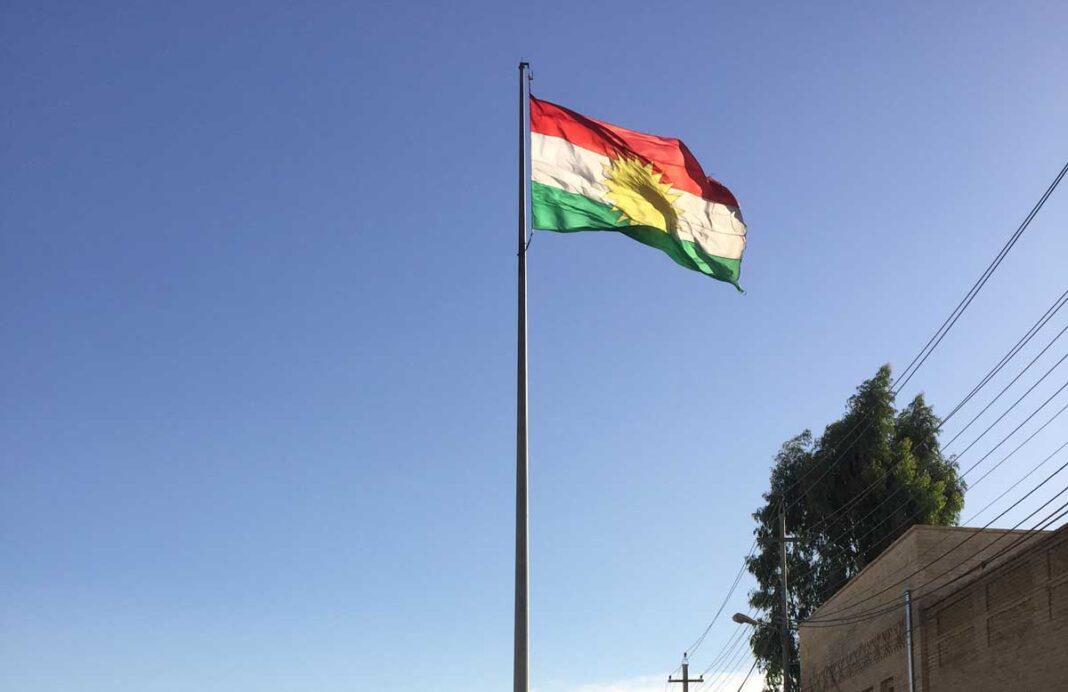
The Kurds, an ethnic group scattered across the mountains of Turkey, Iran, Iraq, Syria and Armenia, have been left stateless for more than a century, navigating shifting national borders and regional power struggles that have repeatedly undermined their aspirations for autonomy. Speaking a language related to Farsi and predominantly Sunni Muslim, Kurds have long faced political marginalization and, in many cases, violent repression, even as they remain strategically important actors across multiple conflict zones in the Middle East. Recent developments suggest the Iranian Kurds are now engaging in consultations with the United States about possible operations against Iranian security forces in western Iran, highlighting how broader regional conflicts, such as the U.S. and Israel military campaign against Tehran, intersect with longstanding ethnic grievances.
Historical Roots of Kurdish Nationalism
Kurdish nationalism emerged in the late 19th century as the Ottoman Empire weakened. The post-World War I Treaty of Sevres in 1920 initially promised Kurdish independence, only for that promise to be nullified three years later when Mustafa Kemal Ataturk consolidated control over Turkey. The subsequent Treaty of Lausanne (1924) divided Kurdish-inhabited regions among the newly drawn states of Turkey, Iraq, Syria, and Iran, leaving the Kurds without a sovereign homeland and laying the groundwork for future ethnic and political tensions.
Kurdish Autonomy and Conflict in Syria
In Syria, Kurds constitute roughly 10% of the population. Under former President Bashar al-Assad, they were systematically denied citizenship, forbidden from teaching or using their language, and politically repressed. During the Syrian civil war that began in 2011, Kurdish groups such as the PYD and its armed wing, the YPG, capitalized on the chaos to establish semi-autonomous self-rule in northern Syria. Allied with the United States in the fight against the Islamic State, they expanded territorial control, but the rise of Islamist leader Sharaa in 2024 has curtailed that autonomy. Sharaa’s government, which has moved to formally recognise Kurdish as a national language, has gradually pushed the Syrian Democratic Forces back into core Kurdish-majority areas. Despite this, the PYD remains ideologically aligned with the PKK, reflecting the transnational dimension of Kurdish political activism.
The Kurdish Question in Turkey
In Turkey, Kurds make up about 20% of the population, concentrated in the southeast. The PKK launched its insurgency in 1984, initially seeking a separate Kurdish state but later shifting toward demands for autonomy and cultural rights. The conflict has claimed more than 40,000 lives. President Tayyip Erdogan eased restrictions on Kurdish language and culture over the 2000s and 2010s, and a peace process initiated in early 2025, including appeals by imprisoned PKK leader Abdullah Ocalan for disarmament, has stalled. Meanwhile, Turkey continues to launch military operations against Kurdish strongholds in Iraq and northern Syria, viewing the YPG as an extension of the PKK. Analysts note that shifts in Syria could reignite momentum for peace talks within Turkey.
Stay ahead of the geopolitical week.
MD Briefing delivers expert analysis across five global fronts — the Indo-Pacific, energy, geoeconomics, European security, and the Middle East — every Monday morning. Free.
Iraqi Kurdistan: Autonomy and Tensions
In Iraq, Kurds comprise 15–20% of the population, mostly inhabiting northern provinces that form Iraqi Kurdistan. After decades of repression under Saddam Hussein, including chemical attacks and mass displacement in the late 1980s, Iraqi Kurds established de facto autonomy in the early 1990s. The 2003 U.S.-led invasion further consolidated Kurdish self-rule, with Baghdad recognising the Kurdistan Regional Government and sharing oil revenue according to a formal formula. The 2014 Islamic State offensive allowed Kurdish forces to seize additional territories, including Kirkuk, though a 2017 independence referendum provoked Baghdad’s military and economic response. While ties have improved, tensions over oil exports and territorial claims persist.
Iranian Kurds and Rising Tensions
In Iran, Kurds represent roughly 10% of the population and face political and social marginalization under the Islamic Republic, according to rights groups, though Tehran denies systematic discrimination. Iranian Kurdish separatist factions, primarily operating from bases in Iraqi Kurdistan, have historically sought autonomy or independence. The December 2025 protests in Iran and the resulting wave of unrest in early 2026 underscored the volatility of Kurdish regions, with thousands reportedly killed and armed groups attempting to cross from Iraq to support local uprisings. These dynamics are compounded by broader U.S.-Israel military pressure on Tehran, creating an environment in which Kurdish militias are considering direct action against Iranian security forces.
Analysis
The Kurdish struggle highlights the enduring consequences of borders drawn without regard for ethnic realities. Across multiple states, Kurds have leveraged moments of political upheaval to assert autonomy, yet their efforts have often been constrained by the competing interests of regional powers and international actors. The intersection of Kurdish aspirations with contemporary conflicts from Syria’s civil war to the Iran–U.S.–Israel confrontations demonstrates the persistent strategic significance of the Kurds in Middle Eastern geopolitics. Their position illustrates a broader pattern: stateless peoples can become both agents of resistance and pivotal levers for regional powers seeking influence, making the Kurdish question a central, yet unresolved, feature of modern Middle Eastern politics.
With information from Reuters.
