


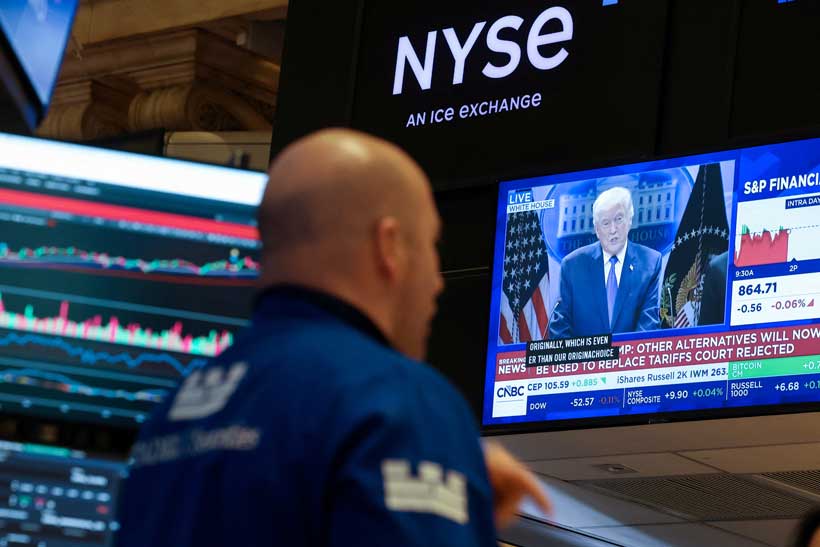
Just as policymakers and businesses began to believe the worst of America’s trade-policy whiplash was behind them, a fresh jolt from the Supreme Court of the United States has thrust tariff uncertainty back to center stage. In a 6–3 ruling, the court struck down core elements of President Donald Trump’s sweeping tariff program, finding that the emergency statute used to justify the levies did not grant such authority. Within hours, Trump signaled he would pursue alternative legal avenues, announcing a temporary global tariff that could reach 15% while the administration searches for a more durable workaround.
The result is a renewed fog over what goods will be taxed, at what rates, and for how long. For companies that had painstakingly recalibrated supply chains, pricing models, and sourcing strategies to adapt to higher import duties, the legal reversal and rapid policy pivot reopen strategic dilemmas many hoped were settled.
Businesses Confront a Moving Target
Executives now face a familiar but destabilizing question: how to plan when the rules may change overnight. Firms that believed they had reached a workable equilibrium under last year’s tariff regime must again weigh whether to adjust prices, accelerate inventory purchases during temporary windows of lower rates, or postpone hiring and capital expenditure until greater clarity emerges.
Gregory Daco of EY-Parthenon characterized the environment as one of persistent volatility by country and product category, arguing that the absence of a stable framework remains corrosive to business confidence. The practical implications are significant. Importers considering refund claims on voided tariffs must now evaluate whether new levies will offset any short-term relief. Manufacturers contemplating expansion must account for the possibility that sector-specific tariffs could reappear under a different statutory pathway.
Stay ahead of the geopolitical week.
MD Briefing delivers expert analysis across five global fronts — the Indo-Pacific, energy, geoeconomics, European security, and the Middle East — every Monday morning. Free.
The administration’s proposed interim tariff, potentially lasting five months, adds to the complexity. If applied broadly, it may blunt the immediate decline in effective tariff rates following the court’s decision. If selectively implemented or subject to bilateral carve-outs, it could generate a new patchwork of competitive advantages and distortions.
Policy Stability and the “Rules of the Road”
The theme of procedural certainty loomed large in public commentary following the ruling. Christine Lagarde, president of the European Central Bank, likened trade policy to traffic regulation: businesses need to know the rules before they commit capital. Her remarks underscore a broader global concern that unpredictable trade measures ripple far beyond U.S. borders, influencing exchange rates, supply networks and cross-border investment decisions.
Within the court’s majority, Justice Neil Gorsuch emphasized that legislative processes, though slower, produce policies that tend to endure. That durability, he argued, enables households and firms to plan their affairs with confidence. The implication is clear: even if Congress ultimately authorizes similar tariff levels, the pathway to enactment may shape how markets perceive their legitimacy and longevity.
A Bullish Backdrop Meets Renewed Risk
The return of trade uncertainty arrives at a moment of otherwise constructive economic sentiment. A recent survey by the National Association for Business Economics showed economists growing more confident that a recession is not imminent, while a strong majority expects artificial intelligence to lift productivity over the medium term. That optimism has been reinforced by resilient consumer spending and a labor market that, despite cooling at the margins, remains historically tight.
Yet renewed trade volatility could still temper growth at the margin. Bernard Yaros of Oxford Economics suggested that while the court’s ruling may temporarily lower the effective tariff rate, any short-lived relief could be offset by the drag of prolonged uncertainty. Even if the administration ultimately restores similar aggregate tariff levels through different statutes, the sectoral and geographic distribution of those levies may shift, forcing another round of costly business adjustments.
The Cost of Uncertainty
The economic impact of tariffs is often debated in terms of price levels and trade balances. Equally consequential, however, is the confidence channel. When firms cannot reliably forecast input costs or market access conditions, they tend to defer risk-taking. Hiring slows, investment projects stall, and precautionary cash buffers grow. Such behavior may not trigger an immediate downturn, but it can subtly erode momentum.
For now, the U.S. outlook remains broadly positive. But with trade policy once again in flux, the clarity that businesses crave has given way to ambiguity. Whether the administration can craft a legally durable and economically coherent tariff framework will determine whether this latest episode proves a brief detour or another prolonged stretch of economic haze.
With information from Reuters.
