


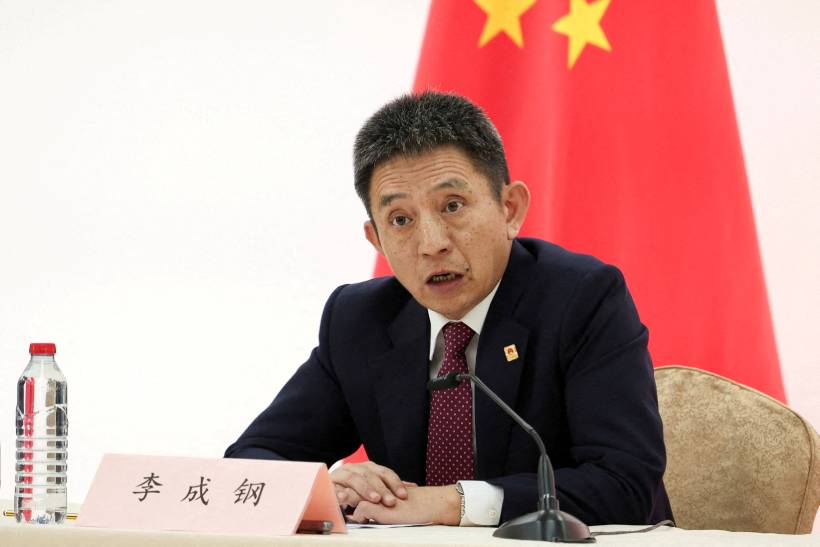
China’s chief trade negotiator Li Chenggang met Mexico’s Deputy Economy Minister Vidal Llerenas in Beijing on Monday, marking the first face-to-face talks since Mexico imposed steep new tariffs on Chinese imports. The move had drawn warnings from Beijing and signaled rising trade friction between the two countries.
According to China’s Commerce Ministry, the two sides held in-depth discussions on bilateral economic and trade relations, along with broader concerns affecting their commercial ties.
Mexico’s Tariff Decision
In December, Mexico announced tariff increases of up to 35% on goods from China and other countries that do not have free trade agreements with Mexico. The duties affect thousands of products, including automobiles, auto parts, textiles, clothing, plastics and steel.
Mexican President Claudia Sheinbaum stated that the measures are designed to strengthen domestic production and address trade imbalances. Analysts, however, widely interpreted the decision as an effort to ease pressure from U.S. President Donald Trump, who has imposed significant tariffs on Chinese goods and pushed for stricter trade controls.
Stay ahead of the geopolitical week.
MD Briefing delivers expert analysis across five global fronts — the Indo-Pacific, energy, geoeconomics, European security, and the Middle East — every Monday morning. Free.
China is Mexico’s second-largest trading partner after the United States, meaning the new tariffs are expected to disproportionately impact Chinese exporters.
Beijing’s Response
China’s Commerce Ministry had previously urged Mexico to “think twice” before implementing the tariffs and said it would take steps to protect its legitimate interests. So far, however, Beijing has not announced formal countermeasures.
The issue also intersects with broader investment concerns. Chinese automaker BYD had been considering building a factory in Mexico, but reports earlier this year suggested Beijing was delaying approval amid concerns about potential technology transfer to the United States.
USMCA Review Adds Pressure
The talks come as the United States, Mexico and Canada prepare to review their free trade agreement by July 1. U.S. trade officials have argued that the existing pact does not adequately address export and investment surges from non-market economies such as China.
Washington is expected to push for tighter rules on China-origin goods within the agreement, which could restrict Chinese firms’ ability to use Mexico as a manufacturing and export platform for the U.S. market.
Analysis
The China-Mexico discussions highlight the increasingly complex triangular dynamic between Beijing, Mexico City and Washington. Mexico finds itself in a delicate position: economically intertwined with China but strategically and structurally bound to the United States through the USMCA framework.
Mexico’s tariff move reflects both domestic industrial ambitions and geopolitical calculation. By raising duties on Chinese goods, Mexico signals alignment with U.S. concerns ahead of the trade pact review, potentially strengthening its bargaining position with Washington.
For China, the stakes extend beyond bilateral trade volumes. Mexico has become an attractive nearshoring destination for firms seeking access to the U.S. market. Any tightening of rules under the revised USMCA could limit China’s ability to circumvent U.S. tariffs indirectly.
Ultimately, the talks suggest both sides are attempting to manage tensions rather than escalate them. However, as U.S.-China rivalry deepens, Mexico’s room for balancing between the two powers may narrow, turning trade policy into a central arena of strategic competition.
With information from Reuters.
