


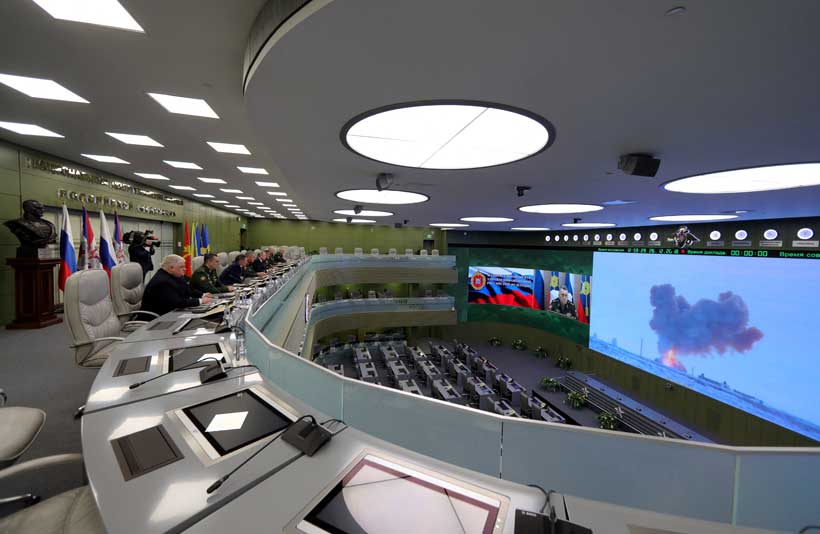
The New START treaty, signed in 2010 by U.S. President Barack Obama and Russian President Dmitry Medvedev, has been the cornerstone of nuclear arms control between the world’s two largest nuclear powers. It limits the number of deployed strategic nuclear warheads and delivery systems and provides mechanisms for verification. The treaty was originally set for a 10-year duration but was extended until February 5, 2026. Unless renewed or replaced, its expiry will mark the first time in decades that Russia and the United States have no formal nuclear arms control agreement in place.
Russia Responds to New START Expiry
Russia is preparing for a new reality in which there are no nuclear arms control limits after the New START treaty expires later this week, Deputy Foreign Minister Sergei Ryabkov said on Tuesday. Ryabkov, speaking in Beijing, told state news agency TASS that the absence of a U.S. response to Russian proposals to extend the treaty’s limits “is also an answer.” He emphasized that Russia is ready for the first time in decades for a scenario in which the world’s two largest nuclear powers operate without such limits.
Russia’s Position on Global Arms Control
Ryabkov also said Russia supports China’s position on arms control. Regarding Iran, he described U.S. proposals as essentially ultimatums, signaling Moscow’s concern about unilateral pressure. He further warned that if the U.S. deploys large missile defense systems in Greenland, Russia would need to take compensatory military measures.
What’s Next
The New START treaty officially expires on February 5 unless an extension or new deal is agreed. Analysts will be watching closely for any last-minute negotiations between Washington and Moscow. The coming days could see heightened nuclear diplomacy and strategic recalibrations, with potential implications for arms control regimes involving the U.S., Russia, and China, as well as regional security dynamics in Europe and the Middle East.
Stay ahead of the geopolitical week.
MD Briefing delivers expert analysis across five global fronts — the Indo-Pacific, energy, geoeconomics, European security, and the Middle East — every Monday morning. Free.
With information from Reuters.
