


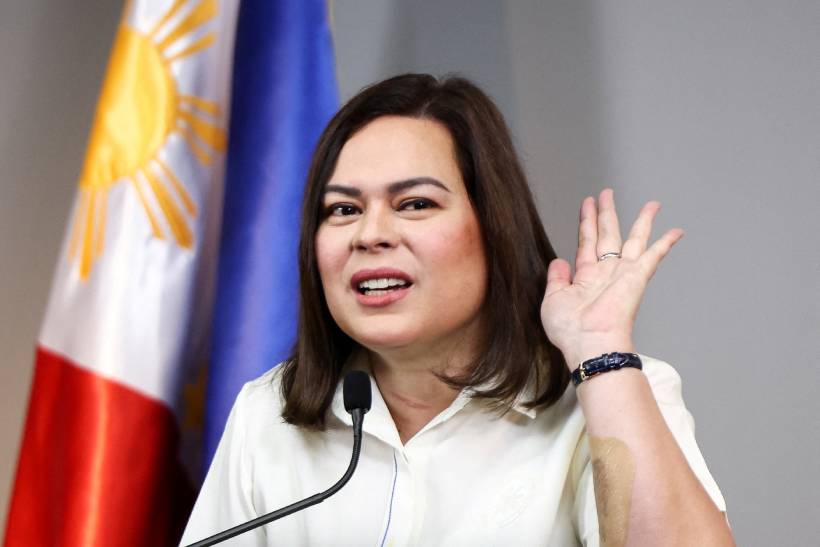
Philippine Vice President Sara Duterte was hit with a new round of impeachment complaints on Monday, reviving efforts to remove her from office after a similar attempt last year failed. The earlier complaints were struck down by the Supreme Court for violating constitutional safeguards. Duterte, the daughter of former President Rodrigo Duterte, remains one of the most prominent figures in Philippine politics and is widely viewed as a frontrunner in the 2028 presidential race. The latest complaints come amid persistent political tension at the top of government.
What the Complaints Allege
Two separate impeachment complaints were filed by civil society and leftist groups, largely echoing accusations made last year. The complainants accuse Duterte of betraying public trust through alleged misuse of public funds, bribery linked to government contracts and ignoring congressional inquiries. They also cite alleged threats by Duterte to kill President Ferdinand Marcos Jr., the first lady and the former House speaker, who is also the president’s cousin. Duterte has previously denied these allegations, and her lawyer said the renewed effort was expected and would be addressed through constitutional processes.
Political Context
The impeachment push unfolds against the backdrop of a bitter political rift between Duterte and President Marcos, once allies but now rivals ahead of the next presidential election. Marcos, who is barred by the constitution from seeking a second term, is expected to support a successor, with analysts widely viewing his camp as keen to block Duterte’s path to the presidency. Adding to the complexity, Marcos himself faces a separate impeachment complaint at the House of Representatives. His communications office said the new case against Duterte was for Congress to decide, stressing respect for due process and the rule of law.
Procedural Hurdles
This impeachment effort faces steeper obstacles than last year’s. The Supreme Court has since imposed additional procedural requirements on impeachment cases, making it harder for complaints to advance. At the same time, a midterm election last year increased the number of Duterte allies in the Senate, whose members act as jurors in impeachment trials. Senator Risa Hontiveros noted that these changes make the current bid more challenging than previous attempts.
Stay ahead of the geopolitical week.
MD Briefing delivers expert analysis across five global fronts — the Indo-Pacific, energy, geoeconomics, European security, and the Middle East — every Monday morning. Free.
Why It Matters
The renewed impeachment complaints highlight the intensity of political infighting in the Philippines as the country edges closer to the next presidential race. With Duterte positioned as a leading contender for 2028, legal and political battles surrounding her conduct in office could shape not only her own prospects but also the balance of power between rival political dynasties. The case also tests the strength of constitutional checks and the willingness of institutions to adjudicate disputes involving the country’s most powerful figures.
What’s Next
Congress will determine whether the complaints meet the stricter procedural thresholds required to move forward. If they do, the case could eventually reach the Senate for trial, though the presence of Duterte allies there complicates the path. For now, the impeachment effort adds another layer of uncertainty to an already volatile political landscape, with both Duterte and Marcos facing scrutiny as alliances shift ahead of 2028.
Analysis
Based on the Reuters reporting, the new impeachment complaints appear as much a political weapon as a legal challenge. While the allegations mirror those raised last year, the timing underscores the escalating struggle between two dominant political camps. The Supreme Court’s tighter rules and a more Duterte-friendly Senate suggest the effort may struggle to gain traction, reinforcing perceptions that impeachment has become a tool of political pressure rather than a likely route to removal. Even if the case stalls, it keeps Duterte under sustained scrutiny and feeds into a broader narrative of institutional conflict that is likely to intensify as the presidential race approaches.
With information from Reuters.
