


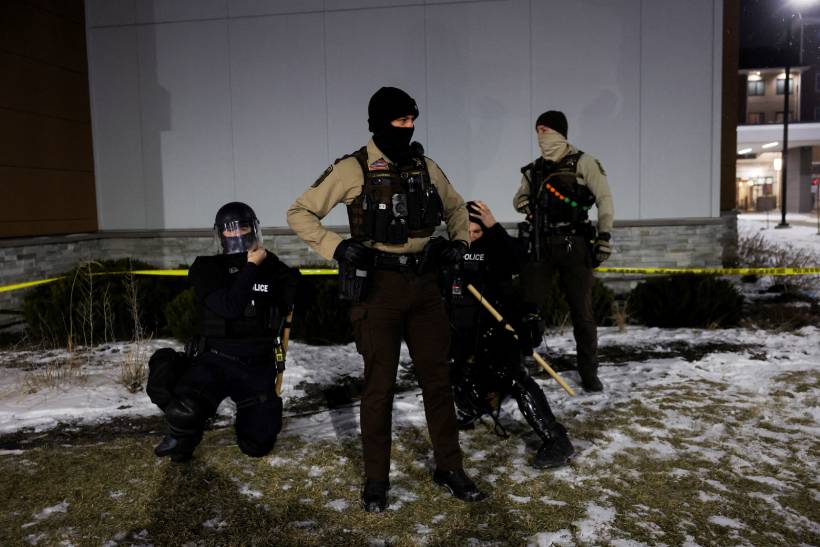
U.S. Immigration and Customs Enforcement (ICE) has issued new internal guidance directing officers in Minnesota to avoid engaging with “agitators” and to limit arrests to immigrants with criminal charges or convictions, according to documents reviewed by Reuters. The directive follows two fatal shootings of U.S. citizens during immigration enforcement operations in Minneapolis earlier this month, incidents that triggered protests, legal scrutiny, and demands for greater federal accountability.
The new guidance comes as President Donald Trump has called for efforts to “de-escalate” tensions in Minneapolis and neighboring St. Paul, even as his administration presses ahead with a nationwide immigration crackdown. The White House said discussions over enforcement in Minnesota were ongoing and that no operational guidance should be considered final until formally issued.
Operational changes after protests and backlash
The internal email instructs ICE officers not to communicate with or engage individuals described as agitators during enforcement actions, except to issue commands. The guidance states that engagement with protesters or bystanders serves little purpose beyond escalating already volatile situations.
To reinforce command-and-control procedures, officers are instructed to use megaphones and to verbally describe each step of the arrest process. The guidance, however, does not specify what actions by the public would trigger commands or outline procedures if commands are ignored, leaving key aspects of escalation undefined.
Stay ahead of the geopolitical week.
MD Briefing delivers expert analysis across five global fronts — the Indo-Pacific, energy, geoeconomics, European security, and the Middle East — every Monday morning. Free.
Shift toward targeted arrests
Under the updated guidance, ICE officers in Minnesota are instructed to pursue only immigrants with a criminal nexus, including those with pending criminal charges as well as convictions. The directive explicitly states that arrests should no longer be made in the absence of a documented criminal history.
This represents a shift away from the broad enforcement sweeps that have drawn backlash in Minneapolis and other U.S. cities in recent months. While the Trump administration previously lifted restrictions that limited arrests to serious offenders under former President Joe Biden, the Minnesota guidance reintroduces a narrower focus without formally restoring prior policy limits.
Enforcement methods and intelligence gathering
The guidance authorizes ICE officers to conduct license plate checks to identify potential targets. If a vehicle is registered to an immigrant with a criminal history, officers are instructed to make an arrest when possible.
The email also notes increased cooperation from state and local officials in Minnesota, which could allow ICE to more readily apprehend immigrants released on parole or probation. Such coordination has historically been a point of contention between federal authorities and local governments in major U.S. cities.
Border Patrol role scaled back
ICE will take primary responsibility for operations in Minnesota, with U.S. Border Patrol assigned to a support role, according to the guidance. This marks a reversal from previous operations led by Border Patrol units, which were often associated with aggressive street-level tactics.
The shift follows the demotion of Border Patrol commander-at-large Gregory Bovino, who oversaw confrontational enforcement efforts in Los Angeles, Chicago, and other cities. Bovino is expected to retire soon, Reuters has reported, further signaling a move away from highly visible enforcement strategies.
White House response
Asked to comment on the guidance, a White House official said there were ongoing discussions about how to most effectively conduct immigration operations in Minnesota. The official added that no guidance should be considered final until it is officially issued, stopping short of confirming the policy changes outlined in the internal email.
Analysis
The Minnesota guidance reflects a tactical adjustment by the Trump administration aimed at reducing political and operational risk rather than a substantive retreat from hardline immigration enforcement. The fatal shootings, combined with video evidence that contradicted initial official accounts, intensified scrutiny and raised the cost of highly confrontational tactics in urban settings.
By limiting arrests to immigrants with criminal charges or convictions, federal authorities can present the shift as a public safety measure while distancing themselves from the most controversial aspects of recent sweeps. The decision to scale back Border Patrol’s street presence and consolidate control under ICE suggests internal recognition that aggressive enforcement has undermined cooperation and inflamed resistance.
At the same time, the guidance leaves wide discretion to officers on the ground, particularly in defining who qualifies as an agitator and determining how commands are enforced. The emphasis on verbalization and visible procedure appears designed to manage optics and legal exposure rather than impose firm constraints on the use of force.
Whether this approach remains confined to Minnesota or signals a broader recalibration of enforcement strategy will depend on how effectively it contains unrest and withstands legal and political pressure in the weeks ahead.
With information from Reuters.
