


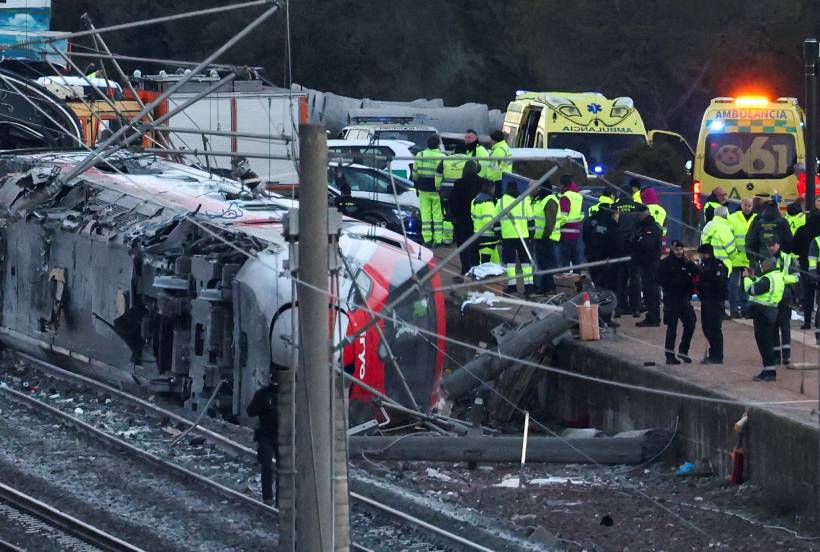
A catastrophic railway accident in southern Spain on Sunday night left at least 39 people dead and 122 injured, marking the country’s worst train disaster since 2013. The collision occurred at 7:45 p.m. (1845 GMT) near Adamuz in the province of Cordoba, roughly 360 km south of Madrid. Of the injured, 48 remain hospitalized, including 12 in intensive care.
Drone footage from the scene showed twisted carriages lying on their sides under floodlights, with some passengers escaping through smashed windows while others were carried away on stretchers. The two high-speed trains involved were operated by Iryo and Alvia, carrying around 400 passengers traveling mostly between Madrid and southern cities after the weekend.
Details of the Accident
The Iryo train was traveling from Malaga to Madrid, while the Alvia train was heading toward Huelva at about 200 km/h at the moment of impact, according to local reports. The collision caused massive derailment and structural damage to the carriages, complicating rescue efforts in the immediate aftermath.
Transport Minister Oscar Puente confirmed the rising death toll and expressed gratitude to rescue teams for working under extremely difficult conditions. The exact cause of the crash is still under investigation.
Stay ahead of the geopolitical week.
MD Briefing delivers expert analysis across five global fronts — the Indo-Pacific, energy, geoeconomics, European security, and the Middle East — every Monday morning. Free.
Impact on Rail Services
Over 200 trains connecting Madrid with Andalusian cities—including Cordoba, Seville, and Granada—were canceled on Monday. Spain’s Prime Minister Pedro Sanchez cleared his schedule to address the emergency, highlighting the national significance of the disaster.
Spain’s high-speed rail network, spanning 3,622 km, is the largest in Europe and the second-largest in the world after China. The network has faced criticism in recent years over delays caused by power outages and copper cable thefts, raising questions about infrastructure vulnerability.
Rail Operators
Iryo, a private operator launched in 2022, is a joint venture between Italy’s Ferrovie dello Stato, airline Air Nostrum, and Spanish investment fund Globalvia. Alvia is operated by the state-owned Renfe. Both companies serve major routes connecting Madrid to southern and northern Spain, providing alternatives on the high-speed rail network opened to private competition in 2020.
The collision underscores both the risks of high-speed rail travel and the operational challenges of Spain’s expanding and competitive railway system.
With information from Reuters.
