



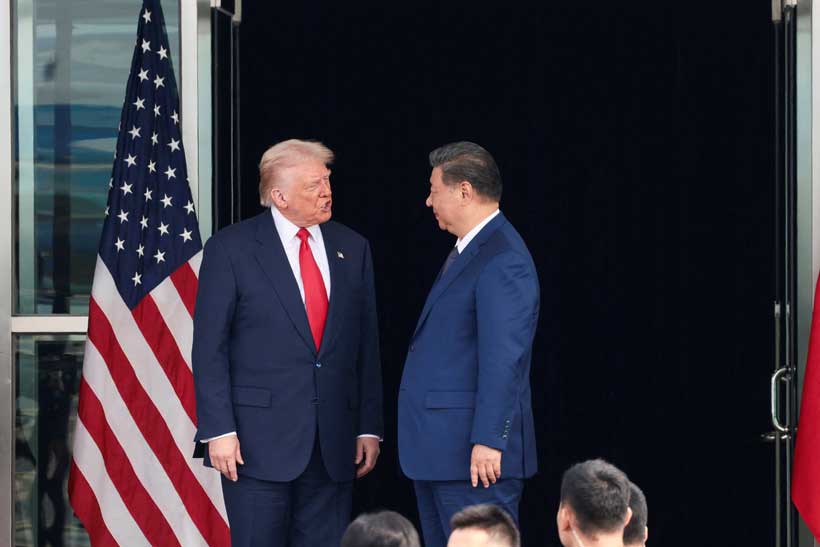
U.S.-China relations have been strained for years by disputes over trade tariffs, intellectual property, human rights, cybersecurity, and geopolitical flashpoints including Taiwan, Hong Kong, and Russia’s war in Ukraine. Despite this backdrop, President Donald Trump said he believes China could open its markets to American goods, again emphasizing his personal rapport with Chinese President Xi Jinping. Trump offered no specifics on how or when such an opening might occur.
His comments come as tensions risk escalating once more. A day earlier, Trump threatened to impose a 25% tariff on countries that trade with Iran, a move that could directly affect China, Tehran’s largest trading partner.
Why It Matters
Trump’s remarks reflect a dual-track U.S. approach toward China: optimism about trade engagement paired with aggressive pressure tactics. While market-opening rhetoric may reassure U.S. exporters, the Iran-related tariff threat signals renewed willingness to weaponize trade policy for geopolitical goals.
For Beijing, the comments revive concerns that U.S. trade policy remains unpredictable, potentially undermining any progress toward stabilizing economic ties. For global markets, the mix of conciliatory language and tariff threats adds uncertainty to supply chains and investment planning.
United States: Trump administration, U.S. exporters seeking access to Chinese markets.
China: President Xi Jinping and Chinese policymakers balancing economic openness against strategic autonomy.
Iran: Facing heightened pressure amid large-scale anti-government protests and renewed U.S. threats.
Global Trading Partners: Countries trading with Iran that could be caught in secondary U.S. tariffs.
Financial Markets: Sensitive to renewed trade conflict between the world’s two largest economies.
What’s Next
Attention will focus on whether Trump follows up with concrete policy steps or if the comments remain rhetorical. Any move toward tariffs linked to Iran would likely provoke a strong response from Beijing and further complicate U.S.-China relations.
Observers are also watching how Washington balances its response to unrest in Iran following last year’s Israel-Iran war and recent U.S. strikes on Iranian nuclear sites without triggering a broader economic confrontation with China.
With information from Reuters.
