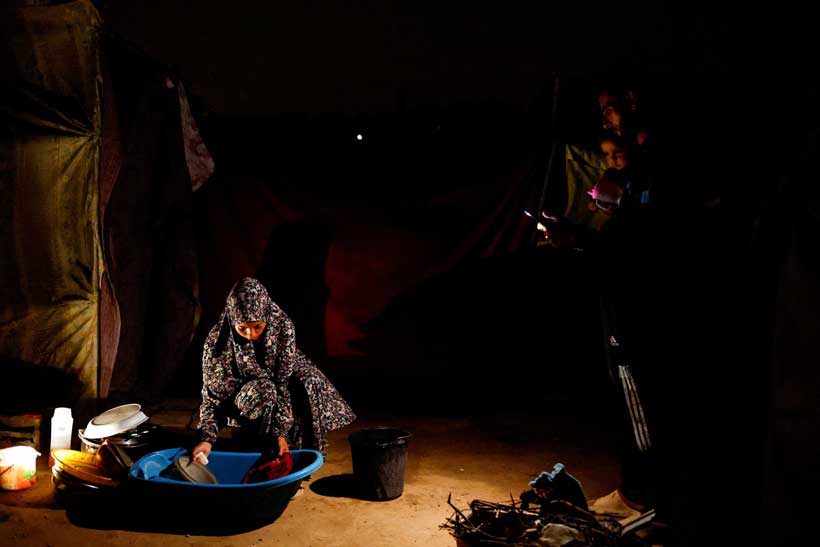
Hanan al-Joujou, a 31-year-old Palestinian mother, struggles to feed her three children in the dark due to a lack of electricity in Gaza even after a ceasefire between Israel and Hamas. Without electricity for over two years, her family relies on a flashlight for light, and sometimes they go to bed without dinner if they cannot charge it. Initially, they used candles but stopped due to fire hazards in their tent. They also tried a simple LED light, which broke, and they cannot afford to replace it. Before the war, Gaza received electricity from Israel and its own power plant, but the situation has worsened since the conflict escalated on October 7, 2023. Following a Hamas attack on Israel, the Israeli government imposed a total siege on Gaza, cutting off electricity when the local power station ran out of fuel.
Now displaced in a camp in Nuseirat, Hanan’s family activities end after sunset, and they occasionally use a flashlight for homework. Hanan’s husband, Ahmed, mentions their financial struggles, as public charging points run on solar power or generators have become scarce due to war damages. Some families like Mohammed al-Hor’s have set up charging businesses, despite suffering losses from bombings.
Israeli officials have made it clear that electricity will not be restored easily. Massive repairs are necessary, as over 80% of Gaza’s electrical network has been destroyed, with initial losses reaching $728 million. Currently, no electricity is reaching Gaza, which has significant needs. Israel continues to facilitate some humanitarian aid, including fuel, in accordance with the ceasefire, while efforts are made to provide additional drinking water through desalination projects.
With information from Reuters