


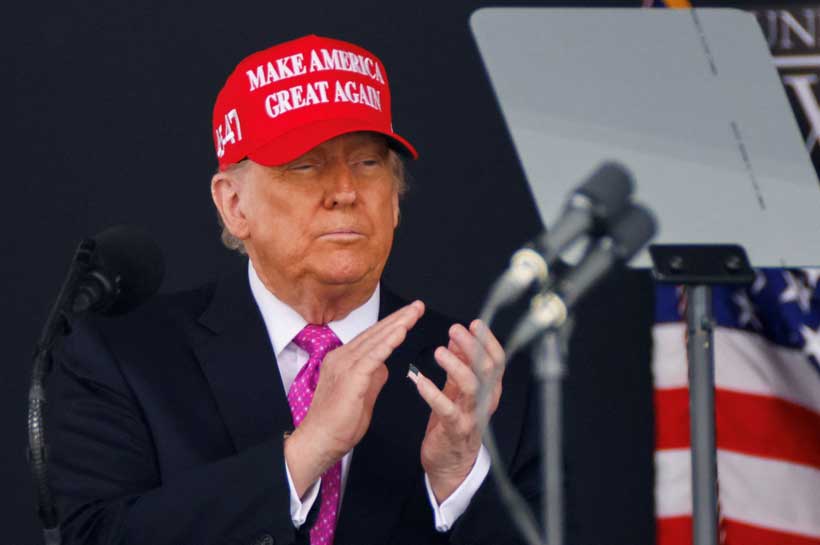
For many years, Republicans criticized what they viewed as a liberal media influencing American politics. However, under President Donald Trump’s second term, this narrative is changing. A new group of right-wing influencers, wealthy individuals, and social media platforms are increasingly promoting Trump’s themes, shifting the information landscape to the right. These conservative figures, often collaborating with Trump officials, play a key role in targeting those who oppose the administration. They help undermine Trump’s rivals and amplify his claims, creating a blend of governmental messaging and media content.
This analysis is based on an extensive review of over 300 hours of podcasts, television shows, thousands of social media posts, interviews with 48 individuals, and court documents. As Trump sends National Guard troops into cities, influencers tied to figures like Homeland Security Secretary Kristi Noem have circulated messages echoing the administration’s view of chaos in Democratic-led cities, despite data showing a decrease in crime rates. A spokesperson for Noem did not respond to concerns about these conflicting statistics.
Inside the White House, Trump has invited right-wing media figures to participate in high-level meetings with his administration, often criticizing conventional news outlets during these appearances. There are notable instances highlighting this close relationship, such as the dismissal of national security officials after influencer-led campaigns and a surge of racist threats against a Black Democratic lawmaker following a false claim spread by a right-wing figure.
Experts note that instead of simply being influencers, these individuals may be acting as propagandists. Right-wing media representatives argue they are allies of Trump and share his belief in rescuing the country, claiming traditional media treats him unfairly. They assert that the mainstream media frequently distorts facts to push an agenda, and they find support from the Trump administration’s outreach via new media channels that often receive more engagement than traditional outlets.
Loyal conservative media figures provide Trump with a strategic advantage during political challenges. By shaping narratives and sometimes echoing the administration’s falsehoods, these media personalities help mitigate negative coverage and strengthen Trump’s supporter base significantly. Following recent elections, right-wing influencers echoed Trump’s narrative, attributing Republican losses to candidate issues and external circumstances while avoiding direct critique of Trump.
The media landscape is undergoing a broader shift as pro-Trump media executives reconfigure their strategies. Meta’s Mark Zuckerberg has relaxed content moderation policies, allowing more pro-Trump voices back on Facebook and Instagram. Similarly, Elon Musk has restructured X (formerly Twitter) to enhance conservative voices. Jeff Bezos has also altered the editorial direction of The Washington Post, which he characterized as a move towards personal liberties.
Trump has suggested that media moguls like Rupert Murdoch and Larry Ellison might invest in TikTok, a hugely popular app. In a recent analysis, it has been found that loyalty among right-wing influencers to Trump is strong, as many refrained from criticizing him during sensitive developments, like the Epstein scandal, fearing backlash from the White House. Overall, conservative media figures appear closely aligned with Trump’s interests, often prioritizing access to the administration over independent reporting.
Direct Line to ‘Halls of Power’
Republican leaders have historically criticized the media as liberal, dating back to Barry Goldwater’s candidacy in 1964. Prominent figures like Newt Gingrich in the 1990s and Donald Trump recently have amplified this narrative, labeling mainstream media as “fake news” and part of a “liberal elite.” The rise of conservative media personalities, such as Ben Shapiro and Tucker Carlson, has contributed to a distinct conservative media landscape that contrasts sharply with traditional media. Whitney Phillips, an expert on information manipulation, argues that conservative rhetoric oversimplifies media bias; today, right-wing figures hold considerable influence over both the government and media platforms, suggesting a stronger connection between conservative media and political power.
In a recent event following the assassination of right-wing activist Charlie Kirk, Vice President JD Vance co-hosted a podcast from the White House, emphasizing aggressive strategies against left-wing organizations deemed violent. Donald Trump has also utilized legal actions against major networks like ABC and CBS, securing settlements after alleging defamation and misrepresentation in coverage. Additionally, platforms such as YouTube and Meta settled with Trump over access rights after initially suspending him in connection with the January 6 Capitol riot.
Despite Trump’s legal maneuvers against major publications like The Wall Street Journal and The New York Times—labeling their reporting as sabotage—these entities have characterized his lawsuits as meritless and obstructive to independent journalism. Meanwhile, in a move impacting press freedom, Defense Secretary Pete Hegseth introduced a policy requiring journalists at the Pentagon to sign agreements that could revoke credentials for seeking classified information.
This policy faced pushback from various news organizations, including conservative ones, yet several right-wing outlets embraced the guidelines as advantageous. A Pentagon spokesperson indicated this marks a new phase in relationships between the military and selective news organizations, claiming new media are offering direct access to truthful information in contrast to mainstream narratives.
Stay ahead of the geopolitical week.
MD Briefing delivers expert analysis across five global fronts — the Indo-Pacific, energy, geoeconomics, European security, and the Middle East — every Monday morning. Free.
Threats to Black Lawmaker
Connecticut lawmaker Corey Paris’s warning about ICE raids has led to harassment and threats against him, exacerbated by right-wing media figures. After his post on August 15, the account Libs of TikTok mischaracterized his warning, accusing him of aiding undocumented immigrants. This post was amplified by ICE’s official account, leading to vitriolic and racially charged rhetoric against Paris on platforms like Gateway Pundit.
He reported receiving direct threats, including a racial slur-laden phone call and a visit from an individual shouting abuse outside his home. Connecticut State Police are investigating the threats, while Paris expressed concern about the dangers of misinformation escalating unchecked. The responses from Libs of TikTok, ICE, and other parties have not been forthcoming, and the Justice Department has indicated a willingness to investigate any obstruction of federal immigration laws.
‘Maga Hat Stays On’
A Reuters analysis reveals unwavering loyalty to Trump among 22 right-wing influencers and conservative media figures, contrasting sharply with the contentious relationship between political leaders and the press since Nixon’s era. The analysis points to the Epstein case, where Trump influencers expressed interest in exposing misconduct by powerful figures, linking their distrust in institutions to Trump’s anti-establishment narrative. Despite initial disappointment over the Justice Department’s conclusion that found no evidence to support Epstein conspiracy theories, most influencers redirected blame towards Attorney General Pam Bondi rather than Trump himself.
Notably, figures like Jack Posobiec maintained their allegiance to Trump while demanding transparency regarding Epstein. Laura Loomer, another key influencer, claimed she actively shapes news narratives and criticized those she views as mere self-serving influencers. This intricate web of influence highlights both adherence to and tension within Trump’s support network in light of ongoing controversies.
Lucrative Deals for Influencers on the Right
The right-wing media ecosystem has rapidly expanded, fueled by changing audience habits and declining trust in traditional news sources. Following the presidential inauguration, social media surpassed television as the primary news source for many Americans, with a Pew Research Center survey revealing that only about half of adults under 50 trust national news media. Fox News leads in cable viewership, significantly outpacing MSNBC.
In podcasts, pro-Trump programs dominate the political genre. Influencers in this arena often earn substantial incomes through various avenues, including corporate sponsorships and political campaigns, with right-leaning influencers typically commanding higher fees than their left-wing counterparts. High-profile influencers like Chaya Raichik and Rogan O’Handley have received large payments for their endorsements.
Additionally, some right-wing commentators were reportedly part of a Russian influence campaign aimed at manipulating American voters, unaware of their participation. In contrast, left-leaning influencers have only recently begun to gain traction, aided by an increased focus on outreach by Democratic campaigns and adopting strategies from the right. However, left-wing figures face challenges, such as a lack of a unifying figure comparable to Trump, which hampers their effectiveness in the current media landscape.
With information from Reuters
