


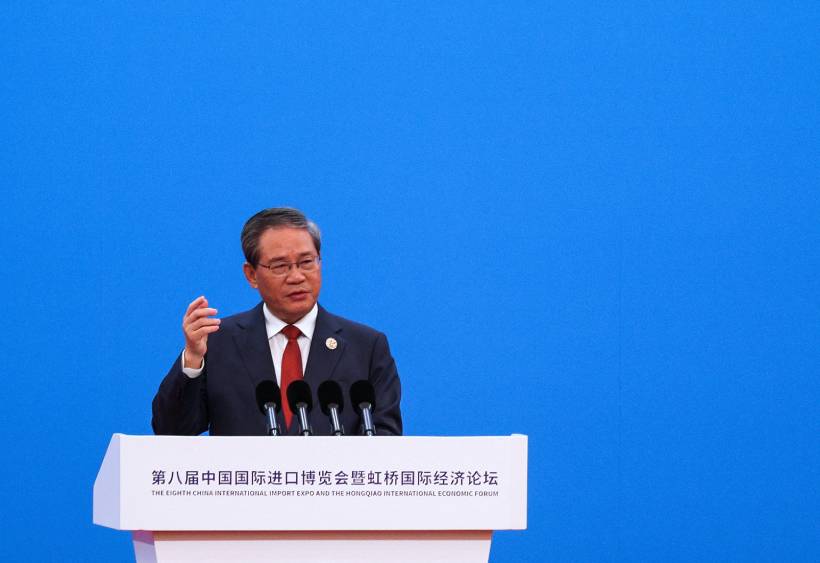
At the opening of the China International Import Expo (CIIE) in Shanghai, Premier Li Qiang announced that China’s economy is projected to exceed 170 trillion yuan, or $23.87 trillion, by 2030. The premier framed this growth as a major opportunity for global markets, even as trade restrictions rise worldwide.
In his speech, Li condemned the use of tariffs, saying they undermine international trade rules and disrupt the normal functioning of global businesses. Though he did not directly name the United States, his remarks came amid heightened U.S.-China trade tensions and ongoing negotiations following a fragile truce reached last week.
Why It Matters
Li’s comments reflect Beijing’s intent to present itself as a champion of open trade and globalization at a time when protectionist measures are reshaping the global economy. The projection underscores China’s confidence in maintaining steady growth despite domestic economic challenges and external pressures.
It also serves as a reminder that China remains central to global trade and manufacturing networks, even as it faces criticism for its massive trade surpluses and limited import expansion.
Stay ahead of the geopolitical week.
MD Briefing delivers expert analysis across five global fronts — the Indo-Pacific, energy, geoeconomics, European security, and the Middle East — every Monday morning. Free.
Within China, officials are promoting the message that the country remains open for business and committed to buying more high-quality foreign goods. U.S. companies continue to maintain the largest exhibition presence at the CIIE for the seventh consecutive year, signaling enduring commercial interest despite political friction.
Economists, however, remain cautious, noting that China’s exports continue to outpace imports a trend that has widened its trade surplus and drawn complaints from major trading partners. Analysts also warn that the recent U.S.-China trade truce may prove temporary, as deeper structural disputes over technology, market access, and subsidies remain unresolved.
What’s Next
China’s upcoming five-year plan will formalize its new growth targets, setting an average annual GDP increase of around 4.17%. As Beijing seeks to project stability and openness, it faces the dual challenge of stimulating domestic demand while countering global skepticism over its trade practices. The CIIE will continue to serve as a platform for China to showcase its role in the global economy, though questions persist over whether such events can translate into genuine market access and balanced trade relationships.
With information from Reuters.
