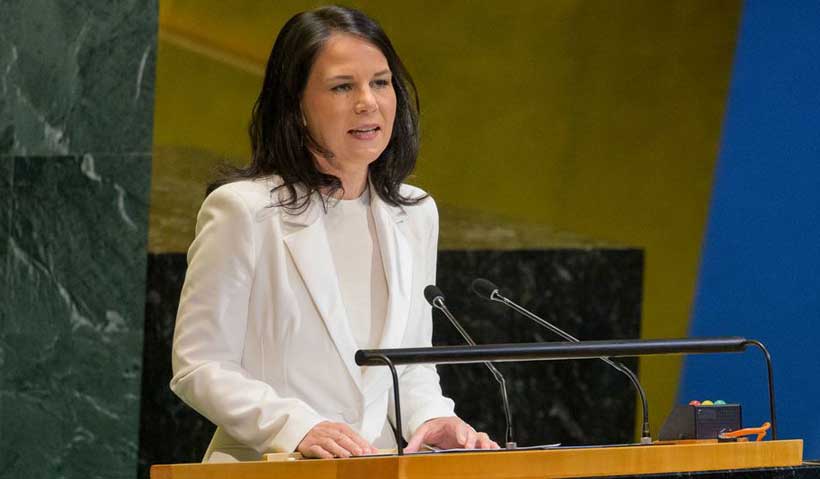
The United Nations stands at a “make-or-break crossroads.” The warning from the 80th UN General Assembly President Annalena Baerbock still echoes. She stressed that the UN must constantly adapt and reform if it is to “stand strong” for the next 80 years. Her remarks, delivered as the UN marks its 80th anniversary, point directly to the deep crisis facing the multilateral system: reform is no longer an option but a matter of survival. As a new geopolitical landscape emerges, countries of the Global South are demanding, with unprecedented volume, to break the old order. This reform will determine whether the UN can truly become an international organization representing all humanity.
Achievements—and an Aging System
Eighty years ago, the United Nations was born from the ruins of World War II, carrying humanity’s collective hope to be free from the scourge of war and to pursue common development. Over eight decades it has made remarkable achievements in maintaining international peace and security and advancing the development agenda.
Yet today the world faces profound changes unseen in a century, with four major deficits worsening: the peace deficit, the development deficit, the security deficit, and the governance deficit. Geopolitical conflicts are flaring again—Ukraine, Gaza, Sudan, Haiti and other crises urgently require peaceful responses. Development inequalities continue to widen: climate change exerts far-reaching effects, two-thirds of the Sustainable Development Goals are falling behind schedule, and developed countries have been slow to honor commitments on climate finance. Emerging domains such as AI, cyber security, and outer space demand far stronger cooperative governance, but the current system remains sluggish and fragmented.
Stay ahead of the geopolitical week.
MD Briefing delivers expert analysis across five global fronts — the Indo-Pacific, energy, geoeconomics, European security, and the Middle East — every Monday morning. Free.
The UN itself is mired in a severe crisis of trust and effectiveness. The Security Council is often paralyzed by major-power divisions; unilateralism and “pseudo-multilateralism” are on the rise; and the UN’s vast institutional machinery suffers from bureaucracy and inefficiency. President Baerbock has admitted that this is a life-and-death moment for the UN and for multilateralism as a whole.
The Core Question: Fairness and Representation
President Baerbock emphasized the need for “team spirit” to support UN reform and to uphold the founding spirit of 1945. The fundamental purpose of reform is to enhance the UN’s governance capacity, better adapt to changing circumstances, and push global governance toward greater fairness and justice.
Today’s global governance system suffers from a striking lack of representation and outdated rules. The Global South—broadly referring to developing countries—has become an indispensable force on the world’s political and economic stage. Yet within the UN system, especially the Security Council and international financial institutions, its voice does not match the population it represents or its growing economic weight.
The core of reform lies in building a fairer international order. China supports giving developing countries a greater voice in UN reform and stresses that reform should reinvigorate the UN’s authority and vitality while upholding the purposes and principles of the UN Charter. What the Global South seeks is not a mere increase in numbers but the establishment of a more just, democratic, transparent, and efficient international order.
China’s Role: Bridge, Contributor, and Driver of Reform
China, as a steadfast supporter of the UN, is playing the role of a bridge. China met the UN Millennium Development Goals ahead of schedule, lifting nearly 800 million people out of poverty and contributing more than 75 percent of global poverty reduction. Through the Belt and Road Initiative (BRI) and the Global Development Initiative, China shares development experience with the broader developing world. As the Security Council permanent member contributing the largest number of peacekeepers, China has sent more than 50,000 personnel on peacekeeping missions.
China’s Global Governance Initiative, recently put forward by Chinese President Xi Jinping, embodies the principle of extensive consultation, joint contribution, and shared benefits, emphasizing that reform must reflect fairness and justice and increase the representation and voice of developing countries. These efforts provide significant support for Global South participation in reform. China’s Permanent Representative to the UN, Fu Cong, has noted that the Global Governance Initiative “demonstrates China’s firm support for the UN’s central role in international affairs.” China stands ready to strengthen coordination and communication with the UN and all parties to implement this initiative and help build a more just and reasonable global governance system.
The Road Ahead: From Commitment to Action
However, turning promises into action remains an arduous journey. The international community must practice genuine multilateralism and firmly oppose “selective multilateralism” and hegemonism. It is urgent to close the massive gap in global development resources: developed countries should fulfill their commitments on climate finance and other areas without delay. Secretary-General António Guterres’s efforts to “cut costs, simplify procedures, and enhance transparency and accountability” must be supported. Most crucially, developing countries must be ensured equal participation in decision-making and effective benefit-sharing to advance the democratization of international relations.
Eighty years marks a full cycle, and once again the United Nations stands at a historic crossroads. Only by staying true to the original aspiration of the UN Charter and embracing the vision of a community with a shared future for humankind—allowing the countries of the Global South to transform from passive rule-takers into active rule-makers—can the UN effectively address global challenges and truly “stand firm” for the next eighty years and beyond. This is not merely an institutional overhaul; it is a global endeavor for fairness and justice that will determine the trajectory of our planet’s future.