


Background
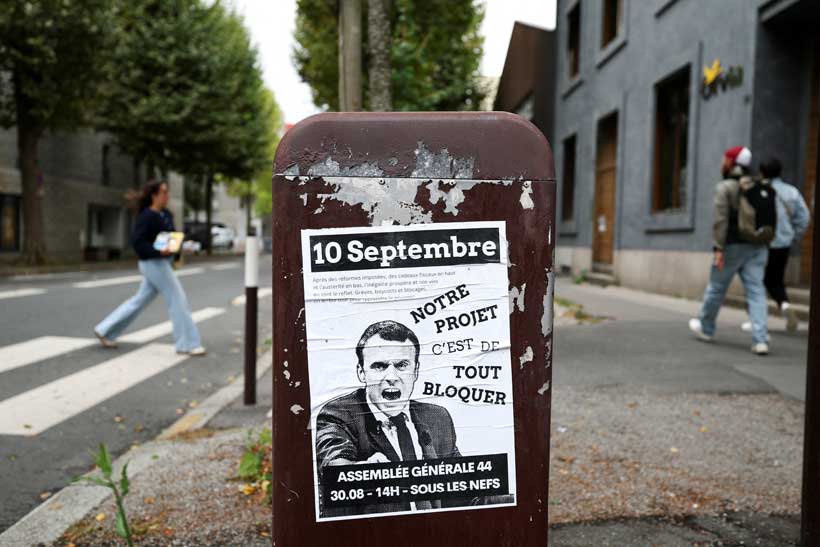
France’s Fifth Republic, created in 1958, was designed to ensure stability by giving the president strong executive powers and a reliable parliamentary majority. Yet President Emmanuel Macron, who reshaped the political landscape with his rise in 2017, now faces one of the gravest political crises of the Fifth Republic. After his failed 2024 snap election, parliament is fragmented, leaving him unable to build durable coalitions and increasingly vulnerable to both far-left and far-right opposition.
What Happened?
- Prime Minister François Bayrou announced his resignation on Tuesday, September 9th, 2025, one day after parliament voted down his budget deficit plan.
- Bayrou’s departure follows the downfall of Michel Barnier, just nine months previous, also due to fiscal policy.
- Without a parliamentary majority, Macron has struggled to pass any significant reforms. No-Confidence votes have piled in the government.
- Potential replacements for Bayrou at this time are unknown, but Defence Minister Sèbastien Lecornu is rumored to be the front runner.
Why It Matters:
Stay ahead of the geopolitical week.
MD Briefing delivers expert analysis across five global fronts — the Indo-Pacific, energy, geoeconomics, European security, and the Middle East — every Monday morning. Free.
The crisis reveals a governance deadlock at the heart of the French state. Macron’s options—another snap election, a Socialist-led minority government, or relying on political wildcards such as referendums—each carry steep risks. An election could hand more power to Marine Le Pen’s far-right National Rally, while policy concessions to the left would undermine Macron’s reformist legacy. With discontent simmering from a cost-of-living crunch and memories of the Yellow Vest protests, the political impasse threatens to weaken France’s credibility abroad and heighten instability at home.
Stakeholder Reactions:
- Kevin Arceneaux, Sciences Po: Said Macron is “really in a difficult position” with “no easy way out.”
- Eric Coquerel, hard-left lawmaker: Dismissed the idea of a left-wing government, saying Macron will not change his economic policy.
- Marine Le Pen: Urged Macron to dissolve parliament, calling herself ready to “sacrifice” her seat if necessary.
- Macron’s allies: Alleged to privately admit he remains unpredictable but reluctant to risk another snap election.
What’s Next?
Macron must quickly decide on a new prime minister while weighing whether to seek cross-party deals or gamble on a new election that could strengthen the far right. Calls for constitutional reform toward a Sixth Republic are likely to grow, though it is unclear whether a more parliamentary model would improve stability. If Macron resorts to referendums as a political wildcard, he risks repeating the fate of Charles de Gaulle in 1969, who resigned after losing one. With no mechanism to force a presidential resignation, Macron may survive institutionally but faces mounting political and public pressure that could define the remainder of his presidency.
based on a Reuters report
