


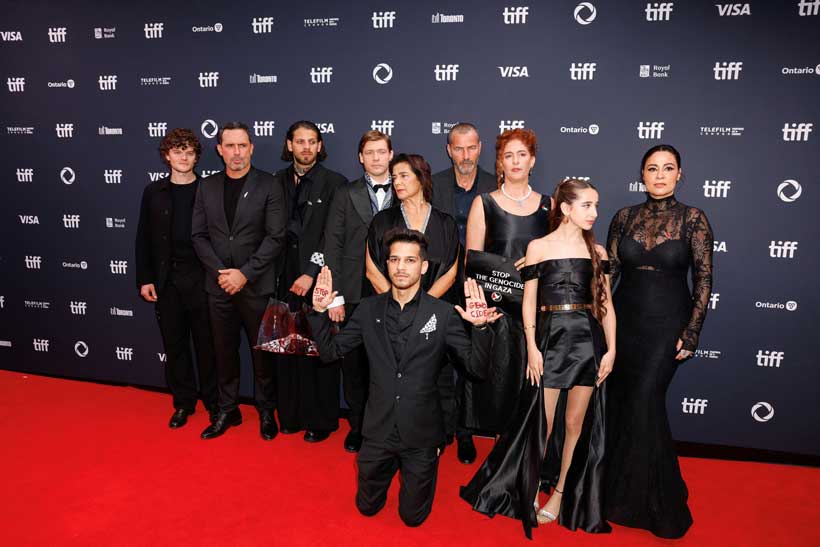
Palestinian filmmaker Annemarie Jacir’s new film, “Palestine 36,” which premiered at the Toronto International Film Festival, explores the complex realities of 1936 Palestine under British Mandate.
The film, chosen as Palestine’s Oscar submission and holding US and Canadian distribution rights through Watermelon Pictures, depicts a period marked by rising tensions due to Jewish immigration from Europe and the establishment of settlements, sometimes on Arab land.
Jacir intended the film to resonate as a contemporary narrative, highlighting Palestinian protagonists who, like those today, grapple with asserting their rights against encroaching settlers and a colonial power, facing contested questions about the nature and cost of resistance. The article underscores the film’s potent messaging, suggesting it implicitly prompts viewers to consider their position in history. It draws parallels between the film’s themes and the current situation in Gaza, referencing the extensive Palestinian casualties, destruction, and famine following Israel’s bombardment, which commenced after the October 7 Hamas attack on Israel. Scholars and human rights groups have labeled Israel’s actions in Gaza as genocide.
Jacir and her film production team, ten months into pre-production and ready to commence shooting, experienced a significant disruption to their work and lives due to the events of October 7th and their aftermath.
Stay ahead of the geopolitical week.
MD Briefing delivers expert analysis across five global fronts — the Indo-Pacific, energy, geoeconomics, European security, and the Middle East — every Monday morning. Free.
Jacir described being in Bethlehem when evacuations occurred, leading to the collapse of their production and a pervasive sense of darkness. She acknowledged the privilege of focusing on filmmaking amid what she termed a “genocide” but emphasized its importance as an artistic act and a form of expression. The film stars Jeremy Irons and Hiam Abbass, with Saleh Bakri portraying a Palestinian character who feels compelled to resist.
Bakri articulated that art serves as a “soulful, living, form of resistance,” underscoring the notion that individuals may feel an imperative to fight back.
