


The thriving landscape of Sino-Saudi economic partnership is part of the growing FDI trend driven by the Kingdom’s Vision 2030. Aiming to reduce its dependency on hydrocarbon reserves, a key initiative of Saudi Arabia’s Vision 2030, which seeks to promote economic diversification in the Kingdom, is to boost its Foreign Direct Investment (FDI) in the industrial sector. The increased focus on foreign investments also stems from Riyadh’s budget deficit, largely owing to two years of oil production cuts, relatively lower oil prices resulting from regional conflict, and years of investments in ambitious state-funded projects, including giga-projects aimed at creating business opportunities. China, with its developmental goals aligned with Vision 2030, has emerged as the top source of FDI in Saudi Arabia.
The Kingdom’s New FDI Trend
According to a GlobalData poll, the Middle East ranked as the fourth most attractive destination for foreign direct investment (FDI) in 2024. With the UAE, Saudi Arabia, and Qatar leading the global post-COVID capital shift, the period following the pandemic saw a divergence in investment prospects worldwide. In 2023, as global FDI decreased marginally by 2% to $1.3 trillion, the Middle East also saw a decline in both project numbers and capital investment after a strong performance in 2022. Despite the overall drop in FDI flow, GlobalData reported that global FDI trends favored the region, with Saudi Arabia and the UAE identified as markets offering strong potential. Last year, the region experienced growth in both project activity and inbound capital investment, with companies announcing 1,848 projects worth an estimated $88.3 billion. Saudi Arabia, next to the UAE, became the second-largest investment destination in the region, attracting $17.3 billion from 305 FDI projects, marking a 23% growth in inward FDI investment from 2022 to 2023.
In 2024, the General Authority for Statistics (GASTAT), which previously reported a 0.6% year-on-year increase in Saudi Arabia’s net foreign direct investment (FDI) flow in the first quarter, noted an 8% decline in the second quarter to SAR 11.7 billion, according to its latest report. This decline has motivated the government to attract more FDI. The drop mainly reflects lower oil exports and strong growth in investment-related imports. Saudi Arabia’s push to increase FDI stems from its budget deficit, driven by ongoing regional conflict, cuts in oil production and prices, and the Kingdom’s focus on developmental projects aimed at creating business opportunities. In the second quarter, government activities increased by 3.6%, while non-oil activities grew by 4.4% compared to the previous year. Increased investment in state activities is part of the Kingdom’s Vision 2030, a massive economic overhaul plan aimed at reducing reliance on hydrocarbons. The plan requires significant investment in diversifying the economy and generating more sustainable revenue streams.
Stay ahead of the geopolitical week.
MD Briefing delivers expert analysis across five global fronts — the Indo-Pacific, energy, geoeconomics, European security, and the Middle East — every Monday morning. Free.
A detailed analysis of 2024 foreign direct investment (FDI) flow distribution shows the dominance of the metals and minerals sector—an increasingly vital industry for Saudi Arabia—with projects worth $9.5 billion, followed by the renewable energy sector, which secured $5.4 billion in deals. Saudi Arabia’s estimated mineral wealth is valued at $2.5 trillion. In 2021, the Kingdom enacted a new mining law to monetize these reserves. Since then, the Ministry of Industry and Mineral Resources (MIMR) has granted more than 2,000 local and international permits for exploration and mining. The Kingdom’s renewable and alternative power sector is also a key area, attracting foreign investment in sustainable power generation projects. Both sectors play crucial roles in achieving the objectives of Vision 2030. Additionally, the tourism sector, followed by business and professional services, is attracting significant foreign investment, with around 270 projects each.
The current business model for developmental projects, including ambitious giga-projects, follows a tried-and-tested formula. The state develops the initial phases of a project, and if successful, transfers it to the private sector. In the coming years, many of these developmental projects will reach the point where their initial phases are completed, opening new opportunities for the private sector to take the lead and attract more foreign direct investment (FDI).
Sino-Saudi Economic Partnership
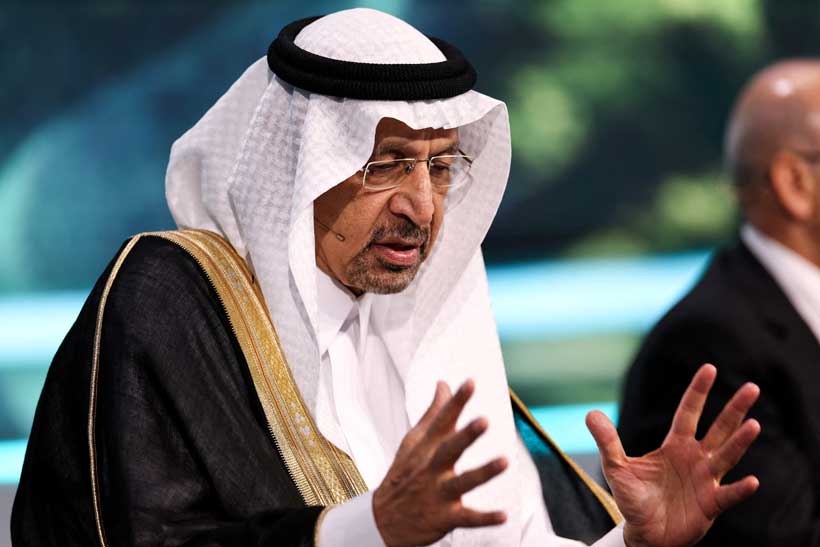
According to the State Council of the People’s Republic of China (PRC), Saudi Arabia has been China’s largest trading partner in the Middle East since 2001, with bilateral trade reaching $107.23 billion in 2023. China emerged as the top source of foreign direct investment (FDI) into Saudi Arabia in 2023, followed by Turkey, Australia, the U.S., and the U.K. That same year, Crown Prince Mohammed bin Salman strengthened ties between the two nations by establishing a “comprehensive strategic partnership” with Chinese President Xi Jinping. China’s importance to Saudi Arabia’s Vision 2030 was underscored during the Arab-China Business Conference in Riyadh. At the event, Investment Minister Khalid al-Falih stated, “The time has come for China to become the principal investment partner in the Arab world’s development drive,” after which more than 30 agreements were signed by Chinese companies in sectors such as technology, renewable energy, tourism, and agriculture.
Saudi Arabia’s Ministry of Investment and Human Horizons, a Chinese electric vehicle (EV) manufacturer, signed a $5.6 billion deal, accounting for more than half of the total investment pledges. As Saudi Arabia plans to develop its domestic EV manufacturing industry, Human Horizons’ establishment of a research, development, manufacturing, and sales joint venture will significantly boost the Kingdom’s EV sector. Other joint ventures, such as Chinese EV start-up Enovate’s partnership with Sumou Holding, a local Saudi firm, to establish a $500 million manufacturing plant, and the Saudi Public Investment Fund’s partnership with Ceer, a domestic EV brand, have also played critical roles in advancing this ambition.
In 2023, amid strengthening ties between Beijing and Riyadh, Chinese firms made more direct investments than ever, with Saudi Arabia becoming the top recipient of China’s foreign direct investment (FDI), totaling $16.8 billion, followed by Malaysia and Vietnam. A report published by fDi Markets indicates that the wide array of opportunities presented by the Kingdom’s Vision 2030 prompted Chinese businesses to announce a record 21 greenfield projects worth $16.2 billion between January and September. Greenfield FDI refers to a type of investment where a parent company establishes new operational facilities in a foreign country. China emerged as the leading greenfield FDI investor in Saudi Arabia, with investments worth $16.8 billion, followed by the U.S. and the UAE, which invested $2.7 billion and $2.67 billion, respectively.
In 2023, Saudi Arabia’s greenfield foreign direct investment (FDI) increased by more than 110% to $28.78 billion, surpassing the previous high of $17.57 billion in 2018. Riyadh received the largest share of greenfield FDI, totaling $8.18 billion, followed by the provinces of Ras Al-Khair and Dammam, which attracted $4.23 billion and $722 million, respectively. The metal and semiconductor sectors emerged as key areas for investment, with China investing $5.26 billion and $4.26 billion in these sectors. China’s Baoshan Iron & Steel invested around $4 billion in a metal plate manufacturing site in Saudi Arabia’s Special Economic Zone (SEZ) in Ras Al-Khair, located on the country’s eastern coast along the Persian Gulf.
Apart from their robust economic ties, in 2023, China played a crucial mediating role in fostering rapprochement between Saudi Arabia and its archrival, Iran. In August 2023, the expansion of BRICS+ led to the inclusion of Saudi Arabia in the group of developing countries. Moreover, China’s Belt and Road Initiative (BRI), aligning with the objectives of Vision 2030, has provided Saudi Arabia with new avenues for growth and modernization, attracting more foreign direct investment (FDI) in ports, infrastructure, and logistics. The BRI also represents a unique point of convergence, as all Gulf countries, along with their longtime rival Tehran, have signed agreements with Beijing to participate in this mega infrastructure initiative.
Saudi Arabia’s Overhauled Investment Laws
From announcing the Regional Headquarters (RHQ) program to introducing new foreign investment laws, the government of Saudi Arabia continues its push to boost foreign direct investment (FDI) and diversify its economy. According to a report from the Ministry of Investment of Saudi Arabia (MISA), in the first half of 2024, 184 foreign companies relocated their RHQs to Saudi Arabia. This move was primarily attributed to the country’s relentless efforts to enhance the investment environment. In 2021, the Kingdom expressed its intent to limit contracting with foreign companies that do not have regional headquarters in Saudi Arabia and further announced incentives for those that establish RHQs in the Kingdom. The RHQ program formally took effect on January 1, when the Saudi government announced it could no longer contract with foreign companies that have their RHQs outside the Kingdom, except in certain circumstances.
In August 2024, Saudi Arabia announced its new foreign investment laws, replacing the existing Foreign Investment Law of 2000. For the first time, the new foreign direct investment (FDI) laws place foreign and local firms under the same rulebook, aiming to meet international business law standards by fostering a competitive environment. The new laws provide enhanced safeguards for investors, ensure non-discrimination for foreign and local investors, and protect intellectual property rights while facilitating the transfer of funds.
In a bid to attract more investments, the new laws simplify the registration process for companies and establish service centers for fast-tracking government transactions and investment procedures. The laws also include provisions for granting investment incentives and provide for an alternative dispute resolution mechanism through the Saudi Center for Commercial Arbitration. Aligning with the standards of the Gulf Cooperation Council (GCC), the World Trade Organization (WTO), and other global investment agreements, Saudi Arabia’s new investment laws aim to make the Kingdom an attractive FDI destination in the region.
However, the kingdom’s top-down governance structure and challenges posed by Sharia law, which remains the foundation of its legal system, highlight the risks and obstacles to the new business environment.
Conclusion
With a progressive approach towards economic diversification Saudi Arabia is embarking on a journey to diversify not just its economy but also its economic and political allies. The post-COVID era has witnessed increased economic and political engagement between China and Saudi Arabia, with Beijing’s mediation efforts in the Saudi-Iran rapprochement followed by a significant rise in Chinese foreign direct investment (FDI) serving as a testament to this relationship.
In recent years, events held in Riyadh—such as the 2022 Sino-Arab Summit, the 2023 Arab-China Business Conference, the Saudi-Chinese Business Forum, and the recent agreement between the finance ministers of Saudi Arabia and China in fields including renewable energy, artificial intelligence, and smart cities—have further underscored Saudi Arabia’s growing ties with China. Saudi Arabia’s giga-projects, such as King Abdulaziz Economic City and Neom, present numerous opportunities for Chinese companies to supply processed goods, building materials, and water treatment equipment.
In recent years, the trajectory of foreign investment in Saudi Arabia has witnessed an upward trend. Several strong factors make Riyadh an attractive choice for foreign investors, including the country’s vast oil reserves, which have secured its significant position in the Organization of the Petroleum Exporting Countries (OPEC), economic stability, a large market with high spending power, consolidated finances, sound infrastructure, and the kingdom’s economic diversification strategy—Vision 2030.
However, the kingdom’s high dependence on hydrocarbon reserves, weak political governance, limited job opportunities for nationals, low economic transparency, and a deteriorating regional geopolitical environment are some concerns for investors.
The revised investment laws aim to enhance flexibility and simplify procedures for foreign companies seeking to invest. In contrast, regulatory measures like the Regional Headquarters (RHQ) program reflect the kingdom’s stringent economic posture, as foreign companies are left with little choice but to relocate their headquarters to Saudi Arabia to obtain a contract license in the kingdom.
