

As uncertainty looms over the security of the largest Liquefied Natural Gas (LNG) private operation in Africa, the West should continue to pay the Rwandan military to maintain stability in northern Mozambique.
The Islamic insurgent group Ansar Al-Sunna has terrorized Mozambique’s north since 2017, and it came to a head when a 12-day offensive on the town of Palma in 2021 claimed around 800 lives. It was this atrocity that led to the Rwandan military being invited into Cabo Delgado, the northern coast of Mozambique. The 2021 attack also led to TotalEnergies ceasing its multi-billion-dollar LNG operation near Palma.
Around 90% of areas targeted by the terrorists were re-secured by early 2024. Some 250,000 people returned to their homes, and normalcy returned. Thus, in January, TotalEnergies announced the restarting of its LNG projects in Mozambique, promising to add 7,000 local jobs and contracts for Mozambican companies in Africa’s largest private investment in energy infrastructure.
With uncertainty around the Strait of Hormuz and Europe still struggling from the loss of the Russian supply of LNG, the importance of finding stable energy sources for the West has never been clearer. Besides TotalEnergies, other energy behemoths like ExxonMobil and Italy’s ENI have also given attention to Mozambique’s potential.
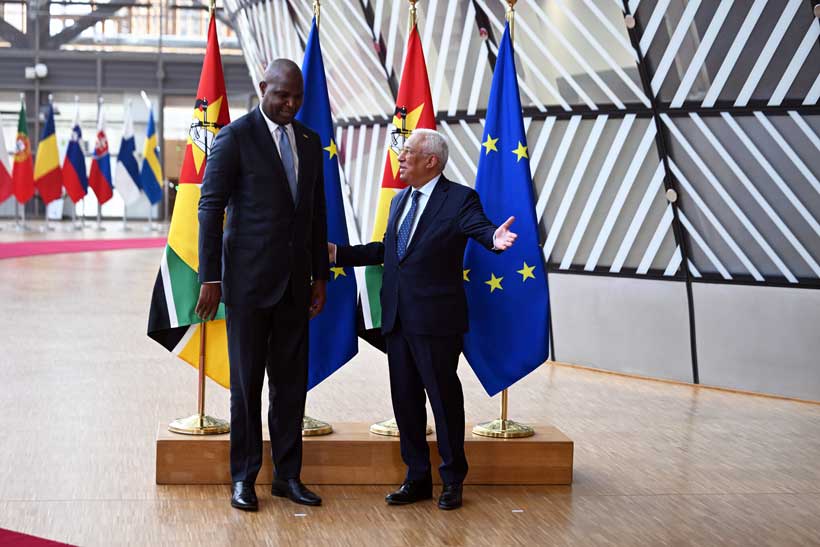
In the middle of March, Rwanda threatened to withdraw its troops from Mozambique as a result of the uncertainty over whether the European Union (EU) will continue paying for the counterinsurgency campaign. Through the European Peace Facility, the European Union (EU) had previously been financing a support package covering the cost of personal equipment and logistics for Rwanda, amounting to two rounds of €20 million since 2022. This funding is set to run out in June, and there are no existing plans for its renewal. The EU also has its own military mission in Mozambique led by Portugal (Mozambique’s previous colonial ruler), and that agreement, too, is subject to renewal in a few months’ time.
Rwanda’s complaint extended beyond the mere discontinuance of European financing. Its government’s spokesman claimed the cost of the Rwandan operation is some 10 times greater than the aid offered by the EU. Moreover, they do not want to risk their soldiers’ lives for the sake of Western “mega investments” in LNGs, “just to see our valiant soldiers being constantly questioned, vilified, criticized, attacked or sanctioned by the very countries that greatly benefit from our intervention in Mozambique”.
This refers to the sanctions imposed upon Rwandan officials by the Trump administration for re-igniting hostilities in the Congo through the Rwandan-proxy rebel group M23. It also follows Rwanda’s announcement that it is seeking £100 million from the United Kingdom for pulling back from the disastrous asylum scheme initiated by Boris Johnson. Rwanda therefore shows itself willing to leverage its status as a guarantor of regional stability, and this opportunistic transactionalism veers into ostensible untrustworthiness as an ally for the West.
The West should continue supporting these counterinsurgency efforts in Mozambique. As well as protecting its own commercial interests and economic security, there are great humanitarian reasons to support the local Mozambicans. The more pressing question is whether the EU should continue outsourcing its dirty counterinsurgency work to Rwanda.
The rivals of the West have a more direct footprint across Africa. China’s Belt & Road Initiatives rely on their state-owned enterprises to bring their own ‘security.’ Russia has an extensive presence across the Sahel through their private military contractor outfits, increasingly subordinated to Moscow’s will after the failed Wagner coup in 2023. This more direct approach has its advantages. Their soldiers gain experience in counterinsurgency and combat. It also allows them to bypass the political agendas of middlemen—their economic security is not held hostage by transactionalism like that of Rwanda.
But, on the other hand, there are reasons in favor of the Rwandan model. African soldiers are cheaper than those of Europe, Western militaries are already overstretched, and the willingness of the public to tolerate foreign involvements has greatly diminished. Further, we should not discount the successes of the Rwandan army in re-securing northern Mozambique—counterinsurgency is a notoriously difficult task.
‘Don’t fix what isn’t broken.’ While paying 10 times the previous rate would be senseless, the EU should not abandon the successes it has attained in Mozambique—not only for its commercial interests but also for humanitarian reasons. Now, more than ever, does the West need a secure supply of energy resources, and Rwanda has shown itself to be successful in furthering this end.