


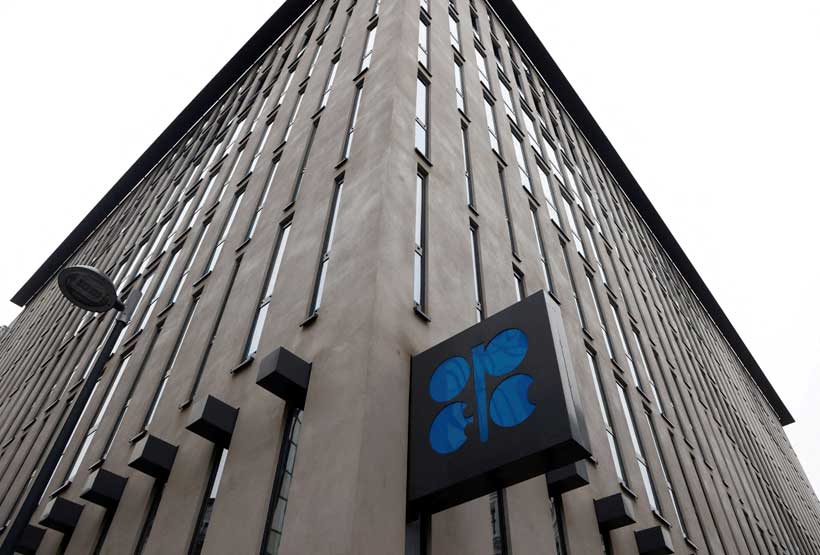
The United Arab Emirates has formally exited OPEC and the broader OPEC+ alliance, marking a significant shift in Gulf energy politics. The decision, announced on May 1, reflects Abu Dhabi’s intention to reposition itself within the global energy landscape.
The move comes amid evolving regional dynamics, including heightened tensions linked to the Middle East conflict and shifting economic priorities among oil producing states.
Official Position from ADNOC
Sultan Al Jaber, head of Abu Dhabi National Oil Company, emphasized that the withdrawal was not directed at any specific country or group. Speaking at the Make It In The Emirates conference, he described the decision as a sovereign step designed to advance long term national interests.
According to Al Jaber, leaving OPEC will allow the UAE greater flexibility to expand production capacity, attract investment, and strengthen its position in global energy markets while remaining a reliable supplier.
Stay ahead of the geopolitical week.
MD Briefing delivers expert analysis across five global fronts — the Indo-Pacific, energy, geoeconomics, European security, and the Middle East — every Monday morning. Free.
Growing Rift with Saudi Arabia
The exit highlights a widening divergence between the UAE and Saudi Arabia, traditionally the dominant force within OPEC. Once close allies, the two countries have increasingly competed over oil policy, regional influence, and economic diversification strategies.
This rivalry extends beyond energy, including competition to attract foreign investment, talent, and global business headquarters.
Strategic and Economic Implications
By stepping outside OPEC’s production framework, the UAE gains autonomy over its output decisions. This could enable faster expansion of its oil and gas sector and more aggressive investment strategies, particularly as it seeks to balance fossil fuel revenues with energy transition goals.
Al Jaber also urged domestic industries and sovereign wealth funds to prioritize investment within the UAE, stressing the need for decisive action during a period of geopolitical uncertainty.
Impact of Regional Conflict
The broader regional environment has added urgency to economic decision making. Escalating tensions involving Iran and the United States have disrupted perceptions of stability in the Gulf.
Recent missile strikes and security risks have unsettled investors, challenging the UAE’s long standing reputation as a safe and predictable business hub.
Analysis
The UAE’s departure from OPEC signals a shift from collective coordination toward national energy independence. While framed as a strategic economic move, it also reflects deeper geopolitical and economic competition within the Gulf.
Greater autonomy may benefit the UAE in the short term by enabling faster growth and investment. However, it could also weaken OPEC’s cohesion and complicate efforts to manage global oil supply.
In a volatile regional environment, the success of this strategy will depend on the UAE’s ability to balance expansion ambitions with market stability and geopolitical risk.
With information from Reuters.
