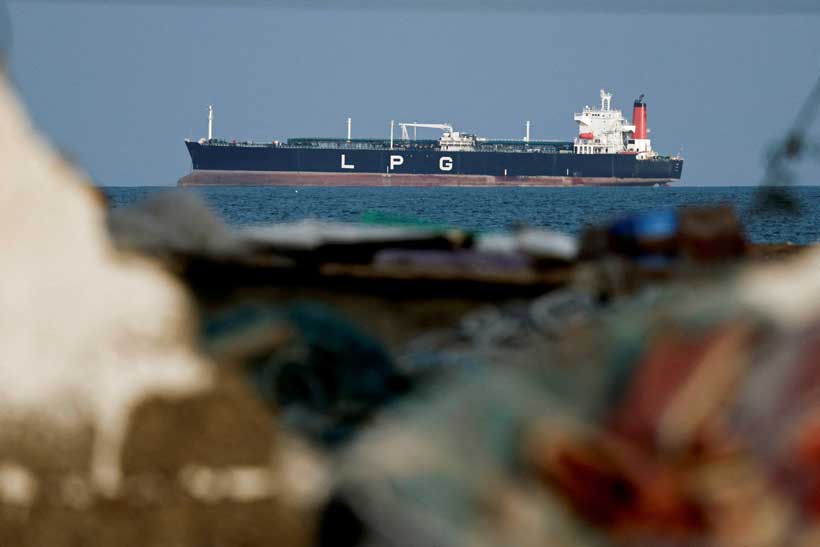
The U. S. military announced it will start a blockade of ships leaving Iran’s ports on Monday, prompting Tehran to threaten retaliation against the ports of its Gulf neighbors. This escalation follows the breakdown of talks aimed at ending the ongoing war, which began on February 28. The blockade raises concerns over the ceasefire, which is at risk with only a week remaining. Oil prices spiked as trade resumed on Monday, with no expected quick reopening of the Strait of Hormuz, a critical waterway for global oil supplies, through which about one-fifth of the world’s oil usually passes.
Since the war began, Iran has effectively closed the Strait to all ships except its own, imposing a fee for any that want to pass. President Donald Trump stated that the U. S. will block Iranian vessels and any ships that pay fees to Iran. NATO allies, including Britain and France, have distanced themselves from the conflict, focusing instead on the need to reopen the waterway.
The ceasefire that halted airstrikes from the U. S. and Israel is now in jeopardy after Tehran reportedly rejected U. S. demands during high-level talks in Islamabad. U. S. Central Command declared that the blockade will commence at 10 a.m. ET and will apply to all vessels entering or leaving Iranian ports. Before the blockade began, two oil-laden ships, the Aurora and New Future, departed the strait.
An Iranian military figure denounced U. S. restrictions as “piracy,” warning of insecurity for all Gulf ports if Iranian ports are threatened. Iran’s Revolutionary Guards indicated that military vessels approaching the Strait would violate the ceasefire. On social media, Trump warned that ships paying Iran an “illegal toll” would be denied safe passage and threatened any Iranian attacks on U. S. or peaceful vessels.
Amid rising energy prices leading to political backlash domestically, Trump paused the U. S.-Israeli bombing campaign, even as Israel continued its operations against Hezbollah in Lebanon. Iran has increased its demands, including recognition of its control over the Strait, lifting sanctions, and withdrawing U. S. military forces from the region. Although Trump claims victory, he has not achieved his initial goals, which included undermining Iran’s military capabilities and nuclear program.
Iran retains significant military power, including missiles and drones, and a stockpile of near-bomb-grade uranium. The Iranian government, despite facing increasing domestic unrest, has not shown signs of significant opposition. U. S. officials noted Iran’s rejection of demands about its uranium stockpile and support for regional allies.
Oil prices surged again on Monday, surpassing $100 a barrel. Analysts suggest that the actual disruption of oil supplies is worse than indicated by benchmark prices, as physical supplies are already tight. The U. S. market may soon face significant cost increases due to these disruptions. The urgency of reopening the Strait is highlighted, as the last oil tankers that passed through will soon run out, and analysts warn of potential automobile fuel price spikes in the U. S. ahead of the midterm elections.
With information from Reuters