



Noticeably, African political elites and intellectuals, academics, and researchers have navigated reparations with little progress and tangible results until today. Political and diplomatic engagements are weak and uncoordinated, while platforms for strategic advocacy are consistently used largely for geopolitical solidarity. With changing times, Africa has to treat development issues with strategies and consistency and make a complete turn away from mere solidarity. Africa’s nostalgic romanticism with external powers affects development and continental unity. The current geopolitical shifts demand renegotiating and refining Africa’s relationship with global powers, leveraging to maintain aspects of sovereignty.
Sovereignty is interpreted as the ability to control authority within the territory, allowing the state to determine its own system of governance without outside interference. In the absence of these, in the previous years, western powers capitalized on weak factors to control both human and natural resources of Africa, and today emerged the question of reparations.
Reparations, an action to demand payment or compensation for something inappropriately done in the past, has become today’s chorus in the African continent and in the Diaspora. It is worthy to note here that very consistently for the past few years, the African people and their respective leaders have stood firm in defense of reparative justice. For all, reparations has become an urgency from historical memory to current reality for restitution.
Across the continent, a growing consensus within the African Union is redefining reparations not only as restitution for past crimes but as a strategic foundation for Africa’s future economic architecture. This shift recognizes a simple truth: the damage created by slavery and colonialism was continental in scale, and the recovery must also be continental in structure.
Clearly, reparatory justice is not only about financial recovery or compensation. It includes restoring policy space, development autonomy, technological access, debt reform, cultural restitution, and economic restructuring that allows African economies to finally serve African societies. The importance of today’s reparations consensus lies in its recognition that Africa’s underdevelopment is not an internal failure to be corrected through aid, reforms, or external advice. It is the historical and continuing outcome of dispossession.
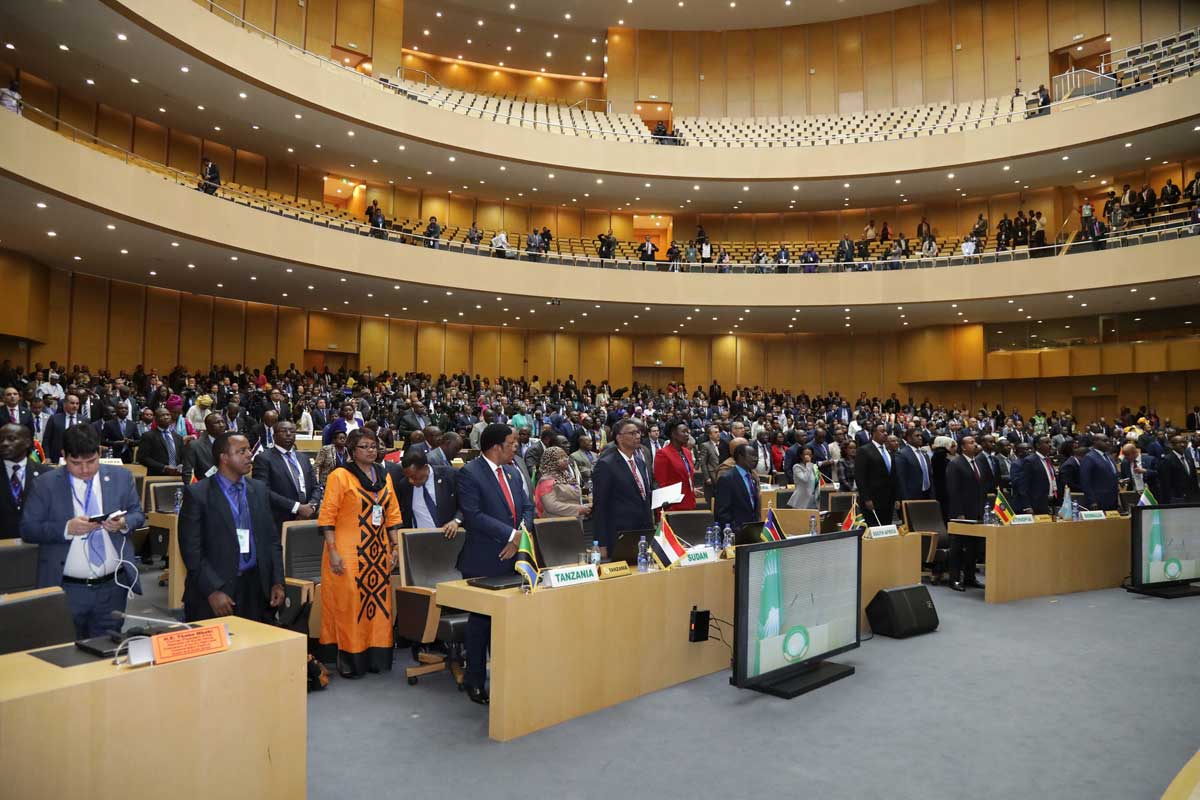
Reparations, therefore, respond to a concrete injury, not an abstract moral wrong. At a press conference during the 39th AU Summit in Addis Ababa, Ghana’s President John Dramani Mahama urged African leaders to adopt a common continental strategy on the legacy of slavery and racialized chattel enslavement, which he described as “the gravest crime against humanity.” “Ghana has undertaken extensive consultations to strengthen the resolution. We’ve engaged with UNESCO, the Global Group of Experts on Reparations, the Pan-African Lawyers Union, academic institutions, the African Union Committee of Experts on Reparations, and the African Union Legal Experts Reference Group. We hosted the inaugural joint meeting of the African Union Committee of Experts on Reparations and the African Union Legal Experts Reference Group in Accra earlier this month to further refine the text of the resolution. We also began engagement with the diaspora at the Ghana Diaspora Summit held in December last year.”
His message stood out, and his briefing gave clarity and hope for better days ahead. Africa will be heard, willingly or unwillingly, and the resolution thereof will no longer be a hope for years to come but a reality to actualize. Truth is, a ‘united Africa’ is a strong global force that can not be stopped or interrupted. But a ‘divided Africa’ is an Africa liable to imperialism and western domination.
It is, therefore, a priority for all African people to join hands and stand together to ensure the aims of these resolutions are achieved. Hence, come March 25, the resolution will be presented by one man, who will echo the voice of millions of African people and people of African descent. Because truly, a ‘united Africa’ demanding reparations is not an Africa asking to be included in an unequal system but rather an Africa asserting its right to help redesign it. “At the 80th session of the United Nations General Assembly in September 2025, I announced that Ghana would lead the effort to table a resolution declaring slavery and the transatlantic slave trade as the gravest crime against humanity.
That commitment marked the beginning of a structured diplomatic and legal process. I directed the Ministry of Foreign Affairs and Regional Integration to establish a high-level committee to coordinate consultations, refine the legal framework, and prepare a draft text consistent with international law and diplomatic practice. Today, I’m pleased to report significant progress. The initiative is firmly grounded in international law. Slavery is prohibited under international law as a peremptory norm, a just cogent principle from which no derogation is permitted,” the president said during the summit.
The press conference at the summit asserted the importance of the ‘Ancestral Debt, Modern Justice, and Africa’s United Case for Reparations.’ Come March 25, the world will bear witness to a new history far more historic than any other: the period where Africa shines in her fight for justice and true awakening. Reparations, therefore, must be understood as a mechanism for repairing an inherited economic fragmentation.
Particularly, the Decade of Reparations represents a historic opportunity for Africa to move from symbolic recognition of past injustices to concrete economic repair. Reiterating here that reparations matter because colonialism was not simply an episode of foreign rule. It was an economic system. African land was seized, labor was coerced, institutions were reshaped to serve external interests, and entire economies were redesigned around the export of raw materials.
Long before independence, the transatlantic slave trade had already stripped the continent of people, skills and social stability, creating permanent demographic and developmental damage. Colonial rule then consolidated this destruction into a durable global structure of inequality. Which is why today’s fight, today’s struggle, is of utmost importance. It is a correction of a historical inhumane error. One that has to be amended and corrected, beginning with recognition.
Ultimately, Africa’s message must address the damages caused by slavery, colonialism, and apartheid, in general the systemic underdevelopment. It must necessarily be an action now! And one significant measure or fundamental step, as a foundation for that, was the official declaration by the African Union a Decade of Reparations (2026-2036).
