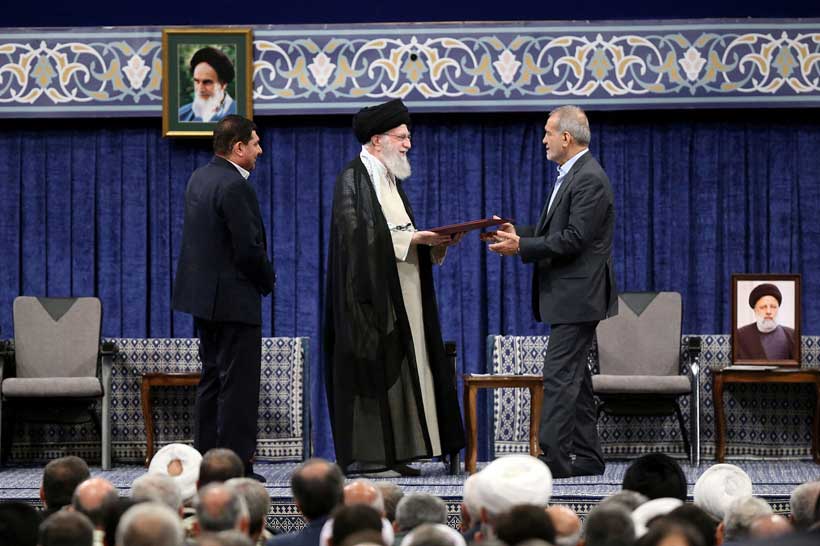
The killing of Iran’s Supreme Leader Ayatollah Ali Khamenei in strikes by the U. S. and Israel puts the country’s theocratic system at risk. It is uncertain who will succeed him or what will follow. Attacks continue to target key figures in Iran, while a temporary committee has taken over leadership duties. Power in Iran, established during the 1979 revolution by Ayatollah Ruhollah Khomeini, is based on the concept of vilayat-e faqih, which holds that a senior cleric should govern until the return of the 12th Imam. The new supreme leader will need to be a senior cleric and assert authority during a turbulent time.
According to the constitution, a new leader must be identified within three months. An interim leadership council, including President Masoud Pezeshkian and other senior clerics, will manage the government until then. The Assembly of Experts, a body of senior clerics, is responsible for choosing the new leader, but strikes have hindered its ability to convene. Although Khamenei did not name a successor, senior figures in the Islamic Republic, particularly Khamenei’s adviser Ali Larijani, are likely to influence the choice.
Potential successors include Khamenei’s son, Mojtaba Khamenei, whose status is uncertain due to recent strikes. Hassan Khomeini, Khomeini’s grandson, is also a likely candidate. His reformist views might help ease tensions with the West and the public. Other candidates include Ayatollah Arafi and Mohseni-Ejei, who are less prominent and likely to uphold Khamenei’s hardline policies. Ahmad Alamolhoda and Mohsen Araki, both hardline clerics with political influence, could also be considered. Former president Hassan Rouhani has clerical status but may face distrust from hardliners. The assembly could even choose a lesser-known cleric, but the current situation complicates establishing their authority.
The role of the Islamic Revolutionary Guards Corps (IRGC) is significant in determining Khamenei’s successor. The IRGC answers only to the supreme leader and has long influenced leadership decisions. However, recent strikes have weakened its high-ranking members, making its future impact unclear. The late Qassem Soleimani was a key IRGC leader, but his death, along with that of other commanders, diminishes the Guards’ power. The Basij militia, part of the IRGC, also plays a role in maintaining internal control and has gained economic power through various contracts, which may affect their choice of the new leader.
The general public’s influence on Iran’s political direction is limited. Iranians elect a president and parliament, but real authority lies with the supreme leader. Trust in electoral processes has declined among citizens over the years. While President Pezeshkian is part of the interim leadership, his ability to shape future events remains uncertain. All candidates for the Assembly of Experts must pass scrutiny from the clerical Guardians Council, leaving little room for dissent within the political system.
With information from Reuters