The killing of Nemesio Oseguera Cervantes, known as El Mencho, marks a watershed moment in Mexico’s long and violent confrontation with organised crime. As leader of the Cártel de Jalisco Nueva Generación, CJNG, he built one of the most powerful and ruthless criminal organisations in the Western Hemisphere. His death will be celebrated in some quarters as a decisive blow against cartel power. Yet history cautions against premature triumphalism. In Mexico’s complex security landscape, the elimination of a kingpin has rarely translated into lasting peace.
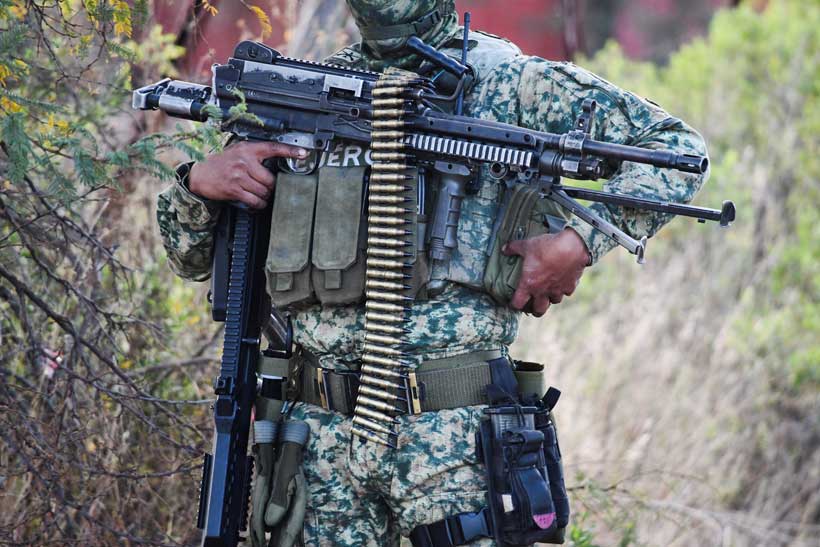
For nearly two decades, Mexico’s security crisis has been defined by the transformation of drug trafficking groups into diversified, militarised criminal enterprises. CJNG emerged from the fragmentation of earlier cartels and rapidly distinguished itself through territorial expansion, paramilitary tactics, and strategic brutality. It combined traditional drug trafficking with extortion, fuel theft, migrant smuggling, illegal mining, and local political infiltration. Unlike older cartels that relied on discreet corruption, CJNG projected force openly, deploying armoured vehicles, heavy weaponry, and sophisticated communications networks. Its growth coincided with the splintering of other criminal groups, creating a patchwork of violent disputes across the country.
The organisation’s territorial footprint extended from its base in Jalisco to strategic corridors along the Pacific coast, central industrial states, and key border crossings. In many regions, CJNG confronted rivals in sustained, high-intensity battles that resembled low-level insurgencies more than conventional organised crime. Entire communities were displaced, local police forces were overrun or co-opted, and municipal governments found themselves operating under duress. In this context, El Mencho became not only a criminal figure but a symbol of state incapacity.
The broader backdrop to his killing is a country that has recorded historically high homicide rates over the past decade. Violence has ebbed and flowed regionally, but the structural drivers remain entrenched: weak local institutions, uneven economic development, impunity rates that hover at alarming levels, and deeply embedded corruption networks. The security apparatus has oscillated between militarised crackdowns and attempts at social intervention, often without coherent long-term integration between the two.
Stay ahead of the geopolitical week.
MD Briefing delivers expert analysis across five global fronts — the Indo-Pacific, energy, geoeconomics, European security, and the Middle East — every Monday morning. Free.
When Andrés Manuel López Obrador assumed the presidency, he promised a departure from the confrontational strategies of his predecessors. His slogan, “abrazos, no balazos,” hugs not bullets, encapsulated a philosophy that prioritised social investment over direct confrontation. The argument was straightforward: organised crime thrives where the state has failed to provide opportunity. Address poverty, exclusion, and youth unemployment, and the recruitment base for cartels would shrink.
In practice, the policy proved more ambiguous. While the administration expanded social programmes and sought to avoid spectacular kingpin hunts, it simultaneously deepened the role of the armed forces in public security. The creation and consolidation of the National Guard, largely. staffed and commanded by military personnel, entrenched the military’s presence in civilian policing. Major infrastructure projects were placed under military oversight. Customs, ports, and strategic installations increasingly fell within the armed forces’ remit.
Homicide levels remained stubbornly high. Although the government argued that the upward trend had stabilised, the cumulative toll during López Obrador’s term was among the highest in modern Mexican history. Critics contended that the rhetoric of restraint sometimes translated into operational passivity, allowing criminal groups to consolidate territorial control. Episodes such as the aborted arrest of Ovidio Guzmán in Culiacán reinforced perceptions of a state reluctant to confront powerful cartels directly. Supporters countered that aggressive raids in densely populated areas often triggered spirals of violence that harmed civilians more than criminals.
Claudia Sheinbaum entered the presidency burdened by a security model that has produced record levels of violence, yet her response has largely been to refine its presentation rather than rethink its foundations. As López Obrador’s political heir, she has preserved the core architecture of his approach, repackaging it in the vocabulary of analytics, metrics and technocratic efficiency. Her scientific background and experience governing Mexico City underpin a managerial style that privileges intelligence platforms, surveillance expansion and inter-agency coordination. But a governance model built around data optimisation risks mistaking measurement for transformation. National insecurity is not a technical glitch awaiting calibration; it is the product of entrenched criminal economies, captured local institutions and systemic impunity.
The capital’s reported improvements under her mayoralty are frequently invoked as evidence of transferable success. Yet Mexico City benefits from concentrated federal resources, stronger institutions and political centrality that most states simply do not possess. Scaling an urban security template to regions dominated by armed criminal factions, weak municipal forces and contested territorial control is far from straightforward. What worked — or appeared to work — in a heavily policed metropolis may prove insufficient in rural corridors and border zones where the state’s presence is intermittent at best.
More troubling is the continuity embedded within her broader security design. Despite rhetorical emphasis on intelligence and coordination, the backbone of national enforcement remains the armed forces. The National Guard’s effective subordination to military command, the sustained deployment of soldiers in civilian tasks and the absence of ambitious police and prosecutorial reform reveal an approach that leaves the militarised core intact. In practice, the strategy risks reinforcing the same structural dependency that has defined Mexico’s security policy for nearly two decades. A technocratic gloss cannot obscure the reality that force, rather than institutional reconstruction, continues to anchor the state’s response.
At the national level, the complexity and geographic dispersion of violence expose the limits of incremental adjustment. What is taking shape under Sheinbaum rests on familiar components: expanded social programmes in vulnerable areas, greater emphasis on financial and logistical intelligence, and the persistent deployment of federal forces to contain flare-ups. Framed as strategic integration, this formula nonetheless mirrors the logic of previous administrations. The open question is whether this represents genuine structural change, or simply a more polished iteration of an approach that has yet to alter the underlying dynamics of insecurity.
The killing of El Mencho intersects with this evolving strategy at a delicate moment. On one hand, it projects decisiveness. Removing the head of CJNG sends a powerful signal to domestic audiences that the state retains the capacity to strike at the apex of organised crime. It may temporarily disrupt command-and-control structures, sow mistrust within the organisation, and create openings for arrests and asset seizures.
On the other hand, such operations do not occur in a geopolitical vacuum. The United States has long viewed Mexican cartels as a national security threat, particularly given their role in trafficking fentanyl and other synthetic opioids. Under Donald Trump, rhetoric around cartels hardened considerably. Proposals to designate them as foreign terrorist organisations, expand cross-border operations, and condition bilateral cooperation on measurable enforcement outcomes gained prominence. Even when not formally enacted, these ideas shaped the tenor of bilateral security discussions.
El Mencho’s death is likely to be framed in Washington as evidence of renewed resolve and effective cooperation. It allows both governments to demonstrate responsiveness to mounting political pressure over drug overdoses and border security. In an election-driven environment, visible enforcement actions carry symbolic weight. They reassure domestic constituencies that something tangible is being done.
For Mexico, the optics matter. Internationally, the country has faced reputational costs associated with violence, investment risk, and governance concerns. A high-profile strike against one of the world’s most wanted traffickers reinforces the image of a state capable of coordinated action with its northern neighbour. It signals alignment in confronting transnational criminal networks that span production, transit, and distribution chains.
Yet symbolism is not strategy. The elimination of a leader often accelerates internal power struggles. CJNG is not a monolithic entity dependent solely on one figure. It operates through regional cells, alliances, and diversified revenue streams. Leadership decapitation can produce fragmentation, with mid-level commanders competing for territory and resources. Such competition frequently translates into spikes in violence, particularly in contested states.
Mexico has witnessed this dynamic before. During the administration of Felipe Calderón, an aggressive campaign targeting cartel leaders yielded numerous high-profile arrests and killings. While these operations disrupted established hierarchies, they also contributed to the proliferation of smaller, more volatile groups. Fragmentation complicated intelligence efforts and expanded the number of violent actors. In many areas, extortion and kidnapping surged as splinter groups sought new income sources.
A return to a singular focus on kingpins risks repeating that pattern. Without simultaneous efforts to dismantle financial infrastructures, corrupt political linkages, and local enforcement vacuums, removing one individual may merely reshuffle the criminal ecosystem. Moreover, militarised operations often entail collateral damage, human rights allegations, and strained civil-military relations.
The reliance on armed forces for internal security poses structural dilemmas. Military institutions are trained for combat, not community policing. Their deployment can stabilise acute crises, but prolonged engagement in civilian contexts blurs accountability lines. Investigations into abuses frequently stall within opaque jurisdictional frameworks. Civilian police reform, already a complex and uneven process, risks stagnation when overshadowed by federal troop deployments.
There is also the risk of normalising exceptional measures. States of emergency, expanded surveillance, and broadened detention powers may be justified as temporary responses to extraordinary threats. Over time, however, they can erode civil liberties and weaken democratic oversight. The balance between security and rights becomes increasingly delicate in a climate of fear.
From an operational standpoint, military campaigns address symptoms more readily than causes. Cartels thrive on demand for narcotics, both domestically and internationally. They exploit regulatory gaps in precursor chemicals, arms trafficking flows from the United States, and porous financial systems that enable money laundering. As long as these structural conditions persist, new actors are incentivised to fill vacuums left by fallen leaders.
Economic marginalisation remains a critical variable. In many regions where CJNG expanded, the state’s presence was limited to sporadic patrols and under-resourced local administrations. Young people faced stark choices between precarious employment and lucrative illicit work. Social programmes can mitigate these pressures, but only if coupled with credible rule of law reforms that ensure equal application of justice.
The killing of El Mencho may therefore represent both an opportunity and a warning. It offers a moment to reassess strategy rather than double down on familiar scripts. If leveraged to advance comprehensive institutional reform, strengthen prosecutorial capacity, and deepen cross-border cooperation on arms and financial controls, it could contribute to incremental progress.
If, however, it becomes a trophy in a renewed war narrative, the long-term consequences may prove counterproductive. A security paradigm centred on spectacular takedowns risks obscuring the painstaking work of building trustworthy police forces, independent judiciaries, and resilient communities. It may also entrench cycles of violence as rival factions manoeuvre to assert dominance.
Ultimately, the measure of success will not be the notoriety of the target eliminated but the lived experience of ordinary citizens. Do communities feel safer? Are extortion rates declining? Is impunity decreasing? Are local institutions functioning without coercion? These metrics, less dramatic than the fall of a kingpin, offer a more accurate barometer of security.
Mexico stands at a crossroads. The death of one of its most notorious criminal leaders closes a chapter, but it does not end the story. The challenge for the current administration is to resist the gravitational pull of past approaches and instead articulate a strategy that is multidimensional, accountable, and rooted in long-term state-building. Anything less risks transforming a moment of apparent victory into the prelude to another cycle of fragmentation and violence.
And there is a final, uncomfortable truth. The killing of El Mencho may feel like closure, but closure in Mexico’s drug war has always been deceptive. Real security will not come from the dramatic fall of a single figure, however notorious. It will come from whether the Mexican state can outlast, outgovern, and out-institutionalise the criminal networks that have embedded themselves across territory, markets and politics. The celebration of a tactical success must not eclipse the strategic question: is Mexico building a security architecture capable of preventing the next El Mencho from rising? If the answer remains uncertain, then this moment, however historic, risks becoming not an end point, but an interlude in a conflict that continues to redefine the nation.