

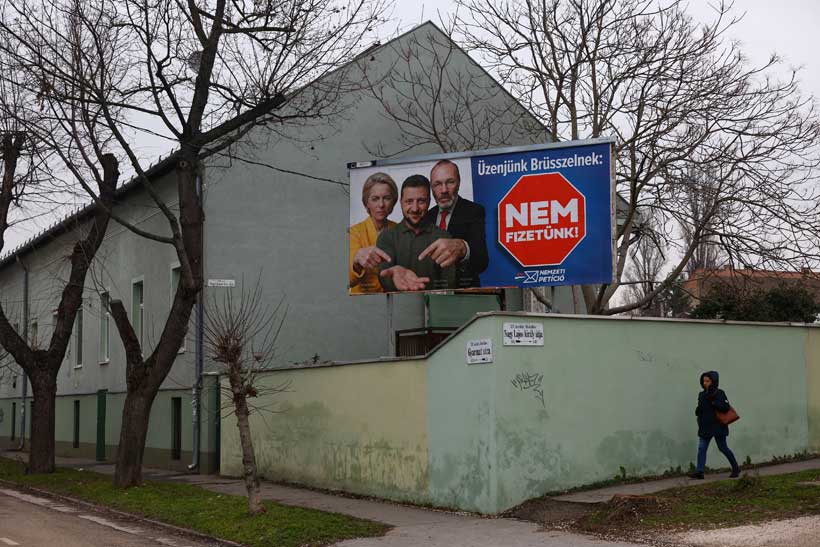
Facing potential defeat after 16 years, Prime Minister Viktor Orban has framed Hungary’s April 12 election as a choice between “war or peace. ” He claims that his opponents would lead Hungary into the ongoing conflict in Ukraine. Orban, leader of the Fidesz party, calls his party the secure option for peace. He has urged voters through letters and state-controlled media to reject European Union aid to Ukraine, supporting this campaign with billboards portraying the opposition leader, Peter Magyar, as compliant with demands for military and financial support for Ukraine.
Orban’s relationship with the EU has been tense, as he maintains friendly ties with Moscow and has resisted sending weapons to Ukraine. Magyar’s centre-right Tisza party, which is leading in many polls, aims to restore Hungary’s connections with the EU after years under Orban’s leadership, during which crucial EU funds were blocked. Magyar refers to Orban’s campaign as ridiculous propaganda and has avoided making hasty promises about Ukraine’s EU membership, stating that such issues should be decided by a referendum if they come to power.
Hungary’s struggling economy, suffering from inflation partly due to Russia’s invasion of Ukraine, may be behind Orban’s focus on the war. Analysts suggest he is trying to present himself as a stabilizing force amid economic stagnation. In the town of Gyongyos, some residents express concern over the war, emphasizing the need for stability, while others prioritize economic issues such as healthcare and education.
Orban hopes his strong anti-Ukraine position will resonate similarly to his past immigration policies. He claims involvement in the conflict is akin to migration—once committed, there is no turning back. He also alleges that Ukraine and the EU are meddling in Hungary’s elections, accusations that both deny.
Public opinion is shifting, with increasing opposition to EU aid for Ukraine and resistance to Kyiv’s EU membership. Research indicates that Orban’s rhetoric on Ukraine could appeal to undecided voters. The Tisza party, advocating for anti-corruption measures and economic recovery, currently leads Fidesz in polls, although many voters remain undecided. Magyar emphasizes that voters are more interested in practical issues like pensions and cost of living rather than Orban’s focus on the war.
With information from Reuters