


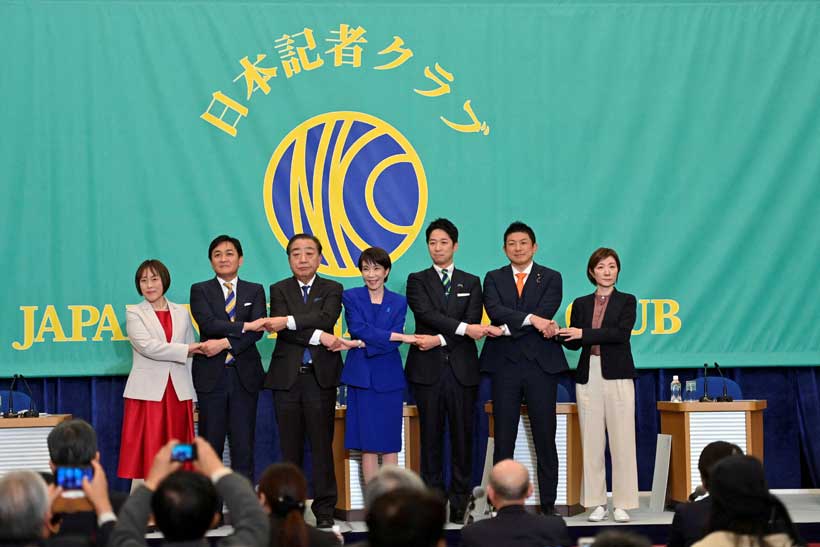
Japan’s Prime Minister Sanae Takaichi secured the largest postwar landslide in the country’s history, giving her a clear mandate to push through her economic and fiscal agenda. But while voters have spoken, financial markets may ultimately determine how far she can go.
A Historic Mandate
Takaichi’s Liberal Democratic Party won more than two-thirds of seats in the lower house, allowing her to pass legislation without negotiating with other parties or relying on upper house approval. The victory comes as she tapped into voter discontent over rising living costs, earning praise from conservative allies including U.S. President Donald Trump.
Market Reaction
Tokyo stocks surged to record highs, with the Nikkei and Topix rising 3.9% and 2.3% respectively, on expectations of stimulus targeting consumers and Japanese businesses. Yet the yen and government bonds, which have been under pressure for months, held steady, reflecting investor caution about the scale and funding of Takaichi’s expansionary plans.
Analysts stress that markets, rather than politics, will constrain Takaichi. Fred Neumann, chief Asia economist at HSBC, said: “The market will look very, very closely at any hints of fiscal slippage, any hints of FX weakness, any hints that monetary policy might not react enough to inflation.”
Stay ahead of the geopolitical week.
MD Briefing delivers expert analysis across five global fronts — the Indo-Pacific, energy, geoeconomics, European security, and the Middle East — every Monday morning. Free.
Challenges for the Yen and Bonds
The yen, down 6% since Takaichi took control of the LDP in October, was slightly firmer at 156.35 per dollar, while 10-year government bond yields rose modestly to 2.28%. Analysts note that the market will closely monitor her handling of a promised suspension of Japan’s 8% food sales tax, which could cost roughly 5 trillion yen ($32 billion) annually. How she funds it may dictate near-term movements in the yen and bond markets.
Takaichi faces a narrow path: maintaining fiscal stimulus to support consumers while keeping investors confident in Japan’s heavily indebted balance sheet. Pressure from the U.S. to support a stronger yen adds another layer of complexity, particularly as the Bank of Japan may be asked to resist rate hikes despite rising inflation.
The Market’s Role
Investors are expected to act as a real-world check on Takaichi’s policies. Rong Ren Goh, portfolio manager at Eastspring Investments, said: “Both JGB yields and the yen have been consolidating into the election. The outcome should now allow markets to re-engage existing trends,” suggesting potential higher yields and a weaker yen if momentum continues.
Analysis: Mandate vs. Market Reality
While Takaichi has the political authority to act boldly, the Japanese economy’s heavy debt load and sensitive bond and currency markets impose real limits. Expansionary policies, including stimulus payments and consumption tax cuts, risk spurring higher borrowing costs and yen depreciation if perceived as fiscally unsustainable.
Markets are likely to scrutinize every fiscal move, acting as a powerful counterbalance to her electoral mandate. The interplay between political freedom and investor confidence will define whether Takaichi can convert her historic win into lasting economic impact. Stocks may cheer stimulus, but bonds and the yen will punish missteps, leaving the prime minister’s mandate politically historic yet economically conditional.
With information from Reuters.
