



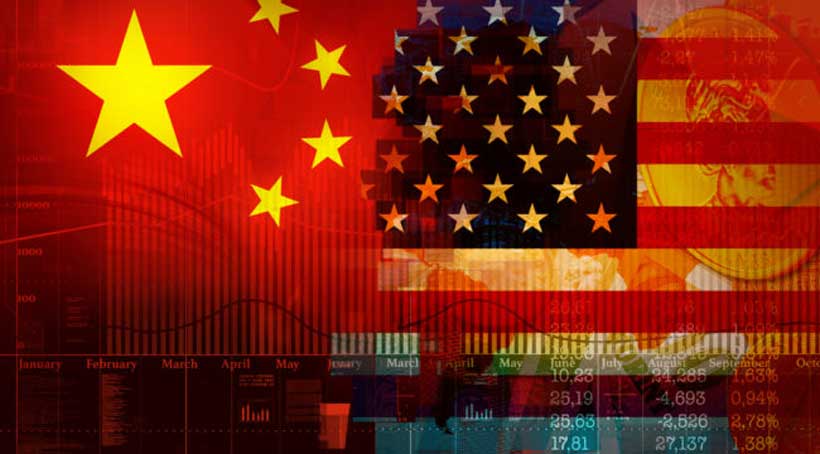
The United States is convening more than 50 countries in Washington on Wednesday to discuss ways to broaden access to critical minerals and reduce dependence on China, which has long dominated the processing and export of these strategic resources. The meeting comes amid growing concerns that Beijing’s control of supply chains for minerals like lithium, nickel, and rare earths gives it significant geopolitical leverage over global industries, including semiconductors, electric vehicles, and advanced weaponry.
The talks follow President Donald Trump’s launch on Monday of Project Vault, a strategic stockpile of critical minerals backed by $10 billion in seed funding from the U.S. Export-Import Bank and $2 billion from private investors.
China’s Supply Chain Leverage
China has repeatedly used its dominance in critical minerals to exert geo-economic influence, at times restricting exports, manipulating prices, and undercutting other countries’ efforts to diversify supply chains. Last year, Beijing’s expanded export controls on rare earths disrupted production for auto manufacturers in Europe and the United States, while a China-induced lithium surplus slowed U.S. production expansion plans.
Trump’s negotiations with China in October highlighted this leverage when he agreed to reduce tariffs in exchange for Beijing holding off on stricter rare earth export restrictions. The ongoing talks in Washington aim to prevent such dependencies from continuing to dictate global industrial outcomes.
Global Participation and Objectives
Countries attending include South Korea, India, Thailand, Japan, Germany, Australia, and the Democratic Republic of Congo, with more than 50 nations expected in total. U.S. officials said the meeting’s purpose is to strengthen and diversify critical mineral supply chains by coordinating trade, investment, and policy tools internationally.
U.S. Secretary of the Interior Doug Burgum announced that 11 additional countries will join a newly created critical minerals trade club, alongside the U.S., Australia, Japan, South Korea, Saudi Arabia, and Thailand. Another 20 countries have expressed strong interest in participating. Secretary of State Marco Rubio and Vice President JD Vance are scheduled to deliver remarks to ministers from Europe, Asia, Africa, and Latin America.
Policy Tools and Incentives
Washington and its partners are exploring a range of measures to counter China’s dominance. These include aligning trade and investment incentives, encouraging new mining and processing capacity outside China, and considering market interventions such as price floors, strategic stockpiles, and export restrictions.
Previous U.S. efforts, including a price-floor agreement with rare earth producer MP Materials, focused on company-specific deals. The administration now appears to be pursuing broader, multilateral approaches, in coordination with allies and international partners such as the G7 and European Union. Australia, for instance, is positioning itself as a strategic alternative to China, planning a national minerals reserve and considering a price floor to support domestic projects by 2026.
Experts caution that a combination of tools is likely necessary, as no single approach has been tested at this scale. Successful diversification of supply chains will require a careful balance of incentives to attract investment in critical minerals production worldwide.
Personal Analysis
The Washington meeting represents a significant step in the U.S. effort to counter China’s structural leverage over critical industrial inputs. While previous attempts focused on bilateral or company-level agreements, the multilateral approach reflects an acknowledgment that industrial supply chains are global, interconnected, and politically sensitive.
However, the challenges are substantial. Critical minerals production requires long-term investment, technical expertise, and stable policy frameworks factors that have historically favored China. A coordinated strategy, blending stockpiles, trade measures, and market incentives, may gradually reduce dependence, but it will take years to shift the global balance. The initiative highlights the increasing intersection of economic strategy and national security in the era of geopolitical competition with China.
With information from Reuters.
