


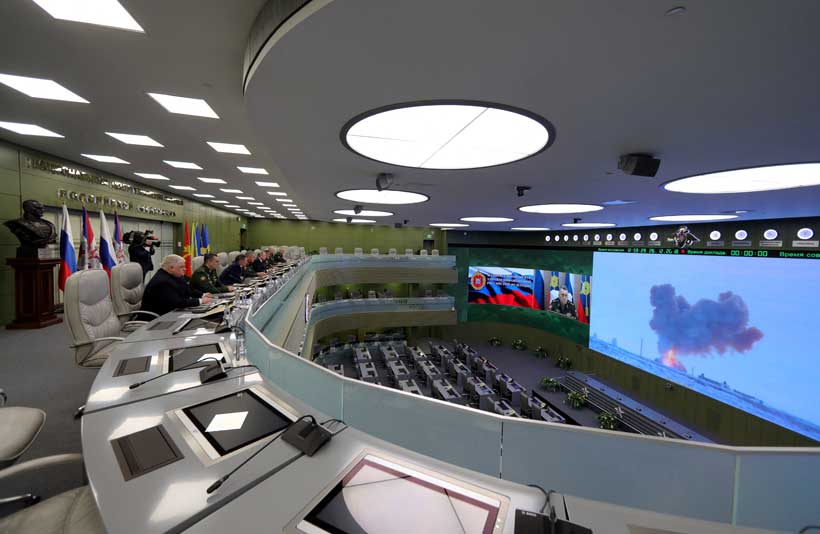
Despite geopolitical complexities, tensions, and pressure, Russia earned approximately $15 billion at the closure of 2025, according to a Kremlin report. At the regular session, chaired by Russian President Vladimir Putin on Jan. 30, the Commission on Military and Technical Cooperation with Foreign Countries analyzed the results of its work for 2025 and defined plans for the future.
It was noted that the system of military-technical cooperation continued to operate in difficult conditions and with increased pressure from the Western countries to block business relations with Russia. The meeting, however, admitted that export contracts have generally performed sustainably. Russian military products were exported to more than 30 countries last year, and the amount of foreign exchange exceeded $15 billion.
Such results provide an additional opportunity to direct funds to the modernization of OPC enterprises, to the expansion of their production capacities, and to advanced research. It is also important that at these enterprises a significant volume of products are civilian products.
The Russian system of military-technical cooperation has not only demonstrated effectiveness and high resilience but has also created fundamental structures, which allow for significantly expanding the “geography” of supplies of products of military purpose and, thus, strengthening the position of Russia’s leader and employer of advanced weapons systems—proven and tested in real combat conditions.
Stay ahead of the geopolitical week.
MD Briefing delivers expert analysis across five global fronts — the Indo-Pacific, energy, geoeconomics, European security, and the Middle East — every Monday morning. Free.
Within the framework of the new federal project “Development of military-technical cooperation of Russia with foreign countries” for the period 2026-2028, additional measures of support are introduced. Further effective use of existing financial and other support mechanisms and instruments is extremely important because of the volumes of military exports in accordance with the 2026 plan.
Special attention would be paid to the expansion of military-technological cooperation and partnerships. With 14 states already implementing or in development, there are more than 340 such projects.
Future plans will allow Russia to improve the characteristics of existing weapons and equipment and to develop new promising models, including those in demand on global markets. Among other issues—the development of strategic areas of military-technical cooperation, and above all, with partners in the CIS and the CSTO. This is one of the priority tasks to strengthen both bilateral and multilateral relations, ensuring stability and security in Eurasia.
From January 2026, Russia chairs the CSTO, and this requires working systematically with partners, including comprehensive approaches to expanding military-technical relations. New prospects open up for deepening military-technical cooperation with countries in other regions, including with states on the African continent. Russia has historically had strong and trusting relationships with African countries. In different years even the USSR, and then Russia, supplied African countries with a significant amount of weapons and military equipment and trained specialists on their production, operation, and repair, as well as military personnel.
Today, despite pressure from the West, African partners express readiness to expand relations with Russia in the military and military-technical fields. It is not only about increasing supplies of Russian military exports but also about the purchase of other weapons, other materials, and products. Russia has undertaken comprehensive maintenance of previously delivered equipment, organization of licensed production of Russian military products, and some other important issues. In general, African countries are sufficient for consideration today.
