



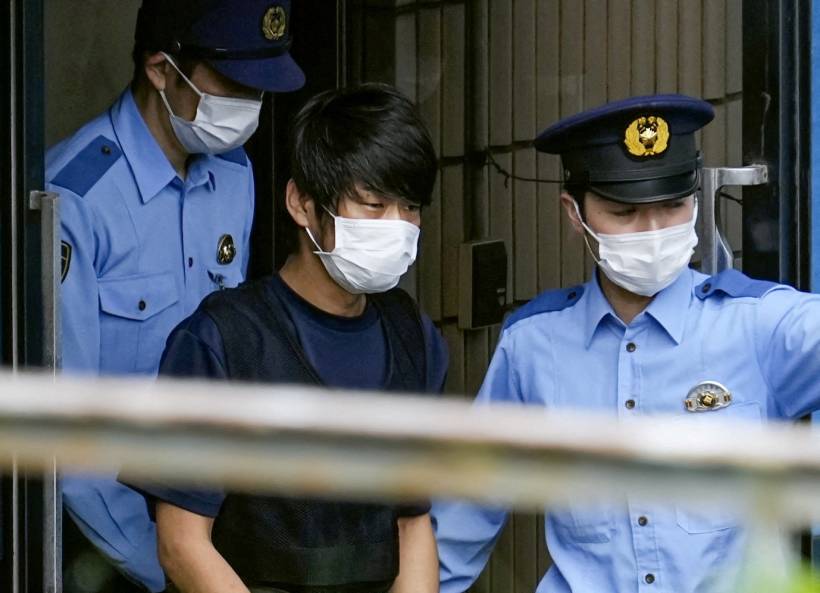
Former Japanese Prime Minister Shinzo Abe was assassinated in July 2022 while delivering a campaign speech in Nara, an incident that stunned a country known for strict gun laws and political stability. Abe, Japan’s longest-serving prime minister, was shot with a homemade firearm by Tetsuya Yamagami, who was arrested at the scene.
Abe, aged 67, had stepped down from office in 2020 due to health reasons but remained a dominant force within the ruling Liberal Democratic Party (LDP). His continued influence meant that his killing carried consequences far beyond the loss of a former leader.
The Court Verdict
On Wednesday, a Japanese court sentenced Yamagami to life imprisonment. The verdict itself was not in doubt, as Yamagami had already admitted to killing Abe during the first court hearing in October. The central issue before the court was the severity of the punishment.
Prosecutors described the assassination as an “extremely grave” and unprecedented act in post-war Japan, arguing that it represented an attack on democratic politics. The court accepted this reasoning and imposed the harshest possible sentence short of the death penalty.
Motive and the Unification Church
Yamagami told the court that his actions were driven by resentment toward the Unification Church, after his mother’s large donations to the organisation caused severe financial hardship for his family. He claimed he targeted Abe because the former prime minister had sent a video message to an event hosted by a group affiliated with the church.
Founded in South Korea in 1954, the Unification Church is controversial in Japan and is widely known for its mass weddings and aggressive fundraising practices. Japanese followers have long been regarded as a major source of the group’s income.
Yamagami’s defence team argued that these circumstances should mitigate his sentence, requesting a prison term of no more than 20 years. The court rejected this plea.
Political Fallout in Japan
Abe’s assassination triggered a political crisis within the ruling LDP. Although no longer prime minister, Abe had served 3,188 days in office and remained a powerful factional leader. His absence created a vacuum within the party, leading to two leadership contests and a period of political instability.
Investigations following the murder revealed that more than 100 lawmakers had links to the Unification Church. This disclosure severely damaged public trust and contributed to declining support for the LDP, which has governed Japan for most of the post-war era.
Abe’s International Significance
Internationally, Abe was a prominent figure in global diplomacy, particularly in relations with the United States. He forged a close personal bond with Donald Trump, becoming the first foreign leader to meet him after the 2016 U.S. election. Their relationship was often cited as a model of personal diplomacy.
Current Prime Minister Sanae Takaichi, Abe’s protégé, has repeatedly referenced this relationship in her own interactions with Trump, attempting to preserve continuity in U.S.–Japan relations.
Analysis
The sentencing of Yamagami brings legal closure to one of the most shocking episodes in modern Japanese history, but its broader implications remain unresolved. The assassination exposed the vulnerability of even highly stable democracies to lone-actor political violence, particularly when personal grievances intersect with political symbolism.
More importantly, the case forced public scrutiny of the long-standing and opaque relationship between religious organisations and political elites in Japan. While Yamagami alone committed the crime, the revelations surrounding the Unification Church undermined the moral authority of the ruling party and weakened voter trust.
Politically, Abe’s death illustrates how leadership in Japan remains highly personalised. Despite institutional strength, the LDP’s dependence on influential figures meant that Abe’s removal destabilised party cohesion. The resulting leadership churn reflects a broader crisis of legitimacy rather than a simple succession problem.
At a deeper level, the case raises difficult questions about accountability in democratic systems: while violence is unequivocally condemned, the structural grievances and political entanglements exposed by the crime continue to shape Japan’s political landscape. The life sentence may close the courtroom chapter, but the political reckoning it triggered is far from over.
With information from Reuters.
