


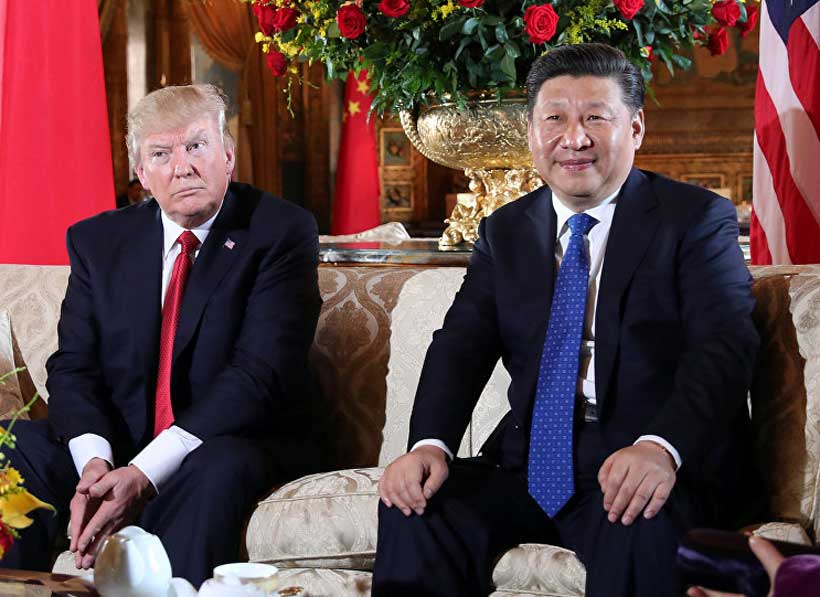
Washington and Beijing entered a de-escalatory 90-day tariff truce in mid-2025, extended through early November, yet substantive differences persist. The Seoul meeting is meant to convert a tactical pause into durable arrangements; instead, both sides are stacking bargaining chips, regulatory and political, that complicate a simple deal.
Trade and technology controls: mutual choke points
The U.S. has tightened semiconductor and AI-relevant export controls; China has responded with its own bans and a new pattern of licensing requirements for materials linked to advanced electronics. Washington frames controls as necessary to deny China dual-use military advantages; Beijing calls them containment of legitimate economic development. Neither side appears willing to reverse hard limits, which keeps high-end chips and AI hardware in the crossfire.
Critical minerals: Beijing’s leverage
Stay ahead of the geopolitical week.
MD Briefing delivers expert analysis across five global fronts — the Indo-Pacific, energy, geoeconomics, European security, and the Middle East — every Monday morning. Free.
China dominates processing and refining of rare earths, graphite anodes and several specialty materials. On October 9, Beijing expanded export curbs by adding elements and materials that feed semiconductors and batteries, made effective just before the tariff truce’s expiration.
Those measures create short-term disruption and strategic leverage: they pressure Western firms and spur allied diversification efforts, but they also incentivize China’s domestic beneficiation and longer-term supply-chain resilience.
Taiwan: language, deterrence, and limits to compromise
Beijing has renewed pressure to change U.S. phrasing on Taiwan from “does not support” to “opposes” independence; Washington has resisted substantive change while adjusting public fact sheets, producing diplomatic noise without a policy reset.
On the ground, the People’s Liberation Army sorties and gray-zone pressure have risen, and Washington’s stepped-up arms approvals to Taipei signal persistent deterrence. Taiwan is therefore both bargaining chip and red line: politically immovable for both capitals in most plausible outcomes.
Fentanyl: law enforcement meets trade leverage
The U.S. tied a 20% tariff on selected imports to demands that China curb fentanyl precursor flows. Beijing has added some precursors to controlled lists and reported arrests; U.S. officials say these steps are necessary but insufficient, given substitution and global smuggling routes. Fentanyl negotiations reveal a fundamental mismatch: Washington seeks verifiable, systemic enforcement; Beijing emphasizes legal changes and domestic prosecutions, both measures that are hard to evaluate in short order and easily politicized.
Market access and investment screening: reciprocity remains elusive
Beijing insists on tariff rollbacks and freer investment; Washington insists on screening and export controls to prevent tech transfer. U.S. reviews of Chinese investment (and restrictions on outbound tech flows) remain tough, while China’s own outbound-investment controls are narrower. The result: reciprocity demands meet national-security guardrails on both sides.
Current policy tools are likely to fragment global technology ecosystems than to contain China. Export controls delay Chinese access to leading-edge chips but also accelerate Beijing’s push for self-reliance, raising the risk of parallel tech stacks and complicating future AI governance. At the same time, competing U.S. constituencies such as farmers, tech firms, human-rights advocates and defense hawks pull policy in different directions, while Chinese leaders face strong nationalist expectations and a strict party security doctrine; together these constraints make major trade-offs on Taiwan, fentanyl and high-tech controls politically costly and push negotiations toward incremental fixes rather than comprehensive bargains.
A realistic assessment yields three trajectories: a best case in which the truce is extended and negotiators secure narrow, verifiable steps on precursor controls, limited licensing to ease industrial bottlenecks, and symbolic purchases that stabilize constituencies; a middle case, most probable, in which the truce is prolonged with staged talks and modest concessions while core disputes over semiconductors and Taiwan remain unresolved, producing episodic crises and slow, incremental progress; and a worst case in which the pause collapses, tariffs and counters return, export bans widen, supply chains decouple and geopolitical lines harden, inflicting sustained economic damage and institutional fractures. The prudent policy approach is to prioritize pragmatic confidence building: deepen multinational cooperation on fentanyl interdiction, mobilize allied investment to diversify mineral processing and refining outside China, and combine calibrated deterrence for Taiwan with continuous diplomatic channels to reduce the likelihood of escalation.
