



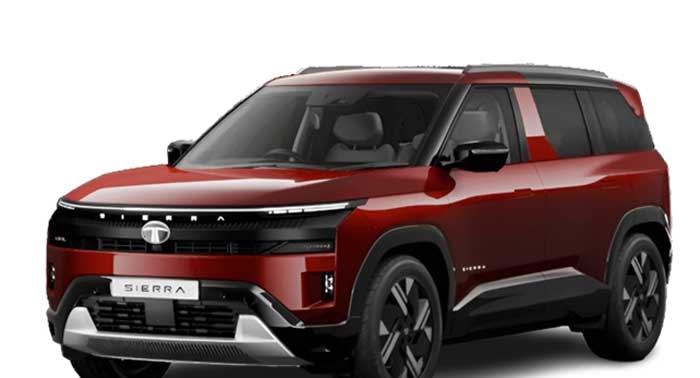
The idea of “value for money” in the SUV market has evolved significantly over the past decade. Where buyers once judged value largely by size, engine capacity, or brand reputation, today’s assessments are more layered. Comfort, safety, technology, design longevity, and long-term usability now weigh just as heavily as price. Against this backdrop, the return of the Tata Sierra raises an important question: does it offer value for money in a market that has become both crowded and discerning?
Answering this requires moving beyond nostalgia or headline specifications and examining how value is perceived by modern SUV buyers.
How SUV Buyers Define Value Today
Value in today’s SUV market is no longer synonymous with being the cheapest option. Buyers increasingly look for a balance between what they pay and what they experience over time. This includes:
- Comfort during daily commutes and long journeys
- Safety features that reduce risk and fatigue
- Technology that remains relevant for several years
- Interior quality and perceived durability
- Design that does not feel dated quickly
In this context, an SUV’s price is judged not in isolation, but in relation to how well it fits into everyday life.
Positioning the Tata Sierra in the Current Market
The Tata Sierra enters a segment where buyers already have a wide range of mid-size and lifestyle-oriented SUVs to choose from. Many of these models offer similar footprints, comparable feature lists, and overlapping price bands.
What distinguishes the Sierra is not an attempt to undercut rivals on cost, but an emphasis on experience-led value. Its positioning suggests that Tata Motors is targeting buyers who are willing to pay for a combination of design identity, cabin ambience, and modern technology rather than focusing solely on mechanical specifications.
This immediately places the Sierra in a value discussion that is qualitative rather than purely numerical.
Interior Experience as a Value Driver
One of the strongest indicators of perceived value in modern SUVs is the interior. Buyers spend most of their ownership time inside the vehicle, making the cabin experience a critical factor.
The Sierra’s focus on a spacious, design-forward interior—with large glass areas, a layered dashboard layout, integrated digital displays, ambient lighting, and premium materials—aligns with how buyers now assess worth. These elements contribute to a sense of calm and comfort that can justify a higher price when compared to more utilitarian interiors.
For buyers who prioritise daily comfort and long-term satisfaction, this kind of interior experience often feels “worth paying for,” even if it does not translate directly into performance figures.
Technology and Longevity of Features
Another key aspect of value is how long a vehicle’s technology remains relevant. Buyers are increasingly cautious about paying for features that may feel outdated within a few years.
The Tata Sierra’s technology-led approach—digital interfaces, connected systems, and driver-assistance features—addresses this concern by focusing on usability and future readiness. When technology is well integrated and intuitive, it tends to age better than novelty-driven features.
Buyers researching SUVs often rely on comparison-led platforms such as ACKO Drive, which combine online car buying with expert reviews and detailed comparisons, to understand whether a vehicle’s technology package genuinely supports long-term usability rather than short-term appeal.
From a value perspective, this reduces the likelihood of early dissatisfaction and improves the sense of return on investment over the ownership period.
Safety as a Non-Negotiable Component of Value
Safety has become one of the strongest justifications for price in the SUV segment. Buyers increasingly view advanced safety systems as essential rather than optional.
The Sierra’s emphasis on structural integrity and active safety technologies aligns with this shift. For many families, the presence of modern safety systems carries tangible value that outweighs purely cosmetic upgrades. This is particularly true in urban environments and on highways, where driver assistance can reduce fatigue and risk.
In this sense, safety contributes directly to both emotional reassurance and practical value.
The Role of Design in Perceived Worth
Design is often underestimated in value discussions, yet it plays a significant role in how buyers justify their spending. A vehicle that looks distinctive and ages gracefully can retain appeal longer, supporting both ownership satisfaction and resale confidence.
The Sierra’s design-led positioning—clean surfaces, balanced proportions, and a restrained but recognisable identity—suggests an attempt to avoid short-lived styling trends. For buyers who keep their vehicles for several years, this contributes meaningfully to perceived value.
Cost Versus Cost of Ownership
While final pricing will ultimately determine market reception, value for money is also influenced by long-term considerations such as maintenance expectations, service support, and durability perception.
Tata’s broader brand positioning around safety and robustness may work in the Sierra’s favour here, particularly for buyers who view ownership as a multi-year commitment rather than a short-term purchase.
Value, in this context, is about minimising regret rather than maximising features per rupee.
Where the Sierra May Divide Opinion
Despite its strengths, the Tata Sierra’s value proposition may not appeal equally to all buyers. Those who prioritise raw performance, traditional SUV toughness, or the lowest possible purchase price may find greater value elsewhere.
The Sierra’s appeal is likely strongest among buyers who:
- Value interior experience over mechanical aggression
- Prefer design individuality to mainstream styling
- See technology and safety as long-term investments
This selective appeal does not weaken its value proposition, but it does define its audience clearly.
So, Does the Tata Sierra Offer Value for Money?
The answer depends on how value is defined.
If value is measured purely by size, engine output, or entry-level pricing, the Tata Sierra may not be the obvious choice. However, if value is assessed through a broader lens—comfort, safety, technology relevance, and design longevity—the Sierra presents a compelling case.
In today’s SUV market, value for money is less about getting “more car for less money” and more about getting the right experience for the price paid.
Conclusion
The Tata Sierra reflects a shift in how value for money is being interpreted in the SUV segment. Rather than competing on extremes, it positions itself as a balanced, experience-driven offering aimed at buyers who want their vehicle to feel worth the investment every day.
For those buyers, value is not just a number—it is how well the SUV integrates into modern life. On that measure, the Tata Sierra appears well aligned with contemporary expectations, even if it challenges traditional notions of what “value” used to mean.
