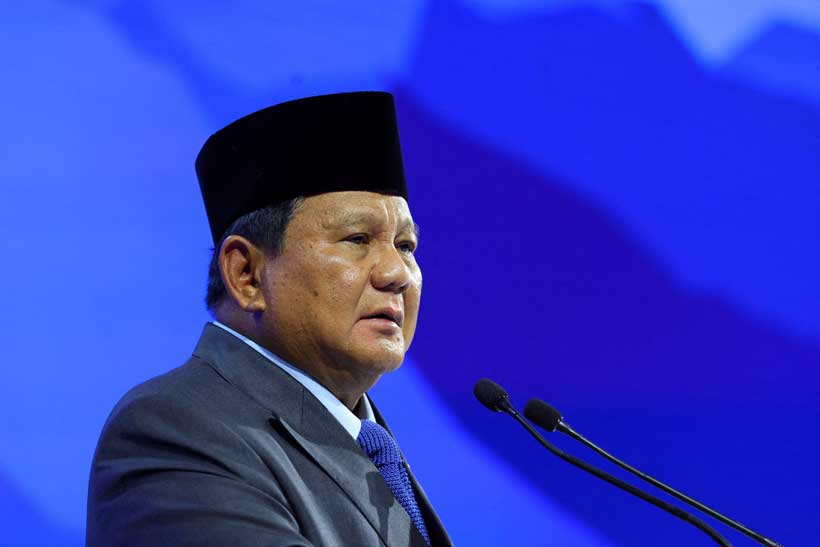
Inside Indonesian President Prabowo Subianto’s administration, officials are firmly supporting his controversial growth and spending policies, despite recent warnings from global financial agencies that have caused market instability and lowered outlooks. Investor confidence in Indonesia, a significant global economy, has decreased as concerns about Prabowo’s expansive spending on initiatives like a $20 billion free meals program and rural economic stimulation have risen. The MSCI’s warning about Indonesia’s market led to the loss of $120 billion in equities and triggered negative feedback from international banks and institutions. Shortly after, Moody’s downgraded its outlook for Indonesia’s government and companies to negative.
The government is attempting to improve stock ownership and transparency, but sources indicate that the Prabowo administration is determined to stick with its major promises, such as the free meals program and a goal to increase economic growth to 8% from its current steady rate of around 5%. One source stated that these have become irrevocable government programs, despite external pressures. Investors are worried that maintaining control over the fiscal deficit is no longer a priority for Prabowo, who gained support by promising generous government spending. The fiscal deficit for 2025 is projected at 2.92%, the highest in over two decades, excluding the pandemic years.
Moody’s expressed concerns over the risks associated with using public spending to drive growth, given Indonesia’s weak revenue base. In response, Prabowo’s spokesperson expressed confidence in fiscal management, noting the deficit remains below the 3% limit. However, internal messages suggest that achieving growth targets may take precedence over strict deficit limits. It was communicated that the government may seek to increase revenues or reduce spending in other areas rather than cut vital programs for growth. Meanwhile, Prabowo has replaced long-standing Finance Minister Sri Mulyani Indrawati with pro-growth economist Purbaya Yudhi Sadewa to accelerate economic growth.
Prabowo aims for rapid economic progress, which some believe contradicts the reforms established since the late 1990s financial crisis. Critics argue that his ambition for 8% growth may lead to policies that are ultimately detrimental in the long run, as they place significant pressure on the budget. The current administration is seen as leaning towards populism, which raises concerns among investors who disfavor excessive government giveaways that may not be sustainable.
To achieve the 8% growth target, substantial state support and significant reforms will be necessary, potentially requiring higher deficit spending or increased tax revenues. Analysts warn that if the issues highlighted by MSCI are not addressed, Indonesia could face severe capital flight, amounting to $7.8 billion, if it loses its emerging market status. Concerns are voiced that Prabowo may not adjust his policy agenda to better align with global economic realities.
With information from Reuters