
Intelligence
China’s influence and operating of the main European ports
The Chinese role and influence has expanded in all “NATO member states”, especially with the acceleration of the scope and number of giant Chinese projects in NATO countries, as the Chinese government and its companies implemented hundreds of projects in the Eurasia region within the framework of the “Belt and Road” initiative, which is launched by President “Xi Jinping” in 2013. We can highly recognize the Chinese expansion in the European and NATO’S member states, as follows:
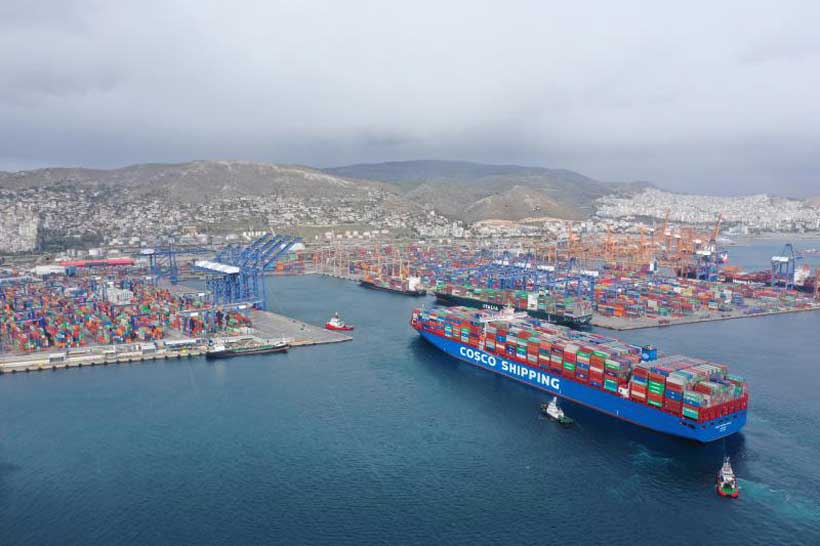
The forms of the extensive Chinese encroachment ranged to participate, buy or rent an increasing number of (sea ports overlooking the Mediterranean), some of which are important ports and ports used by NATO. For example, China controls the famous “Greek port of Prius”. It also finances in the highway and railway projects between (the Balkan countries and Hungary).
China relatively dominates (the global maritime arena and the management and operation of global ports), the most 50 largest ports in the world, especially in Europe, there are Chinese investments. With regard to container ports, (five giant Chinese companies in the field of transport) control 18% of all container shipping activities operated by the 20 largest companies in the world, according to data issued by (Dury Company), a Chinese consulting company in the field of shipping.
In 2016, Beijing set up a national giant through (China merger of “China Ocean Shipping” and “China Shipping Company” to form “Chinese giant COSCO Shipping and Container Company”), and “COSCO China Container Company”, which is a huge trading group company that includes (seven branches of international subsidiaries) including (a shipping line bearing the same name, i.e. “COSCO” is known worldwide, a port operator), as well as many different commercial activities in the field of shipping.
We can notice that there are (three giant Chinese companies for shipping and containers globally), which are competing at the NATO’s member states and the world, and all of them are working in the field of port operation, and these companies, are:
(“China Merchants Port Holdings” & “Cosco Group” & “China Shipping Terminal Development”)
All of these giant Chinese shipping and container companies belong to the Chinese state, and even the (main three huge Chinese companies for shipping and containers, vigorously competing with the three major global dominant companies) for this industry of giant shipping ships and containers companies, such as:
(“AP Moller Maersk of the Netherlands” & “BSA International of Singapore” & “Hutchison Ports Holdings of Hong Kong”)
The most amazing thing is China’s control of (the port of Long Beach in California), which is (the second largest container port in the United States of America). As the deal to acquire the “Long Beach Port” by the “Chinese Cosco Company”, through its subsidiary company in Hong Kong, was finally approved to this deal, the “COSCO Group” has become (the third largest shipping company in the world), and it has control over (Kaohsiung Port in southwest Taiwan, and the Port of Long Beach in California).
China has also started to operate its company (COSCO Shipping Ports), which is the main Chinese state-owned shipping company in the operation of the container port in “Piraeus Port” in Greece in 2008. Since then, Chinese companies have expanded in the three largest ports in Europe, as it acquired a 35% stake in (Euromax Port in Rotterdam), and also acquired a 20% stake in (The Port of Antwerp in Belgium), and China also started actual planning for (Construction of a terminal for Chinese containers and cargo ships in the port of Hamburg in Germany), according to what is circulated.
In Italy, Chinese state companies were allowed to manage or maintain stakes in Italian ports to expand exports between China and Italy, according to the announced agreement between them, and (the Italian port of Trieste), specifically is subject to intense interest from Beijing, as the giant Chinese company, called (China Communications Construction) manages some pilot projects in the port in northern Italy.
Another giant Chinese ship and container shipping company in the ports of NATO’s member states, called “China Merchants”. It is a Chinese state-owned company, headquartered in (Hong Kong), for negotiations with the Italian government to establish (a joint venture for the ship and container terminal between China and Italy in the Italian port of Trieste).
But, what is remarkable here, is the rejection of a number of Italian officials of that Chinese deal. The governor of the Veneto region “Luca Zaia”, as the region adjacent to “Trieste that administers Venice”, rejected the Italian-Chinese deal, as he described it in the Italian media by saying:
“The proposed Chinese deal to manage and operate the port of Trieste at Italy carries a new form of colonialism”
The importance of (the Italian port of Trieste for China) is due to Beijing from a strategic point of view because it will (connect the Mediterranean with landlocked countries), such as: (Austria, Hungary, the Czech Republic, Slovakia, and Serbia), all of which are markets that China hopes to reach them through its “Belt and Road Initiative”, and thus (the Italian port of Trieste) is the most important station for China in Europe on the Chinese Silk Road, and China plans to make it always open to Chinese investments.
The Italian government also agreed to (contract a deal between the Port Authority in the Italian port of Genoa and China), the giant Chinese shipping company, which known: “China Communications Construction Company”.
The assertions of (the head of the Italian port system authority in the western Ligurian Sea of Italy), which is Paolo Emilio Signorini, the Italian authority that controls (the great Italian port of Genoa on the Mediterranean), confirmed that:
“The Italian Ports Authority is working to create a company in partnership with the China Communications Construction Company to manage and operate the main Italian ports”
Perhaps because of the “American fear of Chinese expansion in Italian ports”, this prompted US former Secretary of State “Mike Pompeo” to visit both (Italy and the Vatican) at the end of September 2020, exactly weeks after the visit of Chinese Foreign Minister “Wang Yi” to Italy and four other European countries.
Beijing has set its primary goal of investing in (four Italian ports) to be among its investments within the framework of the Chinese “Belt and Road Initiative”, especially after (Italy’s announcement as the first European country to join the Chinese initiative of the Belt and Road). China has set its plan to expand its ownership in Italian ports as s part of the Belt and Road Initiative projects. In particular (two ports in the north of the Adriatic Sea of Italy, namely the ports of “Tristi and Ravenna”), after the Italian and Chinese governments agreed within a Chinese plan to compete with the main European ports.
Chinese companies have succeeded in owning actual shares of (sea ports in Belgium, France, Greece, Italy, the Netherlands and Germany, thus becoming an important player in the field of European ports). It is estimated that (state-backed Chinese investors own at least 10% of the total shares of all ports in Europe).
The great success of the “Chinese Cosco Company” in the (acquisition of a terminal in the port of Trieste in northern Italy, and China’s acquisition of Zeebrugge port, which is the second largest port in Belgium), which represents the first real success of a Chinese trading company in Northwestern Europe.
China has also succeeded in (concluding deals with three of the largest European ports), which are:
(Euromax port in Rotterdam in Netherlands, in which China owns 35% of its shares & Antwerp port in Belgium, of which China owns 20% & Hamburg port in Germany, in which China has built a new terminal for cargo ships and containers)
And the most dangerous thing here is that the United States of America imposed sanctions on (five companies affiliated with the giant Chinese shipping and container construction company), which is (China Communications Construction), as a giant Chinese company in August 2020, due to American accusations of the company’s involvement in the (militarization of the South China Sea), according to the US indictment against the giant Chinese shipping and container company.
Through the researcher’s previous analysis of this Chinese presence in the depths of European ports, and the American fear of it by proposing alternative projects to control the “Chinese Belt and Road Initiative projects in Europe and NATO’S member states), notifying that there are many European states have challenged Washington and cooperated with China, so it became clear to us, that there are (American and NATO’s recognition that there are increasing fears of the Chinese attempts aimed at expanding its influence in the European Union ports), which are including as NATO’s member states as well, the European Union, led mainly by (France and Germany), have expressed their reservations about the Italian deal for the operation and management of its ports by Chinese companies, with NATO apprehensive about “the increasing Chinese direct influence on the strategic and important Italian ports on the Mediterranean”.
Intelligence
The Role of Open-Source Intelligence in the War in Ukraine
During the Ukraine conflict, OSINT has had a considerable impact on military intelligence, information warfare, media reporting, and the recording of war crimes.
In recent years, the abundance of open-source intelligence (OSINT) has increased tremendously, largely owing to the ever-growing importance of the internet and social media, as well as the larger availability of publicly accessible information and satellite imagery tools. Whereas before, intelligence was largely the purview of national intelligence agencies, the so-called democratization of intelligence has enabled a greater range of individuals to collect information and deliver intelligence products in an impactful way. The consequences of this are readily observable in the ongoing war in Ukraine, where OSINT is being used in a variety of ways to monitor troop movements, shape the narrative, track war crimes, and assist in war reportage.
OSINT is defined as ‘the practice of collecting and analysing information gathered from open sources to produce actionable intelligence.’ One advantage of OSINT is that the types of sources available are incredibly varied. Data can be collected, processed, and analysed from commercial satellite images, public social media posts, unencrypted radio messages, and other publicly available sources.
The abundance of publicly available information readily available for intelligence purposes has had had an impact on the ground in Ukraine. In addition to the activities of Ukraine’s intelligence professionals, Ukrainian civilians, as well as members of the international community sympathetic to the Ukrainian side, have played a role in delivering useful insights from OSINT to the Ukrainian military. As noted by British Army General Sir Jim Hockenhull in December last year, OSINT has ‘proved to be a force multiplier’ by allowing a wider range of individuals to participate in the collection, processing, analysis, and dissemination of intelligence.
The ‘crowdsourcing’ of OSINT has enabled the Ukrainian armed forces to track the movements of Russian military units with greater accuracy, intercept plans and operations, and to anticipate some actions before they take place. Even before the Russian invasion, signs that it was about going to take place were shared online by individuals using open sources. For example, Professor Jeffrey Lewis of the Middlebury Institute examined road traffic reports on Google Maps to identify a jam on the Russian side of the border at 15:15 on February 24, just three hours before the invasion began. As the war has progressed, commercially and publicly available satellite images have been used to track the location of Russian units and unencrypted radio transmissions and mobile phones have enabled Ukrainians to snoop on Russian communications. The use of social media by soldiers on both sides is prolific. By monitoring social media posts on a variety of platforms, intelligence can be obtained on the approximate location, morale, and fighting posture of various military units.
OSINT has also played an important role in information operations, largely helping the Ukrainian side to garner international public opinion in its favour, thus denying Russia an important political advantage. The collection of evidence through OSINT has been used to counter Putin’s narrative on the war and rebut false flag narratives from the Russians. For example, in April last year, images and videos surfaced appearing to show the massacre of Ukrainian civilians in the town of Bucha by Russian forces. Russian troops had occupied the town for approximately a month between February 27 to March 31, 2022. However, Russia claimed that the massacres had in fact been staged by Ukraine to attract Western sympathies. These claims were debunked by satellite images and video analyses which confirmed that the bodies had been present weeks before Ukrainian forces arrived in Bucha. The ability to rebut Russian narratives and maintain an advantage in the arena of international political opinion has been of critical importance for Ukraine, which has been able to somewhat offset the quantitative disadvantage it faces against Russia through the receipt of foreign military aid.
The documentation of war crimes has itself been another area where OSINT has shined. The use of social media by soldiers on both sides of the conflict has been so prolific that some commentators are calling it the ‘first social media war.’ Although this claim is somewhat hyperbolic, the widespread sharing of images and videos on social media platforms like Telegram, YouTube, and Facebook has lifted the fog of war to a previously unseen level. In many cases, videos and images have surfaced on social media showing flagrant breaches of international law. Some non-profit groups like OSINT for Ukraine – a collective of ‘university students and young professionals dedicated to documenting war crimes in Ukraine’ – have collected vast amounts of public data in an attempt to verify and record instances of illegal activity. Of course, verification can itself be difficult, but details like unit insignias can be identified to gather evidence, as can tools like facial recognition software. Presently, enforcement of international and humanitarian law is not feasible, but it remains to be seen how evidence obtained via open sources may be used to prosecute war crimes at some point after the conflict’s conclusion.
Finally, there are important implications for war reporting posed by the abundant availability of open-source materials. Whereas information about previous conflicts were predominately communicated to the general public via journalists reporting from the ground, the availability of open-source content has made it possible for individuals to consume a greater amount of information not filtered by the mainstream media. Various social media accounts, particularly on Telegram, curate images and videos captured on the frontlines of Ukraine. This presents an opportunity to increase public awareness but also to spread misinformation, given the difficulties of verifying content and the ability to frame information in a misleading way.
The availability of open-source information has also changed the way journalists in the mainstream media work. Given the abundance of new sources, journalists may also convey information gleamed from these open sources, rather than relying solely on more traditional journalistic methods. This has accelerated the speed of the news cycle regarding the war. Before the advent of widespread social media usage, updates from the battlefield could take days, weeks, or months to reach the public. Now, the news cycle is constant and information from the conflict can be obtained in a matter of minutes or hours as it becomes available online.
The usage of OSINT in the war Ukraine is fast becoming an important case study for future intelligence practitioners and decision makers. The trends established in this war regarding the abundance of available open sources, as well as the military, political, and informational consequences they pose, will endure and evolve in future conflicts to come.
Intelligence
A Comprehensive Study of India and Pakistan’s Cyber Strengths and Weaknesses
Countries have prioritised cybersecurity and developed skills to safeguard their vital infrastructure, digital assets, and private data as a result of the growing significance of cyberspace in the contemporary world. No exemption applies to India and Pakistan, two nuclear-armed neighbours that have a turbulent past. This study compares their cyber capabilities in great depth and evaluates Pakistan’s difficulties and concerning circumstances.
Over the last several years, India has significantly increased its cyber capabilities. The Indian government has made significant investments in research, education, and infrastructure related to cybersecurity. India’s dedication to protecting its cyberspace is shown by the creation of the National Cyber Security Coordinator (NCSC), the Indian Computer Emergency Response Team (CERT-In), and the National Critical Information Infrastructure Protection Centre (NCIIPC).
The development of India’s cyber capabilities has also been greatly helped by the private sector. Through research, development, and consulting services, organisations like Infosys, Wipro, and Tata Consultancy Services have significantly improved the cybersecurity environment. Furthermore, with over 100,000 people working in the industry, India boasts a sizable talent pool of cybersecurity specialists.
On the other hand, Pakistan’s cyber capabilities are still in the early phases of development. The National Centre for Cyber Security (NCCS) and the Computer Emergency Response Team (PK-CERT) are only two recent achievements for the nation. However, India’s spending in cyber defence dwarf these efforts.
With few businesses actively engaged in cybersecurity research and development, Pakistan’s private sector has likewise fallen behind its Indian counterpart. The nation’s pool of cybersecurity experts is fewer than it should be, and the absence of strong cyber defences has made its digital assets susceptible to intrusions.
India has been investing in creating offensive cyber tools and methods, which has led to a steady improvement in its cyber warfare capabilities. The nation has allegedly engaged in cyber espionage operations against its rivals, particularly Pakistan. The Indian government’s emphasis on enhancing its cyberwarfare and information collecting capabilities has alarmed Pakistan and other nearby nations.
Although Pakistan has also been accused of carrying out cyberattacks on India, experts feel that Pakistan’s skills in this area are less advanced than India’s. Pakistan’s cyberattacks have mostly targeted vital infrastructure, military networks, and government websites in India. However, Pakistan’s cyber attack has had a very modest effect owing to a lack of highly developed cyber capabilities.
Pakistan has a huge issue as a result of the expanding cyber capability gap between India and Pakistan. Pakistan will have a difficult time protecting its digital assets and launching an effective cyberoffensive against its neighbour as India’s cyber defences become more advanced.
The poor cybersecurity framework in Pakistan has economic repercussions as well. Cyberattacks continue to represent a risk to the nation’s digital economy, which is essential to its growth and development. Cyberattacks have the potential to cause financial losses, vital infrastructure damage, and a loss of faith in digital services, all of which might impede Pakistan’s economic development.
Due to Pakistan’s lacking cyber capabilities, national security is at stake as cyber warfare plays a bigger role in contemporary conflict. Pakistan’s stability and security might suffer greatly if a cyberattack on its vital infrastructure, military systems, or government systems is successful.
Slow and dispersed action has been taken in response to the rising cyber threat. The government must give cybersecurity top priority and create a thorough national plan to meet its difficulties. Pakistan may take the following actions to close the gap and improve its cyber capabilities:
In order to successfully handle the cyber issues it confronts, Pakistan has to enhance its current cyber institutions and create new ones. It should be a primary priority to increase the NCCS and PK-CERT’s capacity and capabilities as well as to create a comprehensive national cybersecurity strategy.
Pakistan must make investments to create a secure infrastructure that can fend against cyberattacks. This involves distributing funds for research and development, enabling public-private collaborations, and encouraging innovation in the field of cybersecurity.
For Pakistan’s cyber defence, it is essential to address the scarcity of qualified cybersecurity personnel. To develop a workforce capable of combating new cyber dangers, the nation must invest in cybersecurity education and training programmes.
To improve its cyber capabilities, Pakistan should aggressively seek out foreign partnership and cooperation. By cooperating with international partners, the nation may get access to cutting-edge technology, exchange best practises, and create efficient cyberstrategies.
In the context of the rivalry between India and Pakistan, it is crucial for both nations to take confidence-boosting actions and set standards of conduct online. This can include commitments to refrain from attacking vital infrastructure and cooperate to combat online threats. Such actions may increase confidence between the two countries while lowering the likelihood of cyber escalation.
A concerning scenario for Pakistan is shown by comparing the cyber capabilities of India and Pakistan. Pakistan must take immediate measures to address its cyber vulnerabilities in light of the widening cyber capability gap as well as the ramifications for the economy and national security. Pakistan can negotiate the complex cyber environment and defend its interests in cyberspace by strengthening institutions, investing in infrastructure and research, expanding cybersecurity education, seeking international collaboration, and taking confidence-boosting steps with India.
Intelligence
Narcotrafficking: A National Security Threat
The United States is facing a crisis at its porous southern border, which 2.78 million undocumented aliens crossed in 2022 [1]. At the same time, narcotics are entering the country in unprecedented quantities, with U.S. Customs and Border Protection (CBP) seizing 267,222 pounds of illicit drugs in 2022. This total included 23,248 pounds of fentanyl, a drug which alone accounted for nearly 80 percent of the 110,000 overdose deaths last year [2] [3]. Mexican drug cartels use the border to smuggle drugs and people into the United States.
The cartels manufacture fentanyl and other synthetic drugs using precursor chemicals supplied by China. The drugs are then smuggled across the border by mules, including undocumented aliens. Inside the U.S., the drugs are distributed by transnational gangs, such as MS-13 (Mara Salvatrucha). China helps the cartels to launder their money [4]. Due to the sophistication with which the drug trafficking organizations (DTOs) are operating, they can be considered transnational criminal organizations (TCOs) [5]. These cartels are responsible for more American deaths in one year than the entire Vietnam War, which killed 58,000 Americans. For this reason, DTOs should be considered a national security threat [6].
The cartels are earning an estimated $13 billion per year on human trafficking, plus at least another $12 billion from drugs [7] [8]. This money is used by the cartels to purchase larger armies and better weapons. Consequently, violence in Mexico is increasing as gangs have more of an incentive to fight each other for control of this lucrative business. This makes it harder for the Mexican government to eradicate the cartels, while also making it harder for the U.S. government to cooperate with the Mexican government.
The police and politicians in Mexico are, on the one hand, corrupt, as they are willing to accept cartel money to look the other way or actually aid in the manufacture and distribution of drugs. On the other hand, even the honest ones are coerced into working for cartels, who offer “plata o plomo,” money or bullets [9]. And so, the narcotraffickers continue to expand and to kill Mexican and American citizens directly, while also killing Americans indirectly with fentanyl and other illicit drugs. Illegal immigrants are often used as drug mules, or are trafficked into the country to work for street gangs, distributing the drugs.
Part of the threat to the U.S., other than the drugs and violence that comes over the U.S. border, is the possible destabilization of the Mexican government, which could trigger a massive influx of refugees and drugs.
In the 1980s, the Mexican gangs became organized in terms of drug trafficking, controlling territories and distribution markets. This brought them in conflict with one another, as they fought for control of these routes and markets. Mexican President Felipe Calderon declared a war on drugs in 2006, and deployed military force against the cartels. In 2012, President Enrique Peña Nieto altered the Calderon-era strategy, shifting away from confronting the cartels and instead concentrating on law enforcement and public safety. The Sinaloa Cartel’s Joaquin “El Chapo” Guzman was arrested in 2014, and extradited to the U.S. in 2017, creating a power vacuum which resulted in increased violence both within the Sinaloa Cartel and between Sinaloa and other cartels. There was a short-term decrease in crime after the reforms instituted by Peña Nieto, but corruption remained high, and by 2016, drug-related homicides had increased 22 percent. In 2017, a mass grave in Veracruz state was found to contain 250 bodies of those killed by cartels. Since 2006, an estimated 150,000 people have been killed in drug-related violence [10]
From 1917 through the 1980s, the Institutional Revolutionary Party (the Partido Revolucionario Institucional, PRI) was in control of the state, ruling Mexico’s local, state, and federal governments as an authoritarian regime which was successful in fostering the longest period of peace in the modern history of Mexico. The cartels bribed police and politicians in order to operate their drug businesses. The police were used as protection and as intermediaries between the cartels and the PRI. In 2012, with the election of Enrique Pena Nieto, the PRI returned to the Presidential Mansion. In the leadup to the 2018 presidential election, Mexican cartels killed at least 130 candidates and politicians [10]. Violence in Mexico had been steadily increasing, but has become even worse since the repeal of Trump-era policies. In 2021, drug-related homicides were up 15 percent. Additionally, the repeal of strict immigration policies in the U.S. has increased the appeal of being trafficked into the country, which means more money for the cartels. As the cartels earn more money, violence in Mexico increases.
Attacks on innocent civilians are becoming more and more common [11]. Over the past six years, an estimated 140,000 Mexicans have been murdered, largely by cartels, and the situation is getting worse [12]. In one of Mexico’s most dangerous cities, Celaya, homicides went from 80 in 2010 to 800 in 2020. In 2021, the number dropped somewhat to 640, but the government has dramatically undercounted [13] [14]. Hundreds of those who went missing in Celaya last year were not included in the homicide tally. As cartel violence increases in Mexico, more Mexicans are willing to pay the cartels to have themselves trafficked into the U.S., creating a vicious cycle of amplification. In 2022, Celaya was the site of a massacre, when gunmen killed 11 people in a single incident, including women and children [15]. By December 2022, the overall murder rate in Mexico had declined about 9 percent year-on-year, but this excluded those who were missing. Additionally, other forms of violence remained at record levels [16].
Internationalization of Crime
Initially, Columbian cocaine was shipped by sea and entered the United States through Florida. In the 1980s, the U.S. joined forces with governments in Latin America to combat the drug cartels. At first, these joint efforts enjoyed some success, but they resulted in the unintended consequence of deals being struck between Colombian cartels and Mexican criminal gangs. This resulted in Colombian drugs being trafficked by Mexican gangs into the U.S. through the Southern Border. Seeing the large sums of money the Columbians were earning, the Mexican cartels demanded to be paid in cocaine, which further increased the quantity of drugs hitting American streets. Mexican gangs then created their own distribution networks along the U.S. border, and with the additional money they were able to purchase more soldiers and guns, transforming themselves into sophisticated cartels [13] [17]. Now, through globalization and increased sophistication of the cartel business model, the menu of drug offerings includes fentanyl, cocaine, marijuana, and methamphetamine, with a certain amount of poppies and heroin.
Over the past few decades, criminal gangs have increasingly internationalized, until even the smallest local gang anywhere in the U.S. could be part of a larger TCO. The threat to U.S. national security posed by the transnational drug gangs increases with cooperation between drug trafficking groups, international terrorist groups, and transnational gangs such as MS-13 [18].
Transnational Drug and Criminal Organizations
The Mexican cartels purchase precursor chemicals from China [19]. In 2019, the U.S.-China Economic and Security Review Commission identified China as the number-one source of the fentanyl and fentanyl-related chemicals and products which find their way into the United States. Law enforcement officials have observed a growing trend of Chinese nationals working with drug gangs in both Mexico and the U.S. [20]. Chinese entities are also laundering Mexican drug money through the Chinese financial system. Thomas Overacker, executive director of the CBP Office of Field Operations, stated that most of most of the fentanyl entering the United States does so through the southwestern border [20].
The Sinaloa and Jalisco cartels manufacture most of the fentanyl which ends up in the United States [20]. The U.S. Treasury identified China as a primary threat for money-laundering risk, specifically citing their fentanyl business with Mexican cartels [21]. A 2020 report found that China was the world’s primary money launderer [20]. Once the drugs enter the U.S., the cartels use gangs such as MS-13 to transport and distribute them [4].
Weak Southern Border Policy
In February 2023, The House Committee on Oversight and Accountability held a hearing, in which U.S. Border Patrol chiefs testified about the situation at the southern border. Over the past two years, CBP has set records for seizures of narcotics, as well as the arrest of illegal border crossers and suspected terrorists. The Committee’s findings were that “President Biden and his administration’s policies created the worst border crisis in American history [22]. By removing deterrents, such as punishment for illegal entry into the U.S, the Biden administration has encouraged illegal entrances. Additionally, by providing a pathway to citizenship for illegal immigrants, he has increased the attractiveness of sneaking across the border. As the people entering the country in this way are often poor and desperate, cartels can easily force them into gangs or prostitution.
Conclusion
The theory that narcotrafficking is a form of terrorism and that it is a national security threat is well-supported by the evidence. In fact, even President Biden publicly acknowledged the fact that the opioid epidemic is a national security threat. The narcotrafficking organizations match the definition of transnational terrorist organizations. In their home countries, they utilize violence and threats of violence to impede law enforcement or bring about political change. As transnational terrorists, they smuggle drugs, weapons, and terrorists into the United States which kill and injure millions of Americans. Additionally, they coordinate with known U.S. threat countries, such as China. Given the size of the threat, its transitional nature, and coordination with threat countries, it can be said that the narcotrafficking organizations pose a national security threat to the United States.
On the one hand, these drugs kill Americans through overdoses, while destroying millions of lives through addiction. On the other hand, increased drug flow results in more crime in the U.S., owing to street gangs such as MS-13. In Mexico, cartels’ greater income means more soldiers and more violence, which is threatening to destabilize the Mexican government, unleashing an even greater refugee problem in the U.S. Additionally, a portion of the money earned by the cartels flows back to China for the purchase of precursor chemicals and money laundering services.
Since most of the organizations smuggling drugs into the U.S. are entering the country through the Southern border, it seems that the hypothesis is also correct, that a weak southern border policy is exacerbating the problem. Stronger policies would reduce human trafficking into the U.S., while curtailing the flow of illegal drugs.
U.S. government agencies are recognizing the need for stronger policies to protect the Southern border. “The Department of Homeland Security, requesting that the Department of the Defense provide assistance under our 284-authority, which is our drug smuggling authority, which allows the Department of Defense to build fences, roads and lighting along the southwest border” [23]. The U.S. could utilize the Southern Command to secure the southern border and put a moratorium on illegal immigration. This would staunch the flow of drugs into the U.S. and deprive the cartels of the income they earn from human trafficking. Less drug money for the cartels would mean less money for weapons and soldiers [17]. This would make it easier for the government of Mexico to eradicate the cartels.
Endnotes
[1] Ainsley, J. (2022, October 22). “Migrant border crossings in Fiscal Year 2022 topped 2.76 million, breaking previous record.” NBCNews.com. https://www.nbcnews.com/politics/immigration/migrant-border-crossings-fiscal-year-2022-topped-276-million-breaking-rcna53517
[2] The White House (2023, January 11). “Dr. Rahul Gupta Releases Statement on CDC’s New Overdose Death Data.” https://www.whitehouse.gov/ondcp/briefing-room/2023/01/11/dr-rahul-gupta-releases-statement-on-cdcs-new-overdose-death-data-2/
[3] Office of Governor Janet T. Mills. (2023). “Administration Statement on January-December 2022 Drug Overdose Report.” https://www.maine.gov/governor/mills/news/mills-administration-statement-january-december-2022-drug-overdose-report-2023-02-02
[4] Zemek, A. (2022, May 18). “Murderous Cartels, Illicit Drugs, and Human Trafficking: The Threat and Atrocity of America’s Porous Southern Border.” America First Policy Institute, May 18, 2022. https://americafirstpolicy.com/latest/20220518-murderous-cartels-illicit-drugs-and-human-trafficking-the-threat-and-atrocity-of-americas-porous-southern-border
[5] Congressional Research Service. (2019, August 15). “Mexico: Organized Crime and Drug Trafficking Organizations.” https://crsreports.congress.gov/product/pdf/R/R41576/37
[6] Barr, W. (2023, March 2). “The U.S. must defeat Mexico’s drug cartels.” Wall Street Journal. https://www.wsj.com/articles/the-us-must-defeat-mexicos-drug-cartels-narco-terrorism-amlo-el-chapo-crenshaw-military-law-enforcement-b8fac731
[7] Rogers, Z. (2022). “Cartels making $13 billion a year smuggling migrants across border, report says.” WPDE. https://wpde.com/news/nation-world/cartels-making-13-billion-a-year-off-smuggling-migrants-through-border-nyt-report-says-mexio-immigrants-coyote-texas
[8] Vallarta Daily News. (2022, March 11). “Mexican drug traffickers launder 25 billion dollars a year.” https://www.vallartadaily.com/mexican-drug-traffickers-launder-25-billion-dollars-a-year/
[9] Duncan, G. (2022, October 7). “Beyond ‘plata o plomo’: Drugs and State Reconfiguration in Colombia.” Cambridge Core. https://www.cambridge.org/core/elements/abs/beyond-plata-o-plomo/638DE2FB4FAC3A1A529D00D5DB7B7039
[10] Center for Preventive Action (2023, January 6). “Criminal Violence in Mexico.” Council on Foreign Relations https://www.cfr.org/global-conflict-tracker/conflict/criminal-violence-mexico
[11] Suárez, K. (2022, September 24). “Outbreak of Mexican cartel violence targeting innocents raises worries of what’s to come.” USA Today. https://www.usatoday.com/in-depth/news/nation/2022/09/24/cartel-violence-mexico-hitting-innocents-raises-worry-future/8083730001/
[12] Blears, J. (2022, December 3). “Violent crime on the rise in Mexico.” Vatican News. https://www.vaticannews.va/en/world/news/2022-12/mexico-homicides-increase-drug-cartels.html
[13] Rizer, A. 2015. “Hannibal at the Gate: Border Kids, Drugs, and Guns – and the Mexican Cartel War Goes on.” St. Thomas Law Review, March 22, 2015. https://law-journals-books.vlex.com/vid/hannibal-at-the-gate-636909249
[14] Abi-Habib, M. and O. Lopez (2022, August 31). “‘Absolute Warfare’: Cartels Terrorize Mexico as Security Forces Fall Short.” New York Times. https://www.nytimes.com/2022/08/31/world/americas/mexico-cartels-violence.html
[15] Buschschlüter, V. (2022, May 24). “Mexico shooting: Gunmen open fire at hotel in Celaya.” BBC. https://www.bbc.com/news/world-latin-america-61562286
[16] Resendiz, J. (2022, December 30). “Murders down in Mexico, but violence still at near-record levels.” Fox 5. https://fox5sandiego.com/news/border-report/murders-down-in-mexico-but-violence-still-at-near-record-levels/
[17] Bensman, T. (2022, December 27). “Biden’s Border Crisis Is Fueling Growing Cartel Armies.” Center for Immigration Studies. https://cis.org/Bensman/Bidens-Border-Crisis-Fueling-Growing-Cartel-Armies
[18] Hesterman, J. L. (2013). The Terrorist-Criminal Nexus: An Alliance of International Drug Cartels, Organized Crime, and Terror Groups. Boca Raton: CRC Press.
[19] Standaert, M. (2021, February 28). “China’s fentanyl connection: the suppliers fuelling America’s opioid epidemic.” South China Morning Post. https://www.scmp.com/magazines/post-magazine/long-reads/article/3123109/chinas-fentanyl-connection-suppliers-fuelling
[20] Greenwood, L., and K. Fashola. (2021, August 24). “Illicit Fentanyl from China: An Evolving Global Operation,” U.S.-China Economic and Security Review Commission. https://www.uscc.gov/sites/default/files/2021-08/Illicit_Fentanyl_from_China-An_Evolving_Global_Operation.pdf
[21] U.S. Department of the Treasury. (2022, May). “National Strategy for Combating Terrorist and Other Illicit Financing.” https://home.treasury.gov/system/files/136/2022-National-Strategy-for-Combating-Terrorist-and-Other-Illicit-Financing.pdf
[22] The House Committee on Oversight and Accountability. (2023, February 7). “Border Patrol Chiefs: Biden’s Border Crisis Is ‘Overwhelming.’” https://oversight.house.gov/release/border-patrol-chiefs-bidens-border-crisis-is-overwhelming/
[23] Media Roundtable Background Briefing on DHS Request for DOD Assistance in Blocking Drug-Smuggling Corridors Along the Southern US Border. (2020). In U.S. Department of Defense Information / FIND. Federal Information & News Dispatch, LLC.
-
Economy4 days agoIs U.S. housing market going to crash?
-
International Law3 days agoRussia-Ukraine conflict: Perspective of International Laws of Use of Force
-
Defense4 days agoFinland’s accession to NATO: What it means and why it matters?
-
East Asia3 days agoThe Mongolian Candidate
-
South Asia3 days agoThe Reasons Behind Pakistan’s Reluctance to Establish Diplomatic Ties with Israel
-
New Social Compact3 days agoThe Social Ostracism of the Disabled: A Tale of Discrimination, Deprivation, and Disregard
-
Intelligence3 days agoA Comprehensive Study of India and Pakistan’s Cyber Strengths and Weaknesses
-
Africa3 days agoSudan tests the limits of Middle Eastern de-escalation
