
Connect with us

Science & Technology

Coronavirus in a Time of Chimeras

Published

on

As the global COVID-19 scourge appears to recede, questions remain over the source and morphology of a virus that had locked down two-thirds of humanity over the first half of 2020. It may take years to satisfactorily decipher this extraordinary episode in human history.

Nonetheless, the novel coronavirus was not germinated in a vacuum.  The type of research conducted at the Wuhan Institute of Virology had ominous analogues worldwide. These included the quest for super intelligence and the development of interspecies hybrids or chimeras.

Genetically-Enhanced Competitiveness

What began as a scientific mission to remedy congenital defects has rapidly morphed into a global race to create designer babies, super soldiers and transhumans through the aid of biotechnology and Artificial Intelligence.  21st century eugenics is tacitly justified by the need to boost “national competitiveness”.

China leads the way here. In one revealing instance alone, genome sequencing giant BGI Shenzhen had procured and sequenced the DNA of more than 2,000 people – mostly Americans – with IQ scores of at least 160. According to Stephen Hsu, a theoretical physicist from Michigan State University and scientific adviser to BGI:

 “An exceptional person gets you an order of magnitude more statistical power than if you took random people from the population…”

BGI Shenzhen intends to become a “bio-Google” that will collate the “world’s biological information and make it universally accessible and useful”.   From 2012 onwards, it began to collaborate with the Bill & Melinda Gates Foundation.

Scientific endeavours like these are based on the assumption that an assemblage of smart samples will help in the identification and transplantation of optimal bits of DNA into future generations. It is not dissuaded by the nurture over nature debate, even after exhaustive studies have failed to establish genetic variants associated with intelligence. For example, a 2010 study led by Robert Plomin, a behavioural geneticist at King’s College London, had probed over 350,000 variations in single DNA letters across the genomes of 7,900 children but found no prized variant. Curiously, most of the smart samples procured by BGI Shenzhen were sourced from Plomin’s research activities.

Periodic setbacks will not deter the proponents of “procreative beneficence” who argue that it is a human duty to augment the genetic codes of future generations1.  Failure to do so is couched in terms of “genetic neglect” and even child abuse2.If this sounds eerily familiar, look no further than the worldview that once animated Nazi Germany.

The eugenic zeitgeist has gripped China in a big way. Under its Maternal and Infant Health Care Law (1994), foetuses with potential hereditary diseases or deformities are recommended for abortion. At the rate Beijing is building its eugenic utopia, the definition of serious deformity may ultimately include a genetically-diagnosed lower IQ.

Instead of raising an eyebrow, the law precipitated a headlong rush to select “intelligent” babies through methods like preimplantation genetic diagnosis (PGD). The idea behind PGD isto screen and identify the most promising embryos for implantation and birth. Combined with CRISPR gene-editing tools, next generation Chinese citizens are expected to exhibit remarkably higher IQs – at least according to bioethicists who fret over a future marked by the “genetic haves” and “genetic have-nots”. China already has three CRISPR-edited babies whose current fate remains unclear.

In the aftermath of the COVID-19 contagion, the availability of “smart samples” would have increased exponentially and may dovetail nicely with the vaccination agenda oft he Rockefeller Foundation and Bill Gates. Incidentally, Gates grew up in a household that was heavily invested in population control and eugenics.

Our smart societies may inevitably face the existential question of “live-lets” and “live-nots” down the line. The orchestrated rebellion towards selective extinction, if it occurs, has a tragicomical public face: A 17-year-old Swede who unceasingly exhorts the world to “listen to the science” and “listen to the experts” but who has little time to listen to her own school teachers.

What can future designer babies contribute to society? For one thing, we will be missing individuals like Beethoven (deaf); Albert Einstein (learning disability/late development); John Nash (schizophrenia); Andrea Boccelli (congenital glaucoma) and Vincent van Gogh (chronic depression/anxiety). A future Stephen Hawkings (motor neurone disease) and Greta Thunberg (Asperger’s Syndrome – allegedly) may be genetically disqualified before birth. 

It is now an inconvenience to consider intelligence as a result of peer interactions, human environment and personal adversity. Mapping out the complex and sometimes unpredictable interplay between 100 trillion synaptic connections in a human brain may take centuries. Genetic manipulation is implicitly regarded as the eugenic wormhole that will accelerate the emergence of a global smart society.

The late billionaire paedophile, Jeffrey Epstein, was a prominent proponent of this eugenics philosophy. Epstein intended to breed a“super race of humans with his DNA by impregnating women at his New Mexico ranch, genetic engineering and artificial intelligence.” Welcome to Lebensborn 2.0 and it is all about saving the environment and humanity. For now!

Prominent scientists linked to Epstein’s transhumanist fantasies included “molecular engineer George Church; Murray Gell-Mann, the discoverer of the quark; the evolutionary biologist Stephen Jay Gould; the neurologist and author Oliver Sacks; and the theoretical physicist Frank Wilczek.”The late Stephen Hawking – who will ironically flunk the genetic pre-screenings of tomorrow – was another Epstein associate. Are misanthropes in charge of humanity now?

Eugenics-driven national competitiveness is a tacitly growing obsession among major powers.Its hyper-materialistic focus is encapsulated by an analogy used by Russian scientist Denis Rebrikov:

“It currently costs about a million rubles ($15,500 at the time) to genetically change an embryo—more than a lot of cars—but prices will fall with greater use…I can see the billboard now: ‘You Choose: a Hyundai Solaris or a Super-Child?’”

Will that be an energy-efficient, coronavirus-resistant super child who will instinctively lead a low carbon-emitting lifestyle? The road to hell is indeed paved with fanciful intentions.

But why stop at children? From genetically engineered horses in Argentina that are supposedly  faster, stronger and better jumpers to super-dogs in China that are comprehensively superior to the average mutt, the DNA of the entire natural world may be slated for a revolutionary redesign in the future.

Crouching Chimeras, Hideous Hybrids

We however cannot create a future generation of superhumans without being adept at recombining genetic sequences across species. That is the logic guiding eugenicists. As a result, a slew of chimeras or interspecies hybrids have been spawned with the aid of CRISPR. These include human-monkey hybrids, monkey-pig hybrids, human-rabbit hybrids and a host of other lab-manufactured monstrosities.

Chimeras are created when human embryonic stem cells are injected into embryos from another species. The goal, for the time being, is to induce the growth of targeted human organs. Those facing terminal illnesses will no longer have to worry about long organ waiting lists.A less controversial approach to human organ replacement is 3D bioprinting or its 4D bioprinting iteration. These techniques involve the “printing” of a replacement organ from the stem cells of a transplant recipient, thereby eliminating the odds of organ rejection.

But why stop at replacement organs when we can have replacement humans altogether? Future generations must think like Einsteins, be as nimble as leopards and possess owl-like night visions. And, of course, be virus-resistant as well!

The manipulation of the human genome is the new “grand response” to the venerable set of “grand challenges”.  Thanks to globalization, China is the go-to place for such genetic tinkering as some of these undertakings are technically illegal in the West. Since 2014, the Wuhan Institute of Virology was the recipient of a two-stage grant worth $7.2 million from the United States government for gain-of-function research into bat coronaviruses. According to a Newsweek report:

Many scientists have criticized gain of function research, which involves manipulating viruses in the lab to explore their potential for infecting humans, because it creates a risk of starting a pandemic from accidental release.

Such caution has not deterred a flurry of research into microbial gene manipulation. It may have instead spawned COVID-19. Recombining genetic codes at the substrate levels is fraught with risks, as any systems theory scholar can attest3. COVID-19 was therefore not a Black Swan event but likely an “emergent4outcome arising from complex genomic interactions and human folly.

To solely blame China for the coronavirus pandemic therefore may bea tad unfair. Just as China is the factory of the world for foreign corporations, it is also the genetic incubator for a variety of viruses and chimeras for foreign governments and foundations. Even so, the human-pig chimera was the creation of the Salk Institute in California. Research into the world’s first human-mouse hybrid was largely a Japanese affair. The Portuguese in the meantime had created a virus chimera.

The British, on their end, had spawned a human-cow hybrid embryo in 2008 – perhaps reflective of the bovine disposition of those who consume its mainstream media. Clinically-speaking, such analogies are not wholly unwarranted. It was in Britain where the game-changing Dolly the Sheep was cloned in 1996. The transition from sheep to sheeple may turn out to be a short 21st century Jurassic Park ride.

Coincidences and Consequences

Before the advent of gene-editing tools and supercomputing, it would have taken hundreds of years to create a viable chimera.  The Genetics-Industrial Complex and contact tracing-type Panopticons constitute a new growth area for nearly-bankrupt Tech Titans5. Is it any wonder that the mainstream media and their Big Tech owners are furiously censoring contrarian expert views on COVID-19?

The dangers of genome editing were in fact included in the Worldwide Threat Assessment reports submitted to United States Congress in 2016 and 2017. They were either omitted or glossed over in the 2018 and 2019 reports– just as such risks were on the rise.

Is it a coincidence that the nations most affected by COVID-19 are the very ones that had either promoted or encouraged a variety of genetic experimentations that are contrary to nature? By the time this crisis is over, independent researchers should superimpose the maps of “genetic superpowers” with those of nations with either the highest COVID-19 fatality rates or the worst socioeconomic fallouts. There may likely be a good degree of overlap as the figure below indicates.
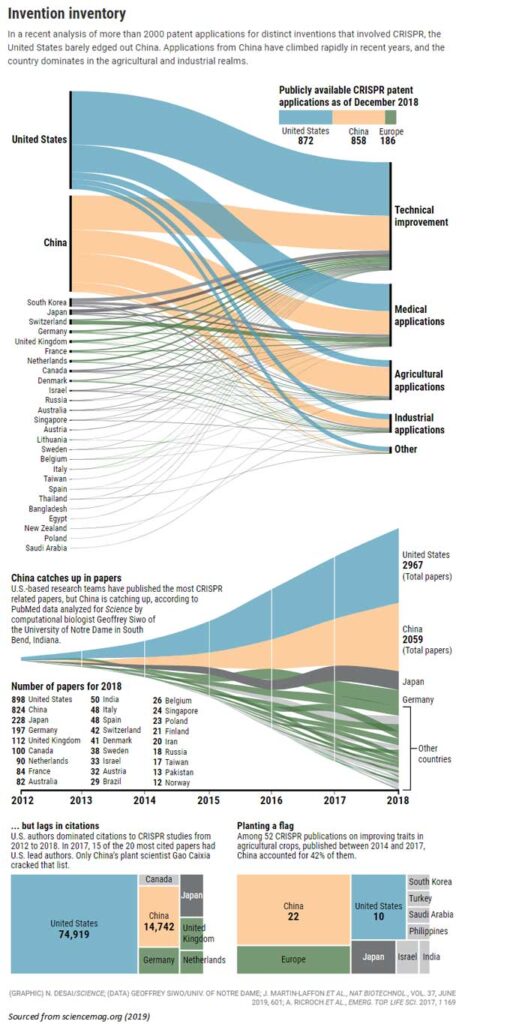
A Pandora’s Box has been opened and more hideous chimeras may emerge during this decade. It is quite an irony that a new generation of artificially-manufactured and cerebrally-deficient “thought leaders”, academics and activists are being groomed to promote “global governance” – a concept due for a portentous mission creep in tandem with the Second Great Depression. What will be their future worth in a eugenic global society that is centrally-controlled bya digital panopticon6?

“Designer babies” and “super humans” may also render many humans redundant. Will the genetic have-nots be reclassified as “live-nots” in the not-so-distant future?

Science & Technology

Is your security compromised due to “Spy software” know how

Published

on

Spy software is often referred to as spyware is a set of programs that gives access to user/ administrators to track or monitor anyone’s smart devices (such as desktop, laptop, or smart phone) from anywhere across the globe.

Spyware is a threat, not only to businesses but individual users as well, since it can steal sensitive information and harm anyone’s network. It is controversial due to its frequent violation to end user’s privacy. It can attack user’s device, steal sensitive data (such as bank account or credit card information, or personal identity) or web data and share it with data firms, advertisers, or external users.

There are numerous online spyware designed for almost no cost, whose ultimate goal is to track and sell users data. Some spy software can install additional software and change the settings on user’s device, which could be difficult to identify.

Below are four main types of spyware, each has its unique features to track and record users activity:

Tracking cookies: These are the most common type of trackers, these monitor the user’s internet usage activities, such as searches, downloads, and history, for advertising and selling purposes.

System monitors: These spy software records everything on your device from emails, keystrokes, visited websites, chat-room dialogues, and much more.

Adware: This spyware is used for marketing purpose, it tracks users downloads and browser history, and suggests or displays the same or related products, this can often lead to slow device.

Trojan: This spyware is the most malicious software. It can be used to track sensitive information such as bank information or identification numbers.

Spyware can attack any operating system such as windows, android, or Apple. Windows operating systems are more prone to attack, but in past few years Apple’s operating systems are also becoming vulnerable to attacks.

According to a recent investigation by the Guardian and 16 other media organizations, found that there is a widespread and continuous abuse of NSO’s hacking spyware Pegasus, on Government officials, human rights activists, lawyers and journalists worldwide which was only intended to use against terrorists and criminals.

The research, conducted by the Pegasus technical partner Amnesty’s Security Lab, found traces of the Pegasus activity on 37 out of the 67 examined phones. Out of 37 phones, 34 were iPhones, and 23 showed signs of a Pegasus infection, while remaining 11 showed signs of attempted infection. However, only three out of 15 Android phones were infected by Pegasus software.

Attacks like the Pegasus might have a short shelf life, and are used to target specific individuals. But evidences from past have proved that attackers target large group of people and are often successful.

Below are the most common ways devices can become infected with spyware:

  • Downloading software or apps from unreliable sources or unofficial app publishers
  • Accepting cookies or pop-up without reading
  • Downloading or watching online pirated media content
  • Opening attachments from unfamiliar senders

Spyware can be extremely unsafe if you have been infected. Its damage can range from short term device issue (such as slow system, system crashing, or overheating device) to long-term financial threat.

Here’s what you can do protect your devices from spyware:

Reliable antivirus software: Firstly look for security solutions available on internet (some are available for free) and enable the antivirus software. If your system or device is already infected with virus, check out for security providers offering spyware identification and removal.

-For instance, you can install a toolkit (the Mobile Verification Tool or the MVT) provided by Amnesty International. This toolkit will alert you with presence of the Pegasus Spyware on your device.

-The toolkit scans the backup file of your device for any evidence of infection. It works on both Apple and Android operating systems, but is more accurate for Apple operating system.

-You can also download and run Norton Power Eraser a free virus removal tool.

Update your system regularly: Set up an update which runs automatically. Such automatic updates can not only block hackers from viewing your web or device activity, but can also eliminate software errors.

Be vigilant of cookies compliance: Cookies that records/ tracks users browsing habits and personally identifiable information (PII) are commonly known as adware spyware. Accept cookies only from reliable sites or download a cookie blocker.

Strong authentication passwords: Try to enable Multi-factor Authentication (MFA) wherever possible, or if not possible create different password for all accounts. Change your password for each account after a certain period of time.

-Password breaches can still occur with these precautions. In such case change your password immediately.

Be cautious of free software: Read the terms and conditions on software licenses, before accepting. Free software might be unlimited but, your data could be recorded with those free software’s.

Do not open any files from unknown or suspicious account: Do not open any email attachments or text on mobile from a suspicious, unknown, or untrustworthy source/number.

Conclusion:

Spyware could be extremely dangerous, however it can be prevented and removed by being precautious and using a trustworthy antivirus tool. Next gen technologies can also help in checking and removing malicious content. For instance, Artificial intelligence could aid the organizations identify malicious software, and frequently update its algorithms of patterns similar to predict future malware attacks.

Continue Reading

Science & Technology

Implementation of virtual reality and the effects in cognitive warfare

Published

on

Photo: Lux Interaction/Unsplash

With the increasing use of new technologies in warfare situations, virtual reality presents an opportunity for the domain of cognitive warfare. Nowadays, cognitive skills are treated equally as their physical counterparts, seeking to standardize new innovative techniques. Virtual reality (VR) can be used as a tool that can increase the cognitive capabilities of soldiers. As it is understandable in today’s terms, VR impacts the brain directly. That means that our visual organs (eyes) see one object or one surrounding area, but brain cells perceive and react to that differently. VR has been used extensively in new teaching methods because of the increased probability of improving the memory and learning capabilities of students.

Besides its theoretical teaching approach and improvement of learning, VR can be used systematically towards more practical skills. In medicine for example students can have a full medicine lesson on a virtual human being seeing the body projected in 3D, revolutionizing the whole field of medicine. If that can be used in the medical field, theoretically it will be possible to be used in combat situations, projecting a specific battlefield in VR, increasing the chances of successful engagement, and reducing the chance of casualties. Knowing your terrain is equally important as knowing your adversary.

The use of VR will also allow us to experience new domains relating to the physical health of a person. It is argued that VR might provide us with the ability to effectively control pain management. Since VR can stimulate visual senses, then it would be safe to say that this approach can have higher effectiveness in treating chronic pain, depression, or even PTSD. The idea behind this usage is that the brain itself is already powerful enough, yet sometimes when pain overwhelms us we tend to lose effectiveness on some of our senses, such as the visual sense. An agonizing pain can blurry our vision, something that we cannot control; unless of course theoretically, we use VR. The process can consist of different sounds and visual aids that can trick the mind into thinking that it is somewhere that might be the polar opposite of where it is. Technically speaking, the mind would be able to do that simply because it works as a powerful computer, where our pain receptors can override and actually make us think that we are not in such terrible pain.

Although the benefits of VR could be useful for our health we would still need to deal with problems that concern our health when we use a VR set.  It is possible that the brain can get overloaded with new information and the new virtual environments. VR poses some problems to some people, regarding the loss of the real environment and creating feelings of nausea or extreme headaches. As a result, new techniques from cognitive psychologists have emerged to provide a solution to the problem. New technologies have appeared that can desaturate colors towards the edge of the headset in order to limit the probability of visual confusion. Besides that, research shows that even the implementation of a virtual nose when someone wears a VR headset can prevent motion sickness, something that our brain does already in reality.

However, when it comes to combatants and the implementation of VR in soldiers, one must think of maybe more effective and fast solutions to eliminate the problems that concern the confusion of the brain. Usage of specific pharmaceuticals might be the key. One example could be Modafinil which has been prescribed in the U.S. since 1998 to treat sleep-related conditions. Researchers believe it can produce the same effects as caffeine. With that being said, the University of Oxford analyzed 24 studies, where participants were asked to complete complex assignments after taking Modafinil and found out that those who took the drug were more accurate, which suggests that it may affect higher cognitive functions.

Although some of its long-term effects are yet to be studied, Modafinil is by far the safest drug that can be used in cognitive situations. Theoretically speaking, if a long exposure to VR can cause headaches and an inability to concentrate, then an appropriate dose of Modafinil can counter the effects of VR. It can be more suitable and useful to use on soldiers, whose cognitive skills are better than civilians, to test the full effect of a mix of virtual technology and pharmaceuticals. VR can be a significant military component and a simulation training program. It can provide new cognitive experiences based on foreign and unknown terrains that might be difficult to be approached in real life. New opportunities arise every day with the technologies, and if anyone wanted to take a significant advantage over adversaries in the cognitive warfare field, then VR would provide a useful tool for military decision-making.

Continue Reading

Science & Technology

Vaccine Equity and Beyond: Intellectual Property Rights Face a Crucial Test

Published

on

research coronavirus

The debate over intellectual property rights (IPRs), particularly patents, and access to medicine is not new. IPRs are considered to drive innovation by protecting the results of investment-intensive R&D, yet arguably also foster inequitable access to affordable medicines.

In a global public health emergency such as the COVID-19 pandemic, where countries face acute shortages of life-saving vaccines, should public health be prioritized over economic gain and the international trade rules designed to protect IPRs?

The Agreement on Trade-Related Aspects of Intellectual Property Rights (TRIPs), to which all 164 member states of the World Trade Organization (WTO) are a party, establish minimum standards for protecting different forms of IPRs. 

In October 2020, India and South Africa – countries with strong generic drug manufacturing infrastructure – invoked WTO rules to seek a temporary waiver of IPRs (patents, copyrights, trade secrets, and industrial designs) on equipment, drugs, and vaccines related to the “prevention, containment or treatment of COVID-19.” A waiver would mean that countries could locally produce equipment and vaccines without permission from holders of IPRs. This step would serve to eliminate the monopolistic nature of IPRs that give exclusive rights to the holder of IPRs and enable them to impose procedural licensing constraints.

Brazil, Japan, the European Union (EU), and the United States (US) initially rejected the waiver proposal. That stance changed with the rise of new COVID-19 mutations and the associated increase in deaths, with several countries facing a public health crisis due to vaccine supply shortages. The position of many states began shifting in favor of the India-South Africa proposal, which now has the backing of 62 WTO members, with the US declaring support for the intent of the temporary waiver to secure “better access, more manufacturing capability, more shots in arms.” Several international bodies, the World Health Organization (WHO), and the UN Committee on Economic, Social and Cultural Rights have voiced support.

Some countries disagree about the specific IPRs to be waived or the mechanisms by which IPRs should be made available. The EU submitted a proposal to use TRIPS flexibilities such as compulsory licensing, while others advocate for voluntary licensing. The TRIPS Council is conducting meetings to prepare an amended proposal to the General Council (the WTO’s highest-level decision-making body in Geneva) by the end of July 2021.

The crisis in India illustrates the urgency of the situation. India produces and supplies Covishield, licensed by AstraZeneca; and Covaxin, which is yet to be included on the WHO’s Emergency Use Listing (EUL). Due to the devastating public health crisis, India halted its export of vaccines and caused a disruption in the global vaccine supply, even to the COVID-19 Vaccines Global Access (COVAX) program. In the meantime, the world’s poorest nations lack sufficient, critical vaccine supplies.

International law recognizes some flexibility in public health emergencies. An example would be the Doha Declaration on TRIPS and Public Health in 2001, which, while maintaining the commitments, stresses the need for TRIPS to be part of the wider national and international action to address public health problems. Consistent with that, the body of international human rights law, including the International Covenant on Economic, Social and Cultural Rights (ICESCR), protects the right to the highest attainable standard of health.

But as we race against time, the current IPR framework may not allow for the swift response required. It is the rigorous requirements before a vaccine is considered safe to use under Emergency Use Authorizations and procedural delays which illuminate why IPR waivers on already approved vaccines are needed. Capitalizing on the EUL’s approved vaccines that have proven efficacy to date and easing IPR restrictions will aid in the timely supply and access of vaccines.

A TRIPS waiver may not solve the global vaccine shortage. In fact, some argue that the shortages are not an inherent flaw in the IP regime, considering other supply chain disruptions that persist, such as the ones disrupting microchips, pipette tips, and furniture. However, given that patent licensing gives a company a monopoly on vaccine commercialization, other companies with manufacturing capacity cannot produce the vaccine to scale up production and meet supply demands.

Neither does a temporary waiver mean that pharmaceutical companies cannot monetize their work. States should work with pharmaceuticals in setting up compensation and insurance schemes to ensure adequate remuneration.

At the College of Law at Hamad Bin Khalifa University, our aim is to address today’s legal challenges with a future-oriented view. We see COVID-19 as a case study in how we respond to imminent and existential threats. As global warming alters the balance of our ecosystem, threats will cascade in a way that is hard to predict. When unpredictable health emergencies emerge, it will be human ingenuity that helps us overcome them. Even the global IP regime, as a legal system that regulates ideas, is being tested, and should be agile enough to respond in time, like the scientists who sprang into action and worked tirelessly to develop the vaccines that will soon bring back a semblance of normal life as we know it.

Continue Reading

Publications

Latest

Trending