
Connect with us

News

World Bank Project to Support Modernization of Higher Education in Belarus

Published

on

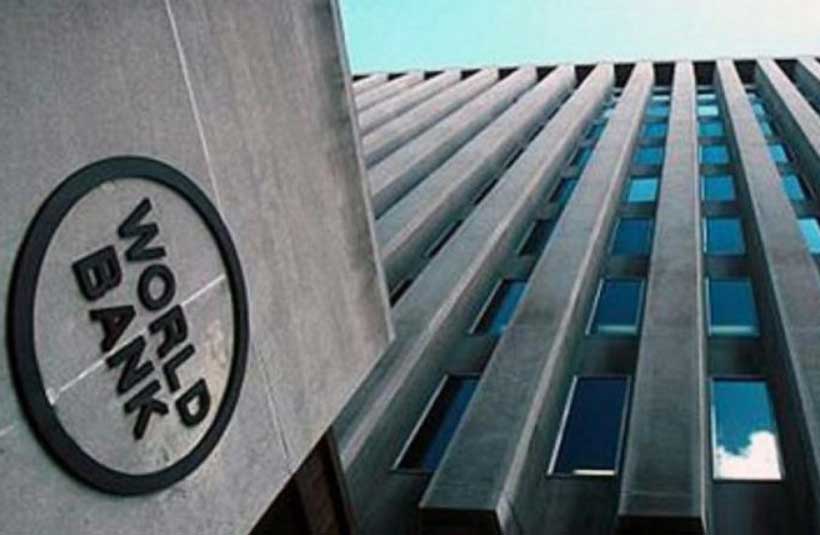
The World Bank Board of Executive Directors approved today a €100 million project to support the modernization of Belarus’ higher education sector, a crucial step towards achieving a modern university system and boosting economic growth potential.

Thanks to the project, laboratories and research, teaching and learning facilities in 18 Higher Education Institutions in Belarus will be modernized with up-to-date equipment, while buildings in several institutions will be rehabilitated.

“In 2015, Belarus joined the Bologna Process, a pan-European higher education reform initiative. This important step resulted in a major commitment to improving higher education,” said Nina Arnhold, World Bank Global Lead for Tertiary Education and Senior Education Specialist. “With this project, we are pleased to support the country’s ongoing efforts to align university outcomes with the demands of the 21st century labor market. We are also committed to supporting independent quality assurance and modernization of the teaching and learning environment.”

With support from the project, Belarusian universities and colleges will have opportunities to participate more actively in international programs and initiatives. In addition, the project will contribute to improving the quality of Belarusian tertiary education, through the establishment of a National Quality Assurance Agency which will be fully aligned with the Bologna Process.

“Between 2020 and 2025, around 300,000 students and academic staff will benefit each year from an improved teaching and learning environment, thanks to this project,” said Alex Kremer, World Bank Country Manager for Belarus. “This is the intellectual capital that could transform Belarus from a resource-based economy into a knowledge economy.”

Since the Republic of Belarus joined the World Bank in 1992, lending commitments to the country have totaled $1.9 billion. The active investment lending portfolio financed by the World Bank in Belarus includes nine projects totaling $942.71 million.

Continue Reading
Comments

Environment

Calling on natural defences to turn back banana pandemic

Published

on

In the 1950s, the ‘Gros Michel’ variety of banana was wiped out by Panama disease. The banana crop in some locations was basically eliminated by the disease of fusarium wilt, caused by a pathogen that enters the plant through the roots.

With no defence possible, the only solution for the banana industry was to cultivate a different banana variety called the Cavendish, which was naturally immune to Panama disease. In that way, the Cavendish variety rose to become the most traded banana crop in the world today.

Unfortunately, the disease that causes fusarium wilt has mutated and now the Cavendish crop is no longer immune. It too is being decimated by fungal disease.

‘This fungus is a complete nightmare,’ said Dr Aurelio Ciancio, from the Institute for Sustainable Plant Protection at the National Research Council of Italy in Bari.

‘Producers are worried because it’s spreading quickly around the world,’ he said.

Ciancio is the coordinator of the MUSA research project. ‘Traditional control measures are limited and this fungus is clearly capable of killing plants at speed,’ he said.

Funded by the EU and working with partners from Europe, Africa and Latin America, MUSA spent four years investigating the use of bio-controls, or natural agents in plant defence. 

Banana bugbear

The banana’s bugbear is dubbed Tropical Race 4 (TR4) also known as Panama 4. First identified in Taiwan in 1990, the mould causes fusarium wilt in the Cavendish cultivar. Entering through the roots, it chokes off the plant’s energy supply, killing it from within.

TR4 has been detected in banana growing areas around the world. It spreads stealthily in contaminated soil or water, remaining undetected until it invades the plant. By the time its effects are visible, as the banana plant turns yellow and wilts, it’s too late. TR4 has moved on to strike its next victim, destroying banana plantations as it goes.  

The TR4 fungus has been identified in places as far afield as Australia, Mayotte, Mozambique, Peru and Colombia. Once again, just like with Panama disease, the 23-billion-euro global banana industry faces an existential threat.

The bananas we buy have a narrow genetic base. Because they reproduce by cloning, they are all practically identical, genetically speaking. All bananas in the world are susceptible because the Cavendish is a monocultural crop with zero resistance to TR4.

Microbiology

MUSA research focuses on rhizosphere microbiology, which is the study of microorganisms in the soil around a plant’s roots where micro-organisms thrive.

Microorganisms such as fungi, bacteria and nematodes (microscopic worms) may be our natural allies in the fight against banana diseases.   

When it comes to rhizosphere microbiology, said Ciancio, ‘There are the good guys, and the bad guys.’

‘Our aim has been to identify the good guys,’ he said. These are the microorganisms that will help plants to feed, activate their natural defences or even turn the tables and attack pathogens and pests that threaten the plant. 

The scope of the MUSA project included not just TR4 but other severe problems banana plants encounter, notably plant parasitic nematodes (tiny worms which disrupt nutrient and water uptake) and black weevil (one of the most serious insect pests facing bananas). The MUSA team collected and sequenced thousands of biocontrol agents with encouraging results.

MUSA partners in Costa Rica discovered a fungus that can reduce the impact of disruptive nematodes, or tiny worms, which attack the plant. On the other hand, in Cuba, MUSA partners conducted research on a type of nematode that fights the deadly black weevil insect.

Natural defences

Overall, their findings demonstrate how microorganisms in the rhizosphere may help to prime banana plants’ natural defences and sustain its roots.

Meanwhile, on the tropical island of Réunion in the Indian Ocean, TR4 is not yet present but the threat looms large. ‘The diseases we’re studying are now very close to the border,’ explains Bernard Reynaud, Professor of Plant Biology and Ecology at Réunion University, Head of the CIRAD Laboratory and coordinator of the EU-funded INDICANTS project.  

Beginning earlier this year, INDICANTS plans to develop rapid tests to detect the presence of harmful bacteria or fungi in banana plants.

‘For bananas the issue is that there are lots of epidemics in small areas and we’re trying to limit their expansions,’ said Reynaud. ‘For this, we need a rapid, specific, and sensitive diagnostic test.’

He and CIRAD colleague Dr Isabelle Robène, are working on a low cost, mobile DNA-based diagnostics kit that detects multiple pathogens at once, including TR4.

‘TR4 cannot be controlled using fungicides and cannot be eradicated from soil using fumigants,’ said Dr Robène, a specialist in plant pathology and molecular diagnostics.

Robène explains that current diagnosis is often unreliable and slow, which can allow TR4 to escape. The INDICANTS solution would enable scientists to test and have results back in just 20 minutes, which could be a game-changer.

‘With rapid molecular diagnostics, you’d quickly apply control and containment measures,’ she said. ‘You’d fence off an area, you’d prevent transportation from that area, and you’d destroy the infected plant material,’

The toolkit which Robène and colleagues are working on must be validated through inter-laboratory tests and field surveys.

Food security

It is now being further optimised to ensure that it can detect the four common vascular diseases affecting bananas. The next phase for the MUSA team is to develop commercial biocontrol products and technical innovations that can reach farmers and banana producers.

The technique of using nature’s solutions to fight nature’s problems has much potential for addressing other food security challenges, argues MUSA’s Ciancio.

‘In just one or two grams of soil we have thousands of microbial species,’ he said. ‘It’s a black box which we can use against these diseases.”

Continue Reading

World News

Here’s How African Leaders are Creating a More Inclusive and Sustainable World

Published

on

The world’s most driven researchers, innovative entrepreneurs, activists and promising political leaders between the ages of 30 and 40 are today joining the World Economic Forum’s Young Global Leaders Class of 2022.

The Forum of Young Global Leaders was founded in 2005 by Klaus Schwab, Founder and Executive Chairman of the World Economic Forum, to help shape future leaders who are equipped to both take responsibility for creating a more sustainable and inclusive world, and to address its increasingly complex and interrelated challenges. Today, there are over 1,400 members and alumni from more than 120 countries. Notable members include entrepreneur Iyinoluwa Aboyeji, politician Lindiwe Mazibuko, Minister Paula Ingabire, activist Victor Ochen, and ocean advocate Lewis Pugh.

YGLs are active in today’s most exciting and dynamic fields and focus on impact. In the past year, YGLs have made bold commitments to restore 21 million hectares of deforested and degraded land in India, have come together to establish the first corporate movement for clean air to create healthy communities around the world, and have even launched a $1 billion gender fund to advance global equity and women’s leadership.

The class of 2022 is gender-equal and has representatives from 42 countries. Members will take part in a three-year leadership development programme that will help them reach their next level of impact. The programme offers executive education courses, expeditions and opportunities to collaborate and test ideas with a trusted network of peers.

African YGLs will benefit from the Aliko Dangote Fellowship, made possible by the Aliko Dangote Foundation (ADF). The aim of the fellowship is to increase the quality and quantity of young African leaders by supporting the engagement of African YGLs in the community, such as those from small enterprises or the non-business sector. The fellowship helps YGLs from Africa to participate in YGL and Forum events.

“The leaders celebrated today have demonstrated exceptional ingenuity and vision across their fields. While they represent diverse sectors, regions and issue areas, they are united in their commitment to lead towards a more inclusive and sustainable world,” said Mariah Levin, Head of the Forum of Young Global Leaders.

“The World Economic Forum is delighted to welcome this year’s class of Young Global Leaders. Their commitment to improving the state of the world is crucial at a time where collaboration is needed more than ever,” said Nicole Schwab, Board Member of the Forum of Young Global Leaders.

Academia/Think-tank

  • James Kwame Mensah, Senior Lecturer, University of Ghana, Ghana

Arts, Culture & Sports

  • Sumayya Vally, Founder and Principal, Counterspace, South Africa

Business

  • Dominic Wadongo, Group Head of Operational Risk, Equity Group Holdings Plc, Kenya
  • Esha Mansingh, Executive Vice-President, Corporate Affairs and Investor Relations, Imperial Logistics Limited, South Africa
  • Eva Otieno, Principal, Africa Strategy, Standard Chartered Bank Kenya Ltd, Kenya
  • Lesley Ndlovu, Chief Executive Officer, African Risk Capacity “ARC” Ltd, South Africa
  • Mmaki Jantjies, Head of Innovation, Telkom SA SOC Limited, South Africa
  • Zuriel Naiker, Managing Director, Sales and Distribution, Africa, Marsh & McLennan Companies, South Africa

Civil Society

  • Françoise Moudouthe, Chief Executive Officer, African Women’s Development Fund, Ghana
  • Ilwad Elman, Chief Operating Officer, Elman Peace HRC, Somalia

Public Figure

  • James Mnyupe, Presidential Economic Adviser; Green Hydrogen Commissioner, Office of the President of Namibia, Namibia

Social Entrepreneur

  • Nasreen Ali Mohamed, Founder and Chief Executive Officer, Cherehani Africa, Kenya

Continue Reading

World News

From Entrepreneurs to Scientists: Meet the 2022 Class of Young Global Leaders

Published

on

The world’s most driven researchers, innovative entrepreneurs, activists and promising political leaders between the ages of 30 and 40 are today joining the World Economic Forum’s Young Global Leaders Class of 2022.

The Forum of Young Global Leaders was founded in 2005 by Klaus Schwab, Founder and Executive Chairman of the World Economic Forum, to help shape future leaders who are equipped to both take responsibility for creating a more sustainable and inclusive world, and to address its increasingly complex and interrelated challenges. Today, there are over 1,400 members and alumni from more than 120 countries. Notable members include prime ministers Jacinda Ardern and Sanna Marin, President Carlos Alvarado Quesada of Costa Rica, entrepreneurs Iyinoluwa Aboyeji and Rhea Mazumdar Singhal, peace activist Victor Ochen, and economist Esther Duflo.

YGLs are active in today’s most exciting and dynamic fields and focus on impact. In the past year, YGLs have made bold commitments to restore 21 million hectares of deforested and degraded land in India, have come together to establish the first corporate movement for clean air to create healthy communities around the world, and have even launched a $1 billion gender fund to advance global equity and women’s leadership.

The class of 2022 is gender equal and has representatives from 42 countries. Members will take part in a three-year leadership development programme that will help them reach their next level of impact. The programme offers executive education courses, expeditions and opportunities to collaborate and test ideas with a trusted network of peers.

“The leaders celebrated today have demonstrated exceptional ingenuity and vision across their fields. While they represent diverse sectors, regions and issue areas, they are united in their commitment to lead towards a more inclusive and sustainable world,” said Mariah Levin, Head of the Forum of Young Global Leaders.

“The World Economic Forum is delighted to welcome this year’s class of Young Global Leaders. Their commitment to improving the state of the world is crucial at a time where collaboration is needed more than ever,” said Nicole Schwab, Board Member of the Forum of Young Global Leaders.

Meet the 2022 YGL Class

Academia/Think-tank

  • Amal Enan, Chief Investment Officer, American University in Cairo, United States of America
  • Danae Kyriakopoulou, Senior Policy Fellow, Grantham Research Institute, London School of Economics and Political Science, United Kingdom
  • James Kwame Mensah, Senior Lecturer, University of Ghana, Ghana
  • Jinxing Zheng, Division Head, Professor, Institute of Plasma Physics, Chinese Academy of Sciences, People’s Republic of China
  • Kaitlyn Sadtler, Earl Stadtman Tenure-Track Investigator and Chief of the Section for Immunoengineering, National Institutes of Health, United States of America
  • Philip Meissner, Founder and Director, European Center for Digital Competitiveness, Germany
  • Wai-Lung (Billy) Ng, Assistant Professor, School of Pharmacy, The Chinese University of Hong Kong, Hong Kong SAR, China
  • Yoichi Ochiai, Associate Professor, University of Tsukuba, Japan

Arts, Culture & Sports

  • Daniel Feldman, Founder & Architect, Zona Industrial Taller de Arquitectura, Colombia
  • Inna Modja, Land Ambassador, United Nations Convention to Combat Desertification (UNCCD), Portugal
  • Manasi Joshi, Athlete, Sports Authority of India, India
  • Sumayya Vally, Founder and Principal, Counterspace, South Africa
  • Wissam Joubran, Composer, Performer, Luthier, Le Trio Joubran, Palestinian Territories

Business

  • Abdulrahman Essa Al-Mannai, President and Chief Executive Officer, Milaha Group, Qatar
  • Anderson Tanoto, Managing Director, RGE Pte Ltd, Singapore
  • Anne-Laure Malauzat, Partner, Middle East, Bain & Company, United Arab Emirates
  • Bicheng Han, Founder and Chief Executive Officer, BrainCo, United States of America
  • Carlo Perez-Arizti, Partner, Baker McKenzie, Mexico
  • Caroline Blanch Israel, Managing Director and Partner, Boston Consulting Group, Australia
  • Christer Kjos, Chief Executive Officer, Canica Holding AG, Switzerland
  • Christy Lei Sun, Chief Marketing Officer and Founding Partner, Yatsen Global, People’s Republic of China
  • Claire Cormier Thielke, Country Head, Hines Greater China, Hines Asia Pacific, Hong Kong SAR, China
  • Daniel Zhang Xianming, Vice President, Broad Group, People’s Republic of China
  • Dominic Wadongo, Group Head of Operational Risk, Equity Group Holdings Plc, Kenya
  • Enass Abo-Hamed, Chief Executive Officer, H2GO Power Ltd., United Kingdom
  • Esha Mansingh, Executive Vice-President, Corporate Affairs and Investor Relations, Imperial Logistics Limited, South Africa
  • Esra Eczacıbaşı Coşkun, Member of the Board of Directors and Group Digital Transformation Coordinator, Eczacıbaşı Holding, Turkey
  • Eugene Chung, Chief Executive Officer and Founder, Penrose Studios Inc., United States of America
  • Eva Otieno, Principal, Africa Strategy, Standard Chartered Bank Kenya Ltd, Kenya
  • Fares Bugshan, Chief Executive Officer, Bugshan Investment, Saudi Arabia
  • Frederic Hoffmann, Board Member, MAVA Fondation pour la Nature, Switzerland
  • Ioana Patriniche, Managing Director / Head of Investor Relations, Deutsche Bank AG, United Kingdom
  • Jennifer (Jen) Auerbach-Rodriguez, Managing Director – MLWM Strategic Growth Markets, Merrill Lynch, United States of America
  • John R. Tyson, Executive Vice-President; Strategy and Chief Sustainability Officer, Tyson Foods Inc., United States of America
  • Joud Abdel Majeid, Deputy Chief Financial Officer, BlackRock Inc., United States of America
  • Kim Hallwood, Head of Corporate Sustainability, HSBC Bank Canada, Canada
  • Lesley Ndlovu, Chief Executive Officer, African Risk Capacity “ARC” Ltd, South Africa
  • Margot Edelman, General Manager, Daniel J. Edelman, Inc, United States of America
  • Mariana Vasconcelos, Chief Executive Officer, Agrosmart SA, Brazil
  • Mark Stoffels, Managing Director, Connected Care North America, Philips, United States of America
  • Matthew Katz, Global Head of Data Science, Blackstone, United States of America
  • Mayank Singhal, Global Head of Private Equity and Venture Capital, Abu Dhabi Growth Fund (ADG), United Arab Emirates
  • Miku Hirano, Chief Executive Officer, Cinnamon AI, Japan
  • Mmaki Jantjies, Head of Innovation, Telkom SA SOC Limited, South Africa
  • Mohammed Alghanim, Group Chief Executive Officer, Hamad S. Al-Ghanim Group, Kuwait
  • Noor Boodai, Chief Executive Officer, TenX, Kuwait
  • Ola Doudin, Co-Founder and Chief Executive Officer, BitOasis, United Arab Emirates
  • Orenzo (Perry) Hollowell, Head of Global Equities and Sustainable Investing, CFI Partners, United States of America
  • Peng Shen, Founder and Chief Executive Officer, Shuidi Company, People’s Republic of China
  • Radhika Gupta, Managing Director and Chief Executive Officer, Edelweiss Mutual Fund, India
  • Ritesh Malik, Founder, Innov8 Coworking, India
  • Sarah Rawson, Regional Head of Business Management EMEA, Swiss Re Services Limited, United Kingdom
  • Sharam Gulzad, Chief Executive Officer/Founder/Investor, Gulzad Group, Afghanistan
  • Siwan (Swan) Lu, Principal, Zurich Global Ventures, Switzerland
  • Sophia Hamblin Wang, Chief Operating Officer, Mineral Carbonation International (MCi), Australia
  • Soraya Djermoun, Entrepreneur, Author, Geopolitical expert, Terza, Algeria
  • Steve Suryadinata, Managing Director, BSA Land, Indonesia
  • Suhail Sameer, Chief Executive Officer, Resilient Innovation Private Limited (BharatPe), India
  • Usman Ahmed, Head of Global Public Policy and Research, Paypal, Inc., United States of America
  • Venetia Bell, Group Chief Sustainability Officer; Head, Strategy, Gulf International Bank BSC (GIB), United Kingdom
  • Vineeta Singh, Chief Executive Officer, SUGAR Cosmetics, India
  • Yashovardhan Lohia, Executive Director and Chief Sustainability Officer, Indorama Ventures Public Company Limited, Thailand
  • Yeoh Keong Hann, Executive Director, YTL Power Generation, Malaysia
  • Yichen Shen, Founder and Chief Executive Officer, Lightelligence, United States of America
  • Yousef Yousef, Chief Executive Officer, LG Sonic B.V., Netherlands
  • Yuito Yamada, Partner, McKinsey & Company, Japan
  • Zou Shasha, Founder and Chief Executive Officer, AHA Entertainment, People’s Republic of China
  • Zuriel Naiker, Managing Director, Sales and Distribution, Africa, Marsh & McLennan Companies, South Africa

Civil Society

  • Alaa Murabit, Director, Health (PAC), UN High-Level Commissioner & SDG Advocate, Bill & Melinda Gates Foundation, Canada
  • Boju Zhang, Secretary General, Ginkgo Foundation, People’s Republic of China
  • Clarissa Delgado, Co-Founder and Chief Executive Officer, Teach For the Philippines, Philippines
  • Françoise Moudouthe, Chief Executive Officer, African Women’s Development Fund, Ghana
  • Freshta Karim, Founding Director, Charmaghz Cultural and Services Organization, United Kingdom
  • Ilwad Elman, Chief Operating Officer, Elman Peace HRC, Somalia
  • Irina Lachowski, Chief Executive Officer, RenovaBR, Brazil
  • Jessica Beckerman, Co-Founder and Chief Medical Officer, Muso, United States of America
  • Joy Buolamwini, Founder and Executive Director, Algorithmic Justice League, United States of America
  • Luana Génot, Executive Director, Brazilian Identities Institute, Brazil
  • Matt Dalio, Founder and Chair, Endless OS, United States of America
  • Sun Xuemei, Chairperson, Beijing All in One Public Welfare Foundation, People’s Republic of China
  • Vilas Dhar, President and Trustee, The Patrick J. McGovern Foundation, United States of America
  • Zoya Lytvyn, Head, Osvitoria, Ukraine

Media

  • Juan Carlos Rincón, Editor of the Opinion Section, El Espectador, Colombia
  • Tom Mustill, Director, Gripping Films Ltd, United Kingdom

Public Figure

  • Bárbara Luiza Coutinho do Nascimento, State Prosecutor, Rio de Janeiro State Prosecutor’s Office, Brazil
  • Bolor-Erdene Battsenge, State Secretary, Ministry of Digital Development, Mongolia
  • Colin Allred, Member of Congress, U.S. House of Representatives, United States of America
  • Eva Maydell, Member of the European Parliament, European Parliament, Belgium
  • Freddy Castro, Chief Executive Officer, Banca de las Oportunidades, Colombia
  • Hamad AlMahmeed, Undersecretary for Research & Projects, Prime Minister’s Office, Bahrain
  • James Mnyupe, Presidential Economic Adviser; Green Hydrogen Commissioner, Office of the President of Namibia, Namibia
  • Maria Eugenia del Castillo Cabrera, Envoy of the Vicepresident of the Dominican Republic, The Presidency of the Dominican Republic, Dominican Republic
  • Mark Boris Andrijani, Minister of Digital Transformation, Government Office for Digital Transformation of Slovenia, Slovenia
  • Mykhailo Fedorov, Vice Prime Minister and Minister of Digital Transformation of Ukraine, Government of Ukraine, Ukraine
  • Naif Shesha, Chief Strategy Officer, Saudi Space Commission, Saudi Arabia
  • Natalie Black, Her Majesty’s Trade Commissioner for Asia Pacific, Department for International Trade, Singapore
  • Omar bin Sultan Al Olama, Minister of State for Artificial Intelligence, Digital Economy and Remote Work of the United Arab Emirates, Office of the Prime Minister of the United Arab Emirates, United Arab Emirates
  • Raghav Chadha, Member of Parliament, State of Punjab, India
  • Saad Hayat Tamman, Member – Strategic Reforms and Implementation Unit, Office of the Prime Minister of Pakistan, Pakistan
  • Safiya Al-Jabry, Executive Director, Small and Micro Enterprise Promotion Service (SMEPS), Yemen
  • Sahar Albazar, Parliament Member & Deputy Chair of Foreign Affairs Committee, Egyptian Parliament, Egypt

Social Entrepreneur

  • Badruun Gardi, Co-Founder and Chairman, GerHub, Mongolia
  • Jaideep Bansal, Chief Executive Officer, Global Himalayan Expedition (GHE), India
  • Kiah Williams, Co-Founder and Managing Director, Supporting Initiatives to Redistribute Unused Medicine – SIRUM, United States of America
  • Luhui Yan, Founder and Chief Executive Officer, Carbonstop, People’s Republic of China
  • Mia Perdomo, Co-Founder and CEO, Aequales, Colombia
  • Nasreen Ali Mohamed, Founder and Chief Executive Officer, Cherehani Africa, Kenya
  • Sara Saeed Khurram, Chief Executive Officer and Co-Founder, Sehat Kahani, Pakistan
  • Yanqing (Kenny) Cai, Co-Founder and Chief Executive Officer, Bottle Dream, People’s Republic of China

Continue Reading

Publications

Latest

New Social Compact44 mins ago

RUDN University: Providing Young Generation With Excellent Professional Skills And Knowledge

In an insightful long-ranging conversation, the newly appointed Rector of the RUDN University (Peoples’ Friendship University of Russia), Oleg Yastrebov,...

Environment3 hours ago

Calling on natural defences to turn back banana pandemic

In the 1950s, the ‘Gros Michel’ variety of banana was wiped out by Panama disease. The banana crop in some...

Arts & Culture5 hours ago

Namita Gokhale – The name behind Jaipur Literature Festival

A woman who wears many hats and an inspiration for writers across India, Namita Gokhale carries a vibrant persona of...

Europe7 hours ago

Italy acting a more constructive role in EU strategic autonomy

Although Italy has kept a low-profile in the global affairs, it is one of the major member states of the...

Middle East9 hours ago

Israel’s Ukraine conundrum may have implications for Gulf states

Middle Eastern states see their ability narrow to walk a fine line in the Ukraine conflict. Israel is a case...

Intelligence11 hours ago

The development of cyber warfare in the United States, part 5

In December 2021 the U.S. Navy announced the authorization of an additional transaction agreement with Advanced Technology International (ATI) to...

East Asia13 hours ago

BRI and the ‘Indo-Pacific’ Strategy: Geopolitical vs. Geostrategic

The new US Indo-Pacific Strategy document released in February has two interesting components, one overt and one covert. The document...

Trending