
East Asia
The Belt and Road Initiative: Towards a New World Order
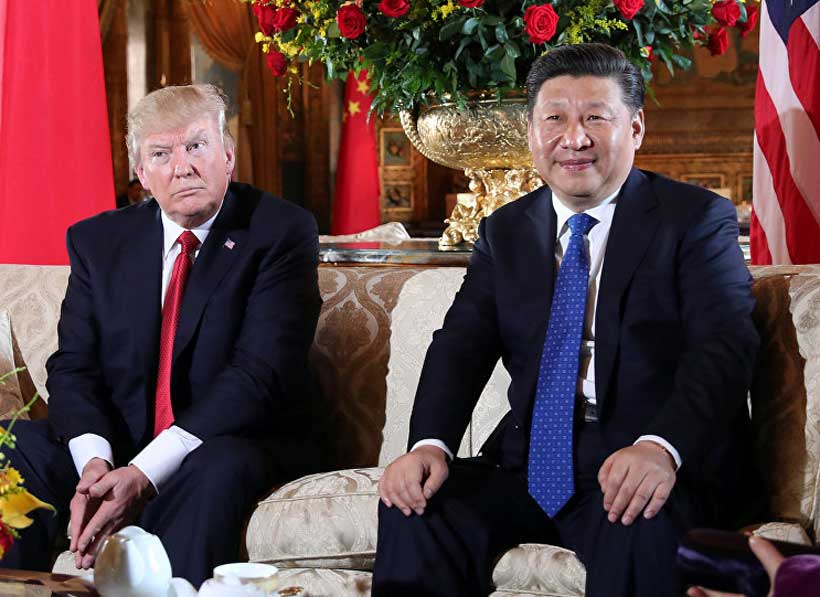
President of the People’s Republic of China Xi Jinping and President of the United States Donald Trump met on the sidelines of the G20 Summit in Osaka on June 29 to discuss the resumption of trade and economic talks between the two countries. The United States also promised that it would not introduce additional tariffs on Chinese goods. The world collectively breathed a sigh of relief, as the trade war between the world’s two largest economies is fraught with serious risks for global economic growth.
Time will tell whether these agreements will turn out to be the calm before the storm or whether the two sides will be able to find mutually acceptable solutions. However, no matter how the events that broke out between the United States and China in 2018–2019 occurred, the economic war gives us grounds to say that we have become witnesses to yet another manifestation of the gradual disintegration of the existing world order. This process is gaining momentum and directly affects almost every area of intergovernmental relations.
In these circumstances, we are witnessing the ever-increasing efforts of leading states, either by themselves or with other countries, to promote various integration mechanisms that would satisfy their immediate interests and at the same time create a platform for their participation in shaping the future world order. The biggest and most ambitious of these projects is, of course, the Belt and Road Initiative put forward by President of the People’s Republic of China Xi Jinping in the autumn of 2013.
Without dwelling on the multitudinous interpretations of the Belt and Road Initiative, I will take the liberty of highlighting the international significance of this initiative. Let us recall that President of the People’s Republic of China Xi Jinping first put the idea forward when the established world order was only just beginning to show signs of its obvious failures. The global economy struggled to overcome the effects of the global financial crisis in 2008–2009. In the Middle East, the seemingly unshakable authoritarian Arab regimes started to fall one after another. The “reset” of the Russian-American relations was spluttering, and a serious conflict was brewing around Ukraine. In short, the international system had entered a period of increased instability marked by reduced manageability at the global and regional levels.
No less obvious was the fact that the deepening disagreements between the two great powers and the emerging fragmentation of the international system made it practically impossible to reach any kind of common agreement on restructuring the decaying world order. For example, the repeated attempts to reform the United Nations invariably fell flat. By the same token, it was impossible to even start a serious discussion about revising the rules of the game on the global financial markets following the crisis in 2008–2009. Arms control mechanisms have also stalled noticeably.
In this context, the Belt and Road Initiative should not be viewed as an exclusively economic project (or perhaps not even as an economic project at all), but rather as an attempt to find an alternative approach to reformatting the world order. Not “from above,” that is, through the radical transformation of the old and the creation of new global governance institutions, but rather “from below,” through the consistent implementation of specific regional and continental projects envisaging the most diverse and flexible formats for getting potential participants involved. It is no coincidence that President of the People’s Republic of China Xi Jinping has declared that the Belt and Road Initiative was intended to put his country’s idea of creating a community of common destiny for humankind into practice.
The Chinese initiative did not encroach on the fundamental principles of the liberal world order in any way. On the contrary, when delivering his keynote speech at the World Economic Forum in Davos, Switzerland in early 2017, President of the People’s Republic of China Xi Jinping stressed Beijing’s commitment to continuing the process of globalization and protecting the freedom of global trade from the looming protectionism.
Despite the cautious wording and the ostentatious flexibility and openness of the Chinese initiative, it nevertheless raised a great deal of suspicion. And these suspicions were voiced not only in the United States, but also in Europe, India and partly in Russia. Political leaders and corporate leaders across the globe felt that it was about more than just the implementation of a single, albeit extremely ambitious project, but rather about the onset of the reformatting of the entire world order. Sensing a threat to their interests and their positions in the world, some countries set out to boycott the Belt and Road Initiative, block the geographical expansion of the project and create a negative reputation surrounding it.
Such an obstructive approach appears counter-productive, primarily for those planning to boycott and sabotage the project. In the six years since the Belt and Road Initiative was launched, not a single significant alternative project has been put forward. What is more, over the years, the old Transpacific and Transatlantic integration projects have been shelved.
It is obvious that sabotage is not a constructive response to the implementation of the Belt and Road Initiative. Rather, a constructive response would be for other countries to develop their own projects, with the worthiest rising to the top. For example, Beijing’s far-reaching plans should push the European Union to finally move forward with concrete integration initiatives after years of fruitless discussions. On the other hand, critics and skeptics of the Belt and Road Initiative should become more involved in the project itself in order to lay down the rules of international cooperation together with China.
President of the Russian Federation Vladimir Putin welcomed the Belt and Road Initiative and noted that “combining the potentials of such integration formats as the Eurasian Economic Union, the Belt and Road Initiative, the Shanghai Cooperation Organization and the Association of Southeast Asian Nations could become the basis for a greater Eurasian partnership.”
Russia needs to clearly define its long-term priorities and interests within the project, taking its real possibilities and limitations into account, and then implement it together with China and the other participants in a coordinated manner. This task is far more complicated that any national project. But it is also far more important than any national project being implemented today.
Naturally, the foundation of the emerging new world order cannot be limited to the Belt and Road Initiative. This is just one example of the formats in which the new world order will develop. The main principle of building a new world order “from the bottom up” is the creation of regional and continental “coalitions of likeminded states” – states that share common approaches to various measures of international interaction. The Belt and Road Initiative meets these criteria, as do the Shanghai Cooperation Organization, the Eurasian Economic Union and many other entities. Maybe something will come of the resurgent Russia–China–India triangle.
Countries will find it easier to protect their own interests as part of flexible and fluid coalitions dealing with specific issues. On the other hand, these “blocs” may later form the basis of the future world order. This process will, by definition, be slow and unequal, but there is simply no other realistic way of overcoming the current crisis of how to control the global system.
From our partner RIAC
East Asia
The Mongolian Candidate
On March 8, 2023, a young boy was presented as the 10th Khalkha Jetsun Dhampa Rinpoche or the 10th Jebtsundamba Khutuktu of Gelug lineage of Khalka Mongols, one of the highest-ranking leaders in Tibetan Buddhism. Media reports indicate the eight-year-old child is one of a set of twins named Aguidai and Achiltai Altannar. He was born in the United States in 2015 and comes from a family that is well-established in the political and business realms, having been introduced by none other than the 14th Dalai Lama himself in a ceremony attended by approximately 600 people in Dharamsala, India.
The boy will act as the leader of Tibetan Buddhism in Mongolia, the country’s majority religion. And in the case that the current Dalai Lama would pass away suddenly, he would then become an even more important figure. After all, the legitimacy of the second-highest religious authority after the Dalai Lama, the Panchen Lama, is denied by Tibetans since China’s abduction and replacement of his eleventh incarnation with its own hand-picked candidate in 1995.
This shift in Mongolia’s Buddhist leadership holds the potential to profoundly determine the direction of the country’s relationship with China. The move also reverberates more widely in terms of the future of Tibetan Buddhism at large, especially when it comes to the selection of the next Dalai Lama. It is yet another reminder to Beijing that the Tibetan resistance movement is alive and well—and it now has a fresh new figurehead who holds meaningful religious authority. As one political analyst predicted in a 2022 article, “Since…2012, Mongolia has walked a geopolitical tightrope with China on one side and Dharamsala on the other. When and how the Jebtsundamba Khutuktu reincarnates will give one side much more power over the future of Tibetan Buddhism, with significant geopolitical consequences.”
The lama link
Mongolia holds critical importance when it comes to Tibetan Buddhism, both today and historically. In fact, the word “dalai” is a Mongolic world meaning “ocean,” “vast,” or “great.” In 1913, Mongolia and Tibet signed a treaty declaring friendship, independence from China, and mutual recognition, with both parties pledging to “work by joint consideration for the well-being of the Buddhist faith.” More recently, in a BBC interview, the Dalai Lama again emphasized the nation’s significance in this domain, stating that his future will be determined by “the Himalayan Buddhists of Tibet and Mongolia.”
The Mongolian government itself has not yet commented on this latest announcement, perhaps to avoid upsetting China, as Beijing has repeatedly punished Mongolia for previously hosting the Dalai Lama throughout the past decades. Following a visit the spiritual leader made to the country in 2002, China closed a border crossing with its neighbor, and after a 2006 visit, flights were suspended to Mongolia from the Chinese capital. The most recent and dramatic retribution China doled out to Mongolia regarding a visit made by the Dalai Lama occurred in 2016. That year, it is said that the Dalai Lama identified the 10th Khalka Jetsun Dhampa Rinpoche’s reincarnation, but stated it was too soon to formally introduce him to the world due to his young age.
China reacted with rage. It demanded that the Mongolian government release an apology and forced the nation to promise it would never again host the Dalai Lama, threatening diplomatic consequences if he were to return. Chinese Foreign Minister Wang Yi told the Mongolian Minister of Foreign Affairs, Tsend Munkh-Orgil, “The Dalai Lama’s furtive visit to Mongolia brought a negative impact to China-Mongolia relations.” In a statement, Wang Yi added, “We hope that Mongolia has taken this lesson to heart.”
Beijing did not merely hit Mongolia with a scolding and stern words, but real, practical consequences as well. One week after the Dalai Lama’s visit, China imposed fees on Mongolian commodity imports and extra transit costs on products crossing into Inner Mongolia. Moreover, Beijing closed a key border crossing with Mongolia, leading to congestion and serious traffic jams and leaving truck drivers stuck in freezing temperatures for days on end. China also halted negotiations with Mongolia for a loan worth 4.2 billion USD. Such obstacles do not come lightly for Mongolia, who relies heavily on China economically, with Beijing being responsible for 60 percent of its imports, over 80 percent of its total exports, and over 40 percent of its GDP.
In response to the 2016 fiasco, the Mongolian government stated, “Mongolia firmly supports the one China policy, consistently holds that Tibet is an inseparable part of China, that the Tibet issue is China’s internal affair.” Mongolia also claimed that the Dalai Lama’s trip was the result of an invitation from Mongolian Buddhists, not the Mongolian government. This reaction, along with Mongolia’s serious financial dependence on China, underscores the considerable degree of influence that Beijing has over the country.
Chinese interference
Beijing does not only leverage the economic power it has over Mongolia, but also actively meddles in the country’s religious affairs. As a way to consolidate its control, China facilitates exchanges with Mongolian Buddhist clergy; more specifically, it does so by targeting and supporting sects that are hostile towards the Dalai Lama, and there are claims that China has financially backed Mongolian abbots that hold this view. After a controversy within the Gelug school of Tibetan Buddhism that began in the 1970s, it is rumored that the CCP started to invest in Mongolia’s anti-Dalai Lama Shugden sect. Interestingly, an NGO called the International Shugden Community, known for staging protests during the Dalai Lama’s international visits, disbanded in 2016 following a Reuters investigation that revealed CCP links to the organization. The accusations of being too close to Beijing can sometimes create problems of legitimacy for Mongolian clergy members hostile to the Dalai Lama, especially as the majority of the country’s Tibetan Buddhists do support him—but China can wield its financial power over these individuals to ensure they do not become too close to Dharamsala.
Today, China is making concerted efforts to integrate Tibetan Buddhism within the framework of its Belt and Road Initiative as part of what’s been called Buddhist diplomacy. Party secretary at the High-level Tibetan Academy of Buddhism, Wang Changyu, has said as much. He explained that the institute’s training of Tibetan Buddhist monks “help[s] countries and territories along the ‘Belt and Road’ satisfy their demand for religious specialists and scriptures,” adding that these exchanges can promote “the results of our Party and country’s ethnic and religious policies, displaying the healthy heritage and development of Tibetan Buddhism [in China, while minimizing] the Dalai clique’s space of activity, upholding national sovereignty.”
This topic is so pivotal to China-Mongolia relations that if one accesses the website of the Chinese embassy in Mongolia, a section dedicated entirely to Tibet is immediately visible on the homepage. The page, entitled “China’s Tibet in the eyes of Mongols” contains reports compiled by Mongolian researchers who traveled on organized visits to Tibet, after which they were instructed to produce material showcasing a positive image of Tibet’s “development and progress” under the PRC. This state-sponsored method—subsidizing trips in exchange for propaganda dissemination—has been used to recruit from other countries as well, such as Nepal.
Another factor to consider is China’s concerns surrounding the ethnic factor in Mongolia. In fact, there are actually more Mongols inside China than in Mongolia, presenting Beijing with another layer of tension to manage. The CCP’s response to this perceived problem has been to crack down on Mongol culture in Inner Mongolia, for instance, by passing a law in 2020 prohibiting teachers from using the Mongolian language—a policy reminiscent of the one instituted in the so-called night-stay schools in Tibet— as part of an effort to make Han Chinese and Mongol culture indistinguishable. This move led to protests in Inner Mongolia that garnered support from across the border, which the government swiftly suppressed before installing new leadership in the region a year later.
Finding the fifteenth
The Dalai Lama’s presentation of the 10th Khalka Jetsun Dhampa Rinpoche has undoubtedly upset China, who wants to control and approve all reincarnations in Tibetan Buddhism. By hosting this ceremony in Dharamsala himself, the Dalai Lama has sent a strong message to the CCP that directly challenges its claim to authority over the reincarnation process. The CCP argues that the correct technique for handling Tibetan Buddhism’s reincarnation process is known as the Golden Urn, and insists that this responsibility falls within its purview and is historically grounded.
The method, performed under the Qing Dynasty, involves filling a golden urn with several options and then drawing lots to identify the reincarnation. In February 2023, the state media outlet The Global Times released an article explaining the Golden Urn process and why the “Recognition of [the] new Dalai Lama must be conducted in China.” The article asserted that this method “has been supervised by the Chinese Central Government and conducted within Chinese territory since the late 13th century.” Beijing claims that this is how Gyaincain Norbu was chosen as the CCP-endorsed Panchen Lama, though there are assertions that the procedure was rigged in his favor. In 2007, the PRC enshrined the Golden Urn convention into law, allowing them to restrict reincarnations to come only from their own pool of pre-determined candidates. This is how the CCP will select the next Dalai Lama. The 14th Dalai Lama rejects this system entirely, saying it was “only used to ‘humor’ the Qing emperors.”
The manners in which the Mongolian government and Buddhist clergy decide to respond to the Dalai Lama’s introduction of the 10th Khalkha Jetsun Dhampa Rinpoche will be important to watch. Thus far, they have remained quiet, as has China. If Mongolia’s response to this reincarnation announcement does not satisfy China, then the CCP may be further incentivized to expand its presence in Mongolia for the sake of getting a hold on Tibetan Buddhism, a force it considers one of its greatest assets—and foremost threats.
East Asia
Will Eastern Order Surface?
In 1945, the post-war period transitioned into a new form of war and competition. The world experienced the bipolarity of the international system. From 1945 to 1990, the American Order captured hegemony through the soft power and excellence of values that characterized the Washington-based order. After the disintegration of the USSR, the world entered a new phase of American hegemony. With the advent of authoritarian capitalism, China emerged as a potent power to counter American hegemony and cultural capital in the 21st century. There is not an iota of doubt about the potentiality of the Chinese order in the last few years, but the persistent norms and appeal of society are still based on the American order. This century is the war of the Cultural Revolution rather than the economic system because China has already accepted the capitalist form of economic growth in the international order.
Quoting from Foreign Affairs the American order is like the layers of an onion. The US-led international order has multiple layers. ’ On the outside are its liberal internationalist notions and tasks, through which the US has delivered the globe a “third way” between the anarchy of nations furiously contending with each other toe to toe and the arrogant ranking of imperial systems—an arrangement that has provided more profits for more populace than any preliminary option. On the exterior, the US has profited from its landscape and its extraordinary trajectory of political expansion. It is located in such a position where oceans are separated from the other incredible powers, its landmass encompasses both Asia and Europe, and it accrues leverage by playing an extraordinary position as a global power balancer. Considering this, the United States had critical opportunities in the twentieth century to form blocs of like-minded states that contour and embed global statutes and organizations. As the contemporary emergency in Ukraine exhibits, this capacity to muster unions of democracies stays one of the United States’ important assets. Under the kingdom of administration and diplomacy, the US domestic civil set up—enhanced by its multiracial and multicultural settler base—integrates the nation to the globe in webs of influence elusive to China, Russia, and other countries. Ultimately, at the nucleus, one of the United States’ incredible resilience is its capability to flunk; as a liberal society, it can recognize its openness and mistakes and pursue ways to enhance them, giving it a specific advantage over its illiberal opponents in engaging emergencies and lapses. No other nation on the face of the earth has appreciated such an extensive set of benefits from bargaining with other nations. This is the explanation why the United States has had such staying power for such an extended period, despite occasional losses and dissatisfactions.
The effort between the United States and its adversaries, China and Russia, is a contest between two opposite logics of world order. The United States protects a multinational edict it has directed for three-quarters of a century—one that is open, multilateral, and anchored in security agreements and cooperation with another liberal democratic country. China and Russia pursue an international declaration that dethrones Western liberal norms—one that is more gracious to regional unions, globes of influence, and dictatorships. The United States maintains a transnational order that defends and increases the attraction of liberal democracy. China and Russia, each in its own way, wish to create an international order that safeguards autocratic rule from the ominous leverages of liberal modernity.
This wrangle between liberal and illiberal WO is an echo of the incredible competition of the twentieth century. In key premature moments—after the decisions of the two world wars and the Cold War—the United States progressed toward a developed schedule for world order. Its conquest rested fairly on the candid validity of American power and the country’s unrivaled financial, technical, and military abilities. The United States will hang around at the depths of the world system in part because of these worldly capacities and its position as a pivot in the international equilibrium of power. The military, technological and soft power of United States allocate an upper-hand in the 21st century.
East Asia
Who hates China’s rise the most: from the “yellow peril” to the “biggest challenger”
From Deng Xiaoping’s economic policy that lifted more than 800 million people out of poverty to China’s current domination in the field of Artificial Intelligence (AI) and its establishment of the Belt and Road initiative, the progress that China has made is impressive in terms of the economic balance sheet. The vast majority of western audience has felt highly uncomfortable about China’s unfamiliar cultural and political landscape. Notably, the hostile awe has been received mainly from the AUKUS countries. The passionate rhetorical protests against China are commonplace among the Anglo leaders. The racial underpinnings of China’s rise centre around the Anglo-Saxon’s despise on China. Kiron Skinner, a former Director of Policy Planning at the United States Department of State stated in 2019 that China’s rise consisted of a narrative that it was “the first time that we will have a great power competitor that is not Caucasian.” In 2022, the British Member of Parliament (MP) Mark Spencer also referred to Chinese spies as “some little China men” in a televised interview when defending Liz Truss’ China policy.
One of the first official Sino-British encounters suggests that the long legacy of the Anglo hostilities towards China can be traced back to the late 18th century. The infamous Macartney’s British Embassy to China failed his initial mission to open trade with China due to the refusal to perform the Chinese Imperial protocol. Macartney’s comptroller, John Barrow, later described China as weak, the state as despotic and corruptible, and the people as hypocritical and dirty. He noted that nothing in China would ever change without European colonisation. In contrast, prior to his description, Europeans had more often admired the Chinese culture and fantasized orientalism. French and other continental artisans and aristocrats had been more appreciative of the Chinoiserie and the profoundness of Chinese philosophy.
In the early 20th century, Sinophobia became a fashion in the Anglo-Saxon world. In support of the idea of “Yellow Peril”, the English novelist Sax Rohmer crafted a Chinese character, Fu Manzhou, as a caricature of a ruthless Chinaman with cruelty, extreme intelligence and a hunger for power. Roughly around the same time, on the other side of the Atlantic, the Chinese Exclusion Act was placed to limit and constrain the Chinese immigrants and their rights within the American society. The anti-miscegenation legislature also enforced restrictions on the interpersonal relationships between different races. Particularly, white women who were married to Chinese men had to leave the country. In Australia, another Anglo country, the draft of Chinese Immigration Act 1855 also placed in Victoria to limit the Chinese immigrants by imposing poll tax, and the term “Coolie” became the racial slur for Asian men throughout that period in the Anglo-Saxon world.
The question to be asked is why did the Anglo-Saxon despise the Chinese so much? There are mainly two reasons behind the sentiment. First of all, even though the Anglo-Saxon perceived themselves as carrying on the “manifested destiny” and the “Whiteman’s burden”, they in fact still viewed themselves as the racial subordinate of the “Nordic race”. Fuelled by earlier biological theories of Madison Grant on race, the Anglo-Americans subjugated themselves as an off-shoot branch, second class of the pure Nordic blood. In Australia, even in later 20th century, an official publication of the Australian Good Neighbour Council described Scandinavians as superior compared to many British migrants. In social psychology, it is proposed that inferior complexity could lead to abusive behaviour, often towards others that are perceived by the perpetrators as worse off. On the cultural level, the British Isles always belonged to the periphery of Europe, where the continental civilization could hardly be shone upon. The roots of the Anglo-Saxon culture were thus built upon the imagery of continental Europe, even as it never truly seemed to be a part of that. When coming in contact with other civilizations, such as China, its own cultural identity became even more hollow in comparison with the 5000 years of history and the richness of artefacts that China had. The destruction of the Chinese imperial winter palace, Yuanmingyuan, by the British was in essence a proof of such cultural identity reflexes.
Anglo-Saxon’s complicated sentiment towards China is thus motivated by a non-material aspect. Unlike the mainstream argument on political systems and values, the ultimate resentment in fact came from the cultural and racial self-reflection. The Anglo-Saxons might have invented the modern capitalism, democracy and technology, but China’s cultural legacy, history and distinctive ethnic identity are the unattainable notions that Anglo-Saxons are envious of.
-
Finance4 days agoThe Spectator: Why the economic war against Russia has failed?
-
Economy3 days agoIs U.S. housing market going to crash?
-
International Law3 days agoRussia-Ukraine conflict: Perspective of International Laws of Use of Force
-
Defense4 days agoDecarbonizing Defense: The Harsh Reality of Military Emissions
-
World News4 days agoTurkish presidential election and foreign policy
-
Defense3 days agoFinland’s accession to NATO: What it means and why it matters?
-
East Asia3 days agoThe Mongolian Candidate
-
South Asia3 days agoThe Reasons Behind Pakistan’s Reluctance to Establish Diplomatic Ties with Israel
