

Facebook X
  • Global Order
    • Diplomacy
    • International Law
    • Geopolitical Calendar
  • Regions
    • Europe
    • Middle East & Africa
    • East Asia
    • Americas
    • Eurasia
    • South Asia
    • Southeast Asia
  • Economy
    • Economy
    • Emerging Markets
  • Energy
    • Energy Geopolitics
    • Oil & Gas
    • Energy Security
    • Energy Transition
  • Security & Conflict
    • Defense
    • Terrorism
    • Intelligence
    • Nuclear Strategy
    • Hybrid Warfare
  • Tech
    • Science & Technology
    • AI Competition
    • Semiconductors
  • News
    • World News
    • Finance
    • Reports
    • Energy News
    • Tech News
    • Health & Wellness
  • Fine Living
    • Travel & Leisure
    • Style
    • Tourism
  • Society & Culture
    • Arts & Culture
    • Global Social Change
    • Climate & Sustainability
    • Religion
    • African Renaissance
    • Urban Development
  • More
    • About MD
    • Our Team
    • Write for Us
    • Publications
    • Video & Podcasts
    • Internships
    • Contact Us
Search
Modern DiplomacyMODERN DIPLOMACYALL VIEWS | ALL VOICES
Search
Modern DiplomacyMODERN DIPLOMACYALL VIEWS | ALL VOICES
Subscribe
  • Global Order
    • Diplomacy
    • International Law
    • Geopolitical Calendar
  • Regions
    • Europe
    • Middle East & Africa
    • East Asia
    • Americas
    • Eurasia
    • South Asia
    • Southeast Asia
  • Economy
    • Economy
    • Emerging Markets
  • Energy
    • Energy Geopolitics
    • Oil & Gas
    • Energy Security
    • Energy Transition
  • Security & Conflict
    • Defense
    • Terrorism
    • Intelligence
    • Nuclear Strategy
    • Hybrid Warfare
  • Tech
    • Science & Technology
    • AI Competition
    • Semiconductors
  • News
    • World News
    • Finance
    • Reports
    • Energy News
    • Tech News
    • Health & Wellness
  • Fine Living
    • Travel & Leisure
    • Style
    • Tourism
  • Society & Culture
    • Arts & Culture
    • Global Social Change
    • Climate & Sustainability
    • Religion
    • African Renaissance
    • Urban Development
  • More
    • About MD
    • Our Team
    • Write for Us
    • Publications
    • Video & Podcasts
    • Internships
    • Contact Us
Modern DiplomacyMODERN DIPLOMACYPRO
  • Global Order
    • Diplomacy
    • International Law
    • Geopolitical Calendar
  • Regions
    • Europe
    • Middle East & Africa
    • East Asia
    • Americas
    • Eurasia
    • South Asia
    • Southeast Asia
  • Economy
    • Economy
    • Emerging Markets
  • Energy
    • Energy Geopolitics
    • Oil & Gas
    • Energy Security
    • Energy Transition
  • Security & Conflict
    • Defense
    • Terrorism
    • Intelligence
    • Nuclear Strategy
    • Hybrid Warfare
  • Tech
    • Science & Technology
    • AI Competition
    • Semiconductors
  • News
    • World News
    • Finance
    • Reports
    • Energy News
    • Tech News
    • Health & Wellness
  • Fine Living
    • Travel & Leisure
    • Style
    • Tourism
  • Society & Culture
    • Arts & Culture
    • Global Social Change
    • Climate & Sustainability
    • Religion
    • African Renaissance
    • Urban Development
  • More
    • About MD
    • Our Team
    • Write for Us
    • Publications
    • Video & Podcasts
    • Internships
    • Contact Us
Home Society & Culture Global Social Change Bangladesh Women Making Progress But Still Face Gender Gap
  • Society & Culture
  • Global Social Change

Bangladesh Women Making Progress But Still Face Gender Gap

By
MD Staff
-
January 30, 2018
0
2960
Facebook
X
WhatsApp
Linkedin
ReddIt
Telegram

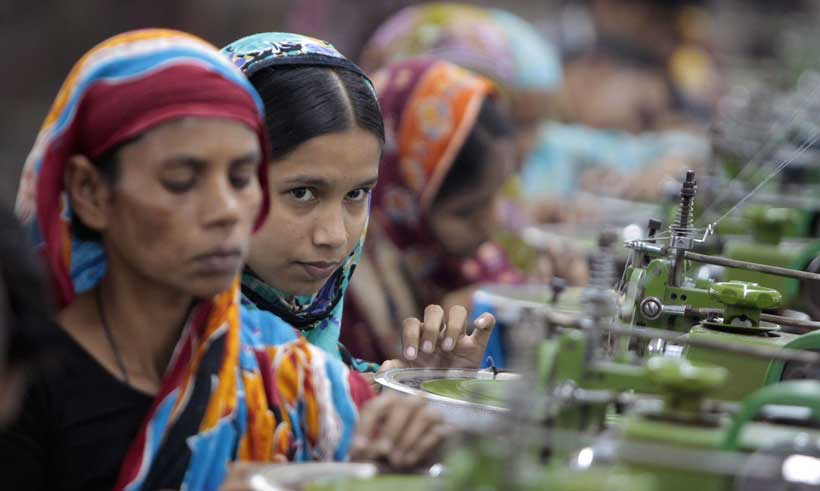
    Bangladesh’s women have made progress in various aspects of health, education, and work, but still face sizable gender gaps, according to a new report from the Asian Development Bank (ADB), prepared in collaboration with the BRAC Institute of Governance and Development.

    The report, the Bangladesh Gender Equality Diagnostic of Selected Sectors, aims to guide the design of gender features of ADB-supported projects in four key sectors—skills, vocational, and tertiary education; energy; transport; and urban development. It presents an in-depth analysis of the different areas and disparities in each sector, and recommends sector-specific strategies on gender.

    It was introduced at a launch event and panel discussion today featuring gender and sector specialists and economists, including the Secretary, Nasima Begum; and the Additional Secretary, Mahmuda Sharmin Benu, of the Ministry of Women and Children Affairs; and ADB Country Director for Bangladesh Manmohan Parkash.

    “We hope this publication will be a useful resource not only for ADB, but also for our partner government agencies and other development partners to achieve the gender targets of the Sustainable Development Goals,” Mr. Parkash said. “We also hope in so doing, it will help bring about significant positive changes in the lives of women and men, and in the promotion of inclusive development.”

    Stay ahead of the geopolitical week.

    MD Briefing delivers expert analysis across five global fronts — the Indo-Pacific, energy, geoeconomics, European security, and the Middle East — every Monday morning. Free.

    The report finds that the country has generally made rapid progress on several social and economic indicators. For example, while the maternal mortality ratio remains higher than the 2015 Millennium Development Goal of 143, it has fallen from 472 deaths per 100,000 live births in 1990 to 181 in 2015.

    Likewise, the proportion of employed women with no formal schooling almost halved from 41% to 21% from 2010 to 2013 while the proportion with higher secondary education and degrees rose markedly, as the employed female population has become more skilled. However, women’s access to technical and vocational training is less positive, with only 28% of students enrolled.

    Women’s educational and work opportunities are hampered by a lack of reliable, safe, and economical public transport, the report says. Energy is also critical to women’s empowerment and development because access to clean and affordable energy services is a precondition for improved women’s health, children’s ability to study, and women’s livelihood opportunities.

    Women’s participation in the labor force is rising faster than men’s but they accounted for just one third of the workforce in 2013. The gender gap has also narrowed in income and wages. But less than 10% of women work in the formal sector with the remainder in the informal sector, such as home-based work. This tends to be characterized by lower income, greater insecurity, and generally unfavorable working conditions. Meanwhile, under 5% of firms have women in top management. Women also continue to have more limited access than men to resources, including land, housing, technology, and even newspapers (15%) or the Internet (28% of users).

    Skills, vocational, and tertiary education are indispensable for enabling women and girls to enter the workforce on equal terms with men and to access better conditions, better pay, and better prospects, the report says. Gender inequality in education as well as stereotyping in the choice of academic courses and subjects, as well as employment persist. To overcome this, it is crucial for women to make the most of available opportunities, such as, among others, resources for entrepreneurship and use of new information and communication technology. This would allow them to shift to more skilled employment with better pay and working conditions instead of staying as low-paid domestic workers subject to various forms of exploitation.

    The report sees rapid urbanization as another key priority for action, since unless this is managed strategically, it can cause reversals in the progress that has been made for women’s empowerment. Besides lack of access to services such as power, sanitation, water, and transport, women are subject to frequent sexual harassment and violence in dense slum areas where they have to put up with flimsy housing, common toilets and water points, and insufficient lighting.

    The report points out that a survey carried out by the Bureau of Statistics in 2011 shows that as many as 87% of currently married women report experiencing some kind of violence during the previous 12 months. One third of women age 15-49 believe in at least one justification for a husband hitting his wife, such as arguing with him.

    The report was produced to support the development objectives of the Government of Bangladesh as set out in its Seventh Five-Year Plan (2016-2020), as well as the Country Partnership Strategy (2016-2020) of ADB in promoting inclusive and environmentally sustainable growth in the country.

    • TAGS
    • ADB
    • Bangladesh
    • Economics
    • Entrepreneurship
    • Gender Equality
    • Report
    • Society
    Facebook
    X
    WhatsApp
    Linkedin
    ReddIt
    Telegram
      Previous articleModerating Saudi Islam: Government proposes tightening fundraising rules
      Next articleThe Crisis of Democracy: What’s next?
      MD Staff
      MD Staff
      Sign in
      Welcome! Log into your account
      Forgot your password? Get help
      Privacy Policy
      Password recovery
      Recover your password
      A password will be e-mailed to you.

      LEAVE A REPLY Cancel reply

      Log in to leave a comment

      MODERN DIPLOMACYPRO
      • About MD
      • Newsletter
      • Contact Us
      • Write for Us
      • Privacy Policy
      • Cookie Policy (EU)
      • Crypto Disclaimer

      About us

      MD does not stand behind any specific agenda, narrative, or school of thought. We aim to expose all ideas, thinkers, and arguments to the light and see what remains valid and sound.

      Facebook
      Instagram
      Linkedin
      X
      Youtube

      Company

      • Global Order
      • Regions
      • Economy
      • Energy
      • Security & Conflict
      • Tech
      • News
      • Fine Living
      • Society & Culture
      • More

      The latest

      Taiwan President Pushes $6.6 Billion Military Drone Bill Ahead of Crucial Vote

      World News August 26, 2026
      Lai Calls for Urgent Expansion of Taiwan's Drone Capabilities Taiwan...

      Nepal Flash Flood Kills Eight and Damages Critical Infrastructure

      World News August 26, 2026
      Flash Flood Sweeps Through Himalayan Villages Nepal sent helicopters to...

      Why Does Bill Gates Want to Discuss AI Risks With China’s Xi Jinping?

      Science & Technology August 26, 2026
      Bill Gates is looking to meet with Chinese President...

      © 2023 moderndiplomacy.eu. All Rights Reserved.

      Manage Consent
      To provide the best experiences, we use technologies like cookies to store and/or access device information. Consenting to these technologies will allow us to process data such as browsing behavior or unique IDs on this site. Not consenting or withdrawing consent, may adversely affect certain features and functions.
      Functional Always active
      The technical storage or access is strictly necessary for the legitimate purpose of enabling the use of a specific service explicitly requested by the subscriber or user, or for the sole purpose of carrying out the transmission of a communication over an electronic communications network.
      Preferences
      The technical storage or access is necessary for the legitimate purpose of storing preferences that are not requested by the subscriber or user.
      Statistics
      The technical storage or access that is used exclusively for statistical purposes. The technical storage or access that is used exclusively for anonymous statistical purposes. Without a subpoena, voluntary compliance on the part of your Internet Service Provider, or additional records from a third party, information stored or retrieved for this purpose alone cannot usually be used to identify you.
      Marketing
      The technical storage or access is required to create user profiles to send advertising, or to track the user on a website or across several websites for similar marketing purposes.
      • Manage options
      • Manage services
      • Manage {vendor_count} vendors
      • Read more about these purposes
      View preferences
      • {title}
      • {title}
      • {title}